
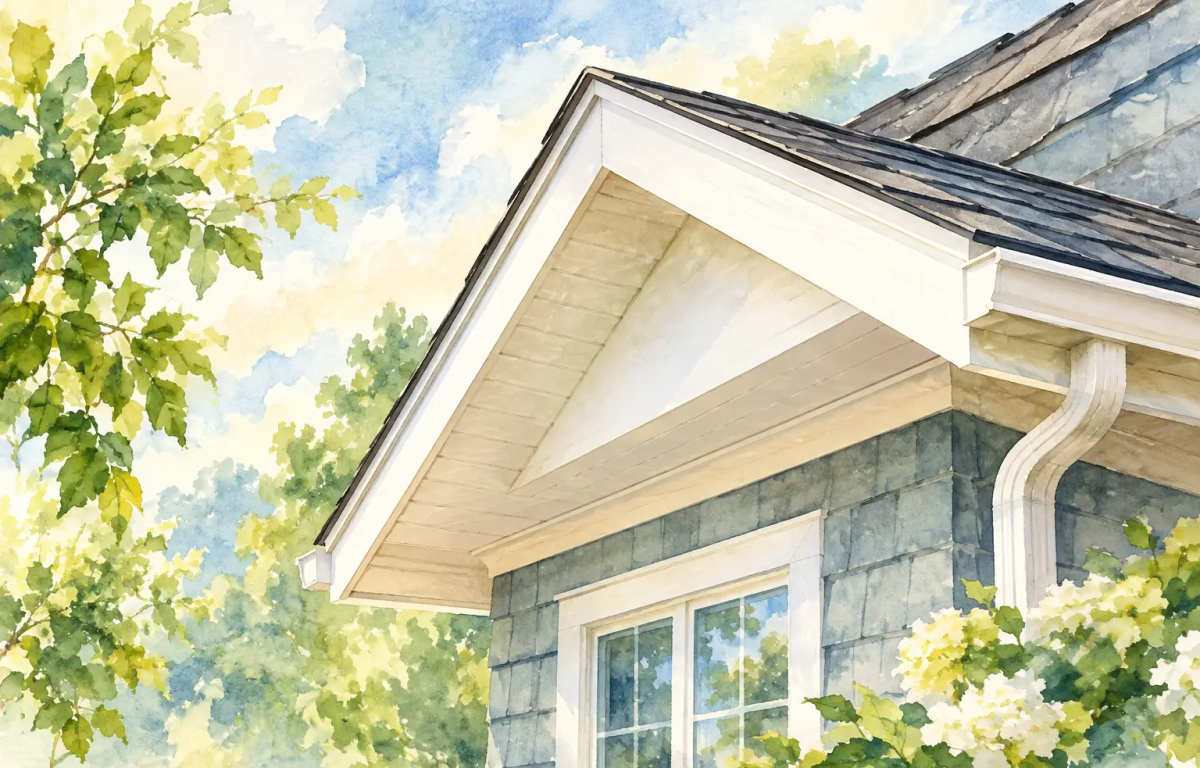
A sagging gutter, peeling paint along the eaves, or a dark stain near the roof edge can point to more than a cosmetic problem. Your fascia boards sit at one of the most exposed parts of your home, where rainwater, wind-driven debris, heat, and humidity all meet. Timely fascia replacement helps protect the roofline, support the gutter system, and stop small moisture issues from becoming expensive exterior repairs.
For homeowners across Upstate South Carolina, fascia damage often shows up after a hard storm or after years of water overflowing from clogged or poorly pitched gutters. The damage may look limited to one board, but the cause can involve the roof edge, drip edge, soffit, gutter hangers, or hidden wood rot. A proper inspection identifies what failed and what needs to be corrected before new materials go up.
What Fascia Does for Your Home
Fascia is the long horizontal board mounted along the lower edge of your roof. It creates a finished appearance at the eaves, but its job is much more practical than decorative. Fascia provides a secure mounting surface for gutters, helps close off the roof structure, and works with soffit and roof-edge flashing to manage moisture around your home.
When fascia is solid, gutters can move rainwater away from the roof and foundation as intended. When it is soft, cracked, or pulling away, gutter fasteners can loosen and the gutter can sag. That allows water to spill against the siding, windows, trim, landscaping, and foundation instead of flowing safely through the downspouts.
In South Carolina, repeated heavy rain and high humidity can speed up the deterioration of unprotected wood. Storms may also bend gutters, tear away sections of trim, or drive water behind fascia boards. The visible issue may be a loose gutter, but the real concern is the moisture that has been sitting where you cannot see it.
Signs You May Need Fascia Replacement
Not every damaged board requires a full replacement project. A small area of surface paint failure may be addressed with preparation, repair, and repainting if the wood beneath is dry and sound. However, replacement is usually the smarter long-term option when rot, structural weakness, or recurring moisture is present.
Watch for discoloration, blistering paint, splitting wood, soft spots, gaps at the roof edge, or boards that appear bowed. Gutters that pull away from the house are another clear warning sign, especially if fasteners no longer hold securely. You may also notice water running behind the gutters during rain, staining on the soffit, or signs of insects and small animals entering gaps near the eaves.
A roof leak does not always mean the roof covering itself has failed. Water can enter around damaged flashing or a compromised roof edge, then travel into fascia and soffit areas before becoming visible indoors. That is why an exterior inspection matters after severe weather, even if the shingles look intact from the ground.
Repair or Replace: What Makes Sense?
The right choice depends on the condition of the wood and the source of the damage. If deterioration is limited and the surrounding materials are dry, a targeted repair may extend the life of the area. But covering rotten fascia with new metal wrap or fresh paint does not solve the underlying problem. The damaged material still cannot support gutters properly, and trapped moisture can spread into adjacent boards.
Fascia replacement is often recommended when the board has widespread rot, repeated water exposure, pest damage, or loose gutter attachments. It may also make sense during a roof replacement, gutter replacement, or soffit project because the roof edge is already accessible. Coordinating the work can reduce disruption and help ensure every part of the roofline is installed to work together.
The most important question is not simply whether the fascia looks bad. It is why it failed. A qualified contractor should inspect gutter slope, downspout drainage, roof flashing, drip edge, and nearby soffit before presenting a written recommendation. Replacing boards without fixing overflowing gutters or roof-edge water intrusion can leave a homeowner facing the same problem again.
How Professional Fascia Replacement Works
A dependable project starts with a close inspection of the roofline. The contractor checks the affected fascia, adjacent trim, soffit, gutter system, and roof edge for water damage. If a recent storm caused the issue, photographs and documentation can also help support an insurance claim when the damage is covered.
Next, damaged materials are removed carefully to reveal the condition behind them. This step matters because visible rot may extend farther than expected. Any compromised backing, framing, or soffit sections should be addressed before the new fascia is installed. Skipping that work may make the outside look better temporarily, but it does not restore a secure roofline.
New fascia is then fitted, fastened, and finished to match the home and support the gutter system. Depending on the project, the work may include new drip edge, trim wrap, soffit repair, gutter rehanging, or replacement gutters. The final step is checking that water will flow into the gutters correctly and away from the foundation.
At Extreme Roofing, the goal is not to patch over storm damage and move on. Homeowners deserve a clear explanation of what was found, a written proposal for the needed work, and a project team that treats the roofline as a connected system.
Choosing the Right Fascia Material
Wood remains a common fascia material, particularly on older homes and homes with detailed trim profiles. It can provide a traditional appearance and is easy to customize, but it needs proper sealing, painting, and ongoing maintenance. If gutters overflow or water gets behind the paint, wood can deteriorate quickly.
Many homeowners choose wood fascia protected with aluminum trim wrap. The wrap provides a clean finished appearance and reduces routine painting, but the wood behind it must be sound and dry at installation. Metal wrap is protection, not a substitute for removing rot.
Composite and PVC trim options can offer stronger resistance to moisture and insects. They can be a good fit in areas that see frequent water exposure, although material cost, appearance, and compatibility with the existing exterior all matter. The best option depends on your home’s architecture, budget, surrounding trim, and gutter needs.
A contractor should explain these trade-offs plainly. The lowest upfront price is not always the best value if it leaves the home vulnerable to another repair after the next season of heavy rain.
Storm Damage and Insurance Considerations
Wind, falling limbs, hail, and sudden gutter damage can all affect fascia. After a storm, avoid climbing ladders or pulling on loose gutters yourself. A damaged gutter can detach without warning, and walking near a compromised roof edge creates unnecessary risk.
Instead, look from the ground for bent gutters, displaced downspouts, missing trim, debris impact, or water pouring over the eaves. Take photos if it is safe to do so, then schedule a professional inspection. If storm damage is found, detailed documentation can help you understand whether it may be appropriate to file a claim.
Insurance coverage depends on the cause of loss and the details of your policy. Storm-related damage may be treated differently from gradual wear, poor maintenance, or long-term rot. An experienced restoration contractor can document the condition, explain the scope of repairs, and help you communicate clearly with your insurer. The final coverage decision always belongs to the insurance carrier, but good documentation makes the process less confusing.
Do Not Let a Small Roofline Problem Spread
Fascia damage rarely stays contained. Once water reaches the roof edge, it can affect soffit, decking, attic ventilation, siding, interior walls, and even the foundation area if gutters cannot drain correctly. The longer the problem continues, the more likely a simple board replacement turns into a larger exterior restoration project.
If you see loose gutters, rotting trim, peeling paint at the eaves, or water escaping where it should not, schedule an inspection before the next hard rain. A solid roofline gives your gutters a secure place to work, protects the edge of your roof, and helps keep your home ready for whatever Upstate South Carolina weather brings.