
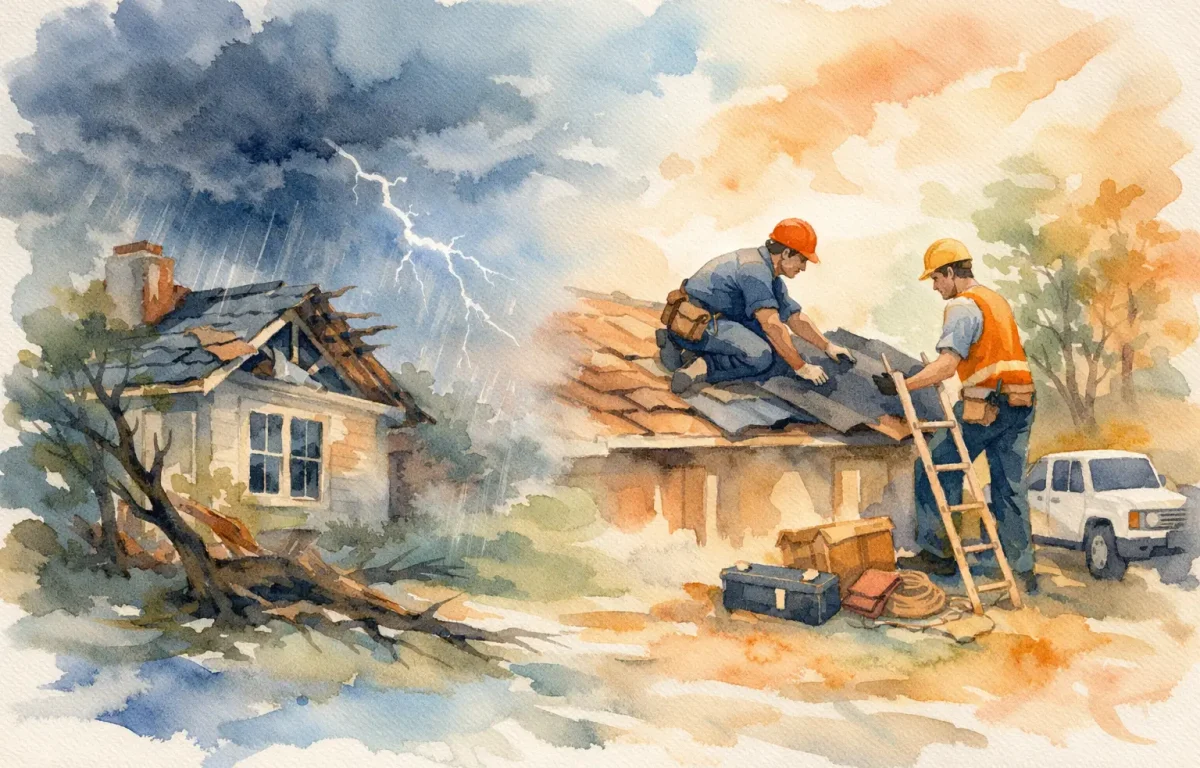
The morning after a hard Upstate storm, the damage is not always obvious from the driveway. You may see a few shingles in the yard or a bent gutter, but the real problem could be water working under the roof system, siding loosened by wind, or hail hits that shorten the life of your exterior. That is why so many homeowners start searching for storm damage repair contractors near me as soon as the weather clears. The right contractor does more than patch what you can see. They help you find the full scope of damage, protect the house quickly, and move the repair forward without adding more stress.
What storm damage repair contractors near me should actually help with
After severe weather, homeowners often think first about the roof. That makes sense, but storm recovery usually goes beyond shingles. Wind can tear flashing loose, hail can bruise roofing materials, gutters can pull away from the fascia, and siding can crack or lift at the seams. If the storm was strong enough, skylights, trim, and even attic ventilation components can take a hit.
A qualified exterior restoration contractor should inspect the whole system, not just the most visible trouble spot. That matters because partial repairs can miss the source of the leak or leave secondary damage untreated. If water is getting in through roof penetrations or damaged flashing, replacing a handful of shingles will not solve much.
The better contractors also understand the insurance side of storm work. They know how to document damage clearly, provide written proposals, and explain what is repairable versus what may need replacement. For a homeowner already dealing with a claim, that kind of support saves time and helps prevent confusion.
Why local matters after a South Carolina storm
When people search for storm damage repair contractors near me, the “near me” part is not just convenience. It is protection.
A local contractor knows what Upstate South Carolina storms typically do to homes in Laurens, Greenville, Anderson, Greenwood, and Spartanburg. They have seen how high winds affect older shingle roofs, how hail marks show up on different materials, and how fast a small leak can become interior damage during a wet week. They also understand local building expectations, permit processes, and the pace homeowners need when weather is still unstable.
There is another reason local matters. Storm-chasing crews often show up after major weather events, promising fast work and low prices. Some are legitimate. Many are not. A contractor with a real local presence has more to lose by cutting corners. They depend on reputation, follow-through, and work that stands up over time.
If a company cannot clearly explain where they work, how they handle warranty issues, or who manages your project once the crew leaves, keep looking.
What to look for before you sign anything
A dependable storm repair contractor should be licensed where required, bonded when applicable, and fully insured. That should be easy for them to discuss, not something you have to drag out of them. They should also be willing to inspect the property thoroughly and provide a written scope of work.
Pay attention to how they communicate. After a storm, speed matters, but so does clarity. You want a contractor who can tell you what they found, what needs immediate attention, what can wait a short time, and what your options are. If they jump straight to a high-pressure sales pitch before documenting the damage, that is a red flag.
It also helps to ask who will actually oversee the job. A dedicated project manager or point of contact can make a big difference when materials are being ordered, insurance paperwork is in play, and several exterior components need work at once. Roof, gutters, siding, and trim often connect in one storm claim, so the repair process should be coordinated instead of pieced together.
The difference between emergency response and full restoration
Not every storm call starts with a full replacement. Sometimes the first priority is stopping active leaks and securing exposed areas. Tarping, temporary sealing, and immediate water control can protect the home while the full inspection and claim process move forward.
That does not mean temporary work is the final answer. It simply buys time and limits additional damage. A good contractor will be honest about the difference. If the roof can be repaired safely and effectively, they should say so. If the storm damage has compromised the broader roofing system or affected multiple exterior surfaces, they should explain why a larger restoration may be the smarter long-term move.
This is where experience matters. Storm restoration is not just construction. It is triage, documentation, planning, and execution. Homeowners need a contractor who can move quickly without guessing.
Signs your home may need a closer inspection
Some storm damage is obvious. Other signs are easy to miss until they become expensive. Water stains on ceilings, damp insulation, granules in gutters, lifted shingle edges, dented metal components, and loose siding panels all deserve attention. Even if there is no leak inside yet, the storm may have shortened the life of the roof or exposed weak points that will fail during the next round of bad weather.
Hail damage is especially tricky. From the ground, the roof can look fine. Up close, there may be impact marks, bruising, or broken seal integrity that affects performance over time. Wind damage can be subtle too. A shingle that has been creased or partially lifted may still be sitting in place, but it is no longer doing its job correctly.
If your neighborhood took a hit, it is worth having your exterior inspected even when the house seems mostly okay. Waiting can complicate repairs and make insurance documentation harder later.
How the insurance side should be handled
Storm repairs and insurance claims often move together, but homeowners should never feel left alone to sort it out. A strong contractor will document visible damage, provide photos when appropriate, and prepare a clear written proposal that matches the work needed. They should also be able to explain the repair scope in plain language.
That does not mean a contractor should replace your insurance company or make promises they cannot control. Approval decisions, deductibles, and policy details depend on your carrier. What a contractor can do is help you stay organized, show the real condition of the property, and reduce the chance that key damage gets overlooked.
The best working relationship is transparent. You should understand what the contractor found, what has been submitted or discussed, and what the next step is. If someone guarantees full claim approval before doing a careful inspection, be cautious.
Why the cheapest estimate can cost more later
After a storm, it is tempting to move fast and take the lowest number. Sometimes a lower bid is fair. Other times it means the inspection was incomplete, the materials are weaker, or key parts of the repair were left out.
Exterior systems work together. If damaged flashing is ignored, if gutters are rehung without addressing fascia trouble, or if a roof patch is done without checking surrounding areas, the homeowner may end up paying again when the first rain exposes the shortcuts. A quality proposal should be detailed enough that you know what is included and why.
This is one reason many homeowners prefer a full-service exterior contractor over a basic roofer. When roof, siding, trim, skylights, and drainage all need attention, one coordinated team can reduce delays and finger-pointing.
What a smoother repair process looks like
Good storm restoration should feel organized, even when the situation is urgent. The process usually starts with a prompt inspection and a clear explanation of damage. From there, you should receive a written proposal, guidance on the next steps, and a realistic timeline based on materials, weather, and claim status if insurance is involved.
During the job, communication should stay active. You should know when crews are arriving, what work is happening, and who to call with questions. Cleanup matters too. Storm repairs are stressful enough without nails in the driveway and debris around the yard.
This is the standard homeowners should expect. Not perfection, because weather jobs can shift, but accountability from start to finish. Companies like Extreme Roofing have built trust by handling that full cycle well, from inspection to cleanup, because homeowners need more than labor. They need a partner who treats the house like it matters.
Choosing confidence over panic
Storm damage can make any homeowner feel rushed, and sometimes rushed decisions lead to the wrong contractor. The better move is to act quickly without handing your project to the first person who knocks on the door. Look for a local team that knows storm restoration, communicates clearly, documents thoroughly, and stands behind the work.
Your home does not need a sales pitch after a storm. It needs skilled hands, honest guidance, and a repair plan that protects what matters most. If the weather has already done enough damage, the next step should bring peace of mind, not more uncertainty.