
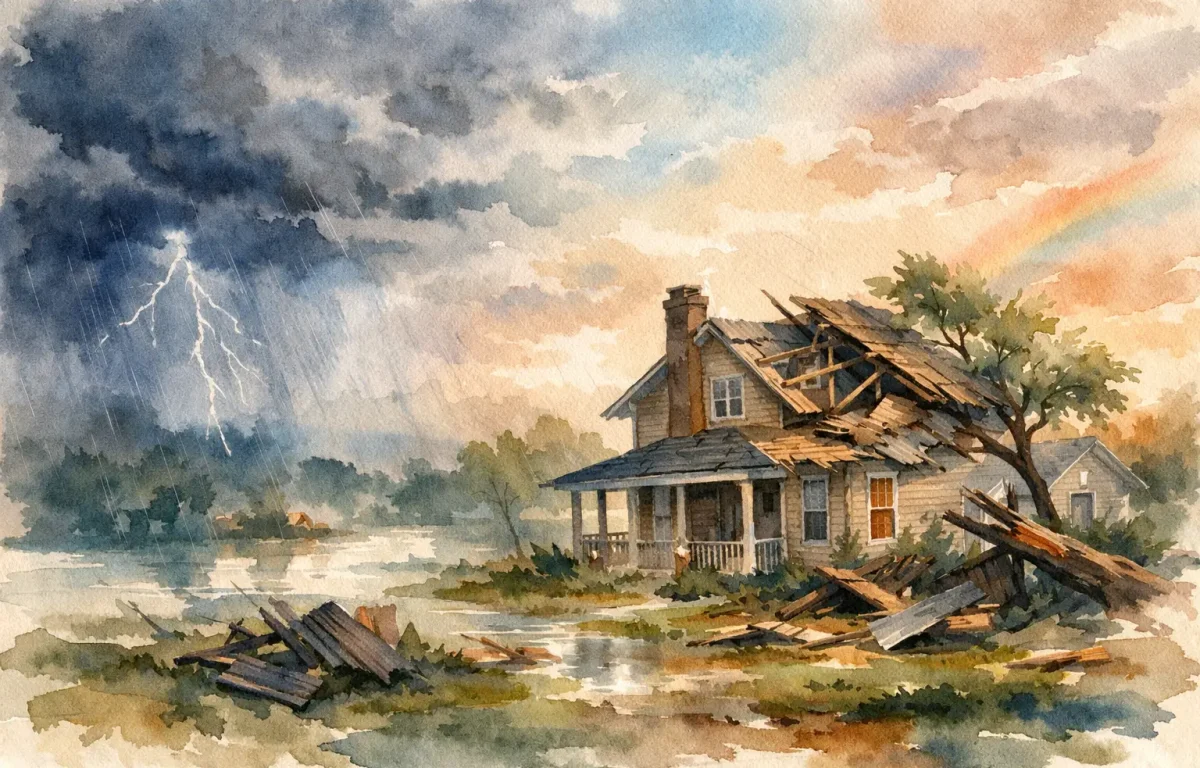
The call usually comes after the rain lets up. A few shingles are in the yard, a water stain is spreading across the ceiling, and the gutters are hanging where they should not be. In Upstate South Carolina, storm damage repair is not something homeowners think about until weather turns a small weak spot into a real problem.
What matters in those first hours is not guesswork. It is a clear plan. The right response can stop more damage, protect your insurance claim, and keep a repair from turning into a full replacement before it has to.
What storm damage repair really includes
Most homeowners think storm damage means roof damage, and that is often where the trouble starts. But a hard storm can affect much more than shingles. Wind can lift flashing, hail can bruise roofing materials, and heavy rain can push water into places that looked fine the day before. Gutters may pull loose, siding can crack, skylights can leak, and trim can take a hit from debris.
That is why good storm damage repair has to look at the whole exterior, not just the obvious spot where water is showing up inside. A ceiling stain may be caused by missing shingles, but it could also be tied to damaged flashing around a vent, bent metal at a valley, or impact damage near a skylight. If the full problem is not identified, the leak often comes back.
For homeowners, this is where experience matters. You want a contractor who knows how storms affect roofing systems in real conditions across places like Greenville, Anderson, Greenwood, Laurens, and Spartanburg – not someone who treats every repair the same.
The first steps after a storm
Safety comes first. If there is active leaking, place buckets or towels where needed and move valuables out of the way. If you see a fallen power line, structural sagging, or major tree impact, stay clear and call the right emergency services before anything else.
Once it is safe, start documenting what you can see from the ground. Take photos of missing shingles, dented gutters, damaged siding, downed limbs, and interior water spots. Do not climb on the roof. A storm-damaged roof can be slick, weakened, or unstable in ways that are not obvious from below.
Then schedule a professional inspection quickly. Time matters with storm damage. Water intrusion rarely stays contained, and delays can make insurance questions harder later. A prompt inspection creates a record of what happened and gives you a real scope of damage instead of a rough guess.
Signs your home may need storm damage repair
Some damage is easy to spot. Other damage hides well until the next storm. Missing shingles, exposed underlayment, bent flashing, granules collecting in downspouts, dents in metal components, and loose gutters are all common warning signs. Inside the home, look for ceiling discoloration, damp attic insulation, bubbling paint, and musty odors after heavy rain.
Hail damage can be especially tricky. A roof may look mostly intact from the driveway, yet still have bruised shingles that shorten its life and make future leaks more likely. Wind damage can be the same way. One lifted shingle can break the seal on surrounding materials and leave the roof vulnerable even if nothing appears dramatic from the street.
That is why a professional inspection is not just about finding what is broken today. It is also about identifying what is likely to fail next if left alone.
Storm damage repair and insurance claims
For many homeowners, the most stressful part is not the repair itself. It is dealing with the claim. The process can feel slow, technical, and frustrating when you are already trying to protect your home.
Good documentation helps from the start. Photos, notes about when the storm hit, and a detailed inspection report can all support your claim. A written proposal also matters because it shows the scope of repairs in a clear, organized way. If your insurer sends an adjuster, having a contractor who understands storm-related damage can make a real difference in how the damage is presented and reviewed.
That does not mean every claim is automatic. Coverage depends on your policy, the cause of the damage, the age and condition of the materials, and whether there were pre-existing issues. A homeowner may assume every leak after a storm is covered, but sometimes insurers look closely at wear and tear versus direct storm impact. That is one reason accuracy matters. You want the damage documented correctly the first time.
In this part of the process, homeowners usually need less sales talk and more practical help. A contractor who can inspect thoroughly, provide written findings, and help you understand what the insurer is asking for can remove a lot of unnecessary stress.
Repair or replace? It depends on the damage
Not every storm means a full roof replacement. In some cases, targeted storm damage repair is the right move. If the damage is limited to a small area and the surrounding roofing system is still in solid condition, a focused repair can restore protection without the cost of replacing everything.
But there are times when repair is only a short-term patch. If a roof is older, has widespread hail impact, multiple lifted sections, recurring leaks, or material matching issues, replacement may be the smarter investment. The same goes for gutters, siding, and trim when damage is spread across several elevations or components.
This is where honest guidance matters. Homeowners need a contractor who will explain the trade-offs clearly. A cheaper repair today is not a savings if it leads to interior damage, repeat service calls, and a larger bill next season. On the other hand, not every problem requires a full replacement just because a storm came through.
Why local storm damage repair matters
Storm restoration is not just about construction. It is also about local knowledge. Upstate South Carolina homes face strong winds, hail pockets, blowing rain, heat, humidity, and sudden weather swings that can stress exterior materials fast.
A local contractor understands common storm patterns, neighborhood housing styles, and the practical realities of scheduling emergency response in this region. They also know what homeowners here expect – clear communication, fast action, fair pricing, and work that holds up after the crews leave.
That local accountability matters after the job too. If a homeowner has a question during the claim, needs follow-up on a repair, or wants help checking another area of the exterior, it helps to work with a company that is established nearby and built around ongoing service. That is part of why many homeowners in the region turn to a storm-focused company like Extreme Roofing when severe weather hits.
What a strong repair process looks like
A reliable repair process should feel organized from the start. It begins with a thorough inspection of the roof and exterior systems, followed by a clear explanation of what was found. Homeowners should receive a written proposal that outlines the recommended work, not a vague number scribbled on the back of a card.
From there, communication should stay steady. If temporary protection is needed to stop active leaking, that should happen quickly. If insurance paperwork is part of the job, the contractor should help keep the process moving. Once work begins, cleanup and final walkthrough matter just as much as the repair itself.
The best storm damage repair work is not just about replacing materials. It is about restoring confidence in the home. When the process is handled well, you know what was damaged, what was fixed, and what condition your exterior is in going forward.
Don’t wait for the next storm to expose the first one
A small leak after a storm has a way of turning into stained drywall, damaged insulation, wood rot, and mold concerns if it sits too long. The same goes for loose gutters, cracked siding, or bent flashing that seem minor at first. Weather finds the weak point.
If your home took a hit, the smartest move is to get it inspected, documented, and repaired before the next round of wind and rain tests everything again. Quick action protects more than your roof. It protects your investment, your time, and your peace of mind.