
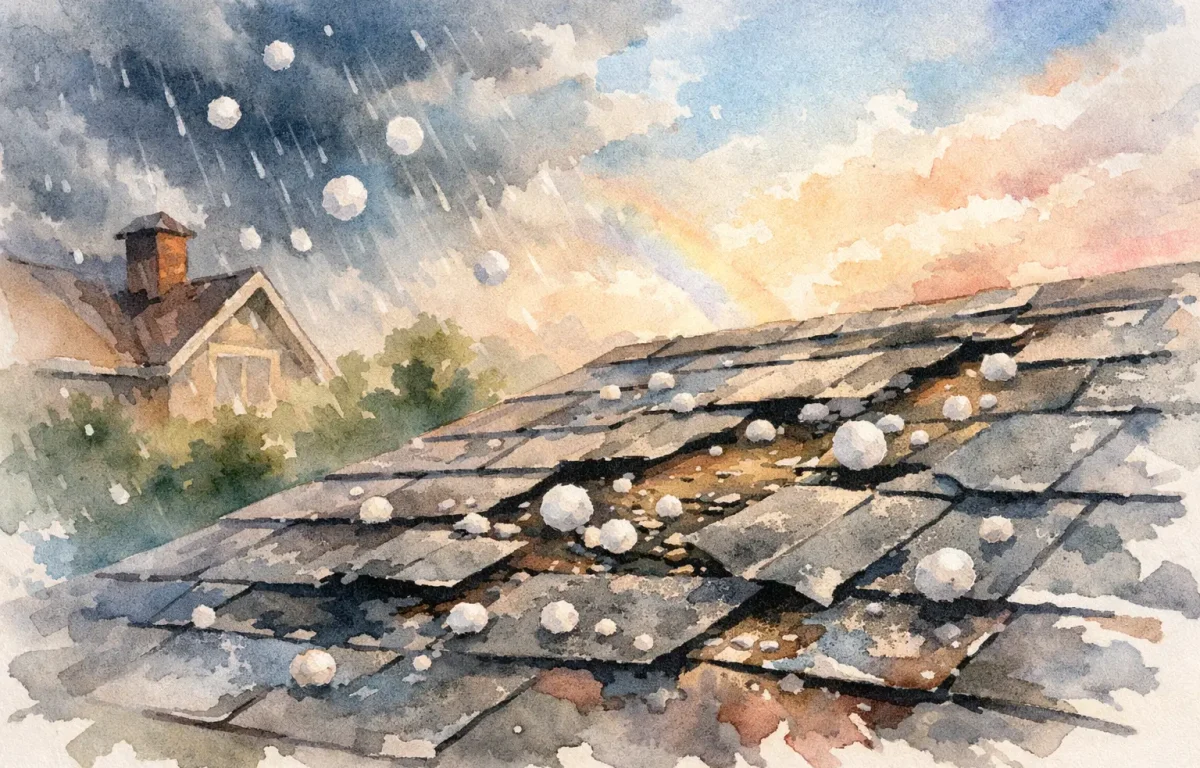
A hailstorm can be over in ten minutes and still leave behind damage that costs you thousands later. That is why homeowners need to know how to spot hail roof damage early, before a small bruise in a shingle turns into a leak, wood rot, or an insurance headache.
In Upstate South Carolina, storms can move through fast and hit hard. You may not see shingles lying in the yard, and that can make the roof look fine from the ground. But hail damage is often subtle at first. The real problem is that it weakens the roof system, shortens its lifespan, and gives water an easier path inside.
How to spot hail roof damage from the ground
Start with a simple walk around your home. You do not need to climb onto the roof to notice signs that a storm likely caused trouble.
Look at your gutters, downspouts, metal flashing, and window screens. Hail often leaves dents in softer metal before the roof damage becomes obvious to a homeowner. If you see fresh dings on gutter runs, garage doors, metal fascia, mailbox tops, or outdoor AC units, that is a strong clue that the roof took a hit too.
Next, check the ground around your home. Granules from asphalt shingles can wash into downspout splash blocks or collect along the edges of driveways and patios. A little granule loss happens over time, especially on older roofs, but a sudden heavy amount right after a storm deserves attention.
Also step back and look for uneven roof lines, dark patches, or shingles that seem to sit differently than the rest. Hail does not always knock shingles off. Sometimes it cracks them, bruises the mat below the surface, or loosens their protective layer. From the yard, that may show up as scattered dark spots rather than obvious holes.
What hail damage looks like on asphalt shingles
Asphalt shingles are the most common roofing material on homes across this region, and they tend to show hail damage in a few specific ways.
The most common sign is a bruise mark. This usually looks like a dark, round spot where the protective granules have been knocked away. If the impact was strong enough, the asphalt beneath can feel soft or slightly spongy. A trained inspector may gently test the area, but homeowners should avoid walking on the roof unless they know it is safe.
You may also see random circular marks across multiple slopes of the roof. The pattern matters. Manufacturing defects and normal wear usually look more uniform. Hail damage tends to appear scattered, with hits in inconsistent sizes and locations depending on wind direction and storm intensity.
Cracking is another warning sign. A hail strike can split the shingle surface or create a small fracture point that grows over time with heat, sun exposure, and future storms. In South Carolina, where roofs deal with humidity, strong sun, and sudden weather shifts, that kind of hidden weakness can get worse fast.
Some damage is less visible but still serious. A shingle may keep its shape while losing enough granules to expose the asphalt layer underneath. That can speed up aging and leave the roof more vulnerable to leaks, especially around valleys, ridges, vents, and flashing details.
How to spot hail roof damage on other exterior surfaces
Your roof does not take storm impact alone. In many cases, the best evidence is on nearby materials.
Check metal roof vents, flashing, chimney caps, skylight frames, and gutter guards for fresh dents. Look at siding, especially on the sides of the house that faced the storm. Vinyl siding may crack or chip. Painted surfaces may show pockmarks. Wood trim can show fresh impact marks where the finish has been knocked off.
Window screens and soft aluminum wraps around windows are also helpful indicators. If hail damaged these areas, there is a good chance the roof needs a closer inspection. The same goes for deck railings, fence caps, and outdoor furniture.
These signs do not confirm the full extent of roof damage on their own, but they build the case that your home took measurable impact and should be professionally checked.
When roof damage is easy to miss
Not every hailstorm causes the same kind of damage. Size matters, but so do wind speed, roof age, shingle condition, and the direction the storm came from.
A newer roof may resist visible punctures better than an older one, yet still suffer enough granule loss to reduce its service life. On the other hand, an aging roof may show lots of wear after a storm, and it can be hard for a homeowner to tell what is old and what is new. That is one reason storm inspections matter. The difference between wear and storm damage can affect both repair planning and insurance documentation.
Steep roofs and darker shingles can make hail marks harder to spot from the ground. Multi-level roofs are another challenge because one section may take the brunt of the storm while another stays mostly untouched. That uneven pattern is common and often missed during a quick visual check.
Signs inside the house after hail damage
Sometimes the first clue is not outside at all. It is a water stain on a ceiling, a damp attic smell, or discoloration near a vent pipe penetration.
After a hail event, inspect the attic if you can do so safely. Look for wet insulation, dark marks on roof decking, or small drips around penetrations and flashing points. Check upstairs ceilings, corners of walls, and around skylights for fresh staining.
Keep in mind that leaks do not always show up right away. Hail can damage the roof in a way that allows slow moisture intrusion over the next few weeks. That delay is why many homeowners assume a later leak came out of nowhere when it actually started with storm damage.
What not to do after a hailstorm
The biggest mistake is waiting too long because the roof looks mostly normal. Hail damage is often functional before it becomes dramatic. If you delay inspection, moisture can get in, repair costs can grow, and insurance timelines can become harder to manage.
Another mistake is climbing on the roof without the right equipment or experience. Storm-damaged shingles can be slick, loose, or unstable. A safer approach is to inspect from the ground and call a licensed contractor for a full evaluation.
It is also smart not to assume every mark is hail. Blistering, foot traffic, age-related granule loss, and old mechanical damage can look similar to an untrained eye. Good documentation matters, especially if you plan to file a claim.
Why a professional inspection matters
If you are serious about learning how to spot hail roof damage, the most practical answer is this: know the warning signs, then have a professional confirm what you are seeing.
A proper storm inspection looks beyond shingles. It includes flashing, ridge caps, vents, gutter systems, siding impact, skylights, and the areas where leaks usually start first. It should also come with clear documentation, photos, and a straightforward explanation of whether the damage calls for repair, replacement, or simple monitoring.
That matters because not every hail-damaged roof needs full replacement right away. In some cases, isolated repairs are enough. In others, widespread bruising and granule loss mean patching one area will not solve the bigger problem. It depends on the age of the roof, the severity of impact, and how much of the system was affected.
For homeowners in Laurens, Anderson, Greenwood, Greenville, Spartanburg, and nearby communities, fast local response makes a real difference after a storm. A contractor who understands storm restoration can help document damage properly, explain what is cosmetic versus functional, and walk you through the next step without wasting time.
Extreme Roofing works with homeowners who need that kind of clear, on-the-ground support after severe weather. The goal is simple: protect the home, document the damage, and get the right fix in place before a small issue turns into a bigger one.
If your neighborhood just took hail and you are not sure what your roof is hiding, trust what the storm left behind on the rest of your property. Those dents, granules, and impact marks are your early warning – and catching them now can save you a lot of trouble later.