
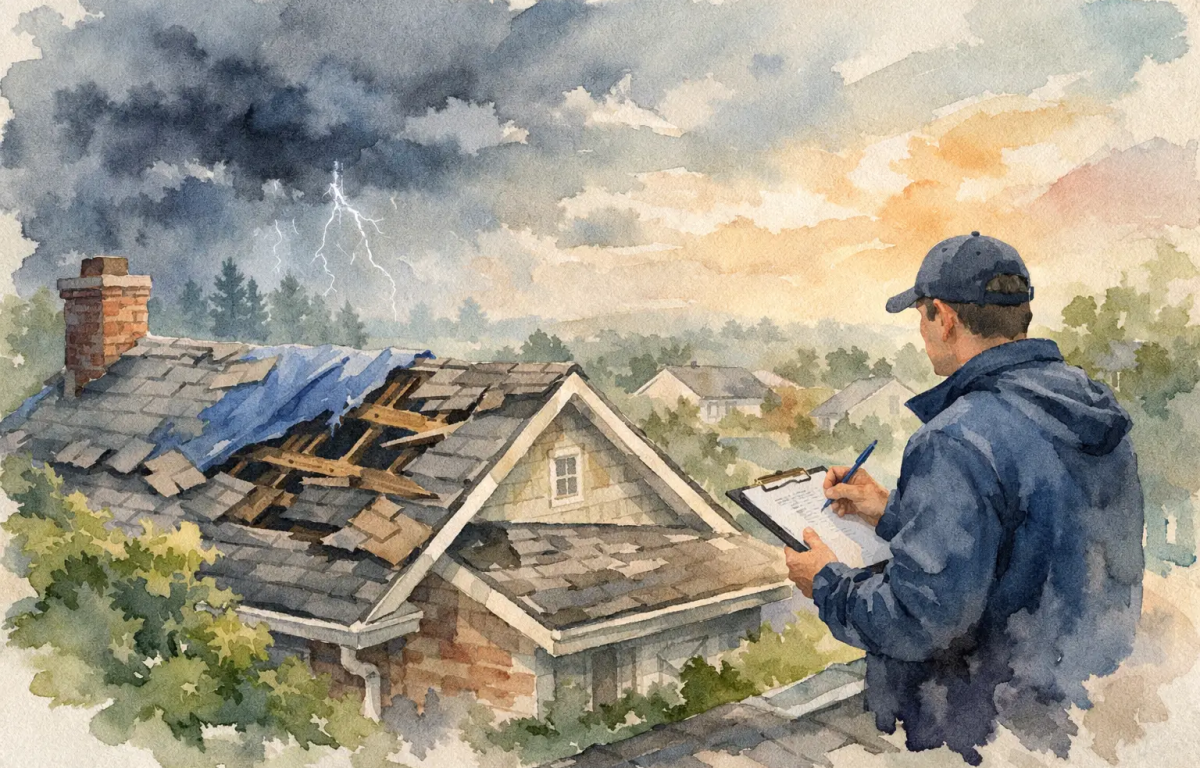
A hard storm can leave behind more than branches in the yard. A few missing shingles, a dented gutter, or a new ceiling stain can expose your home to bigger problems if water keeps getting in. Getting insurance claim roof damage help quickly gives you a clearer picture of what happened, what needs immediate attention, and what your policy may cover.
For homeowners across Laurens, Anderson, Greenwood, Greenville, and Spartanburg, the best first move is not guessing at the damage from the ground. It is protecting the property, documenting the facts, and getting a qualified local roofing inspection before small storm damage becomes a costly interior repair.
Insurance Claim Roof Damage Help Starts With the Right First Steps
Safety comes first. Stay off the roof, especially after high winds, hail, or heavy rain. Storm-damaged shingles can be loose, wet decking can be unstable, and downed power lines may be hidden by debris. If water is actively entering the home, move furniture and valuables away from the affected area, place containers under drips, and call for emergency protection such as tarping if needed.
Then document what you can see from a safe position. Take wide photos of the home and close-up photos of visible damage, including shingles in the yard, fallen limbs, dented gutters, damaged siding, bent vents, and interior water spots. Make a short note of the storm date, the time you first noticed damage, and any steps you took to limit further loss.
This documentation does not replace a professional inspection, but it can help establish a timeline. Keep receipts for reasonable emergency measures, such as temporary tarping or water mitigation. Most insurance policies require homeowners to take reasonable steps to prevent additional damage after a loss.
Do not throw away damaged materials until your insurer or contractor advises you to do so. A broken shingle, damaged flashing, or piece of dented metal may help show the type and severity of the storm impact.
What a Storm Damage Roof Inspection Should Cover
Not all roof damage is obvious. Wind can lift or crease shingles without blowing them completely off. Hail can bruise asphalt shingles, crack skylight components, dent metal vents, and affect gutters or siding. Water may enter around flashing, pipe boots, valleys, or roof penetrations long before a stain appears on the ceiling.
A thorough inspection should look at the full exterior system, not just the most visible spot. That includes shingles or other roofing material, flashing, ridge caps, vents, gutters, downspouts, fascia, trim, siding, and skylights. The inspector should also look for signs of leaks in the attic or upper interior areas when accessible.
Ask for clear findings and photos. A dependable contractor should explain the difference between fresh storm damage, normal aging, installation issues, and wear that may not be covered by insurance. That distinction matters. Insurance is generally designed for sudden, accidental storm damage, not maintenance problems caused by an aging roof or long-term neglect.
A detailed written proposal also gives you a practical baseline. You should understand whether the roof needs a targeted repair, temporary protection, or a full replacement. The right answer depends on the damage pattern, the roof’s age and condition, local code requirements, and what your policy allows.
Repair or Replacement: It Depends on the Damage
A small, isolated area of wind damage may be repairable if matching materials are available and the surrounding roof is in good condition. A repair can be the sensible option when it restores the roof’s weather protection without disturbing sound materials.
Replacement may make more sense when damage is widespread, shingles are brittle or discontinued, multiple slopes are affected, or repairs would leave the roof vulnerable to future leaks. Local building codes can also affect the scope of work, particularly when a large portion of the roof is being replaced.
The goal is not to push a homeowner toward the biggest job. It is to restore a sound, code-conscious exterior that protects the home through the next storm season.
How the Roof Insurance Claim Process Usually Works
Once you have documented the damage and arranged an inspection, contact your insurance carrier to report the loss. Have your policy number, storm date, address, and a simple description of the damage ready. The carrier will open a claim and may schedule an adjuster inspection.
The insurance adjuster represents the carrier and evaluates the reported damage under the terms of your policy. Your contractor represents your interests as the property owner by providing inspection findings, measurements, photos, and a repair or replacement scope. Those roles are different, and both are part of a well-managed claim.
If possible, have your roofing contractor present when the adjuster inspects the property. This allows the contractor to point out damage that may be difficult to see from the ground and discuss the materials and work required to restore the roof correctly. It does not guarantee approval, but it can reduce misunderstandings and help ensure the inspection considers the full scope of storm-related damage.
After the inspection, the carrier may provide an estimate or settlement summary. Review it carefully. Look for the roofing materials, labor, tear-off, flashing, ventilation, gutters, and other exterior items that may have been included or left out. If the approved scope does not match documented damage, your contractor can help identify legitimate differences and provide supporting information for review.
Do not sign an assignment of benefits or any agreement you do not understand. A clear contractor agreement should explain the proposed work, materials, payment expectations, insurance-related process, and what happens if the claim is denied or only partially approved.
Understand Your Deductible and Policy Details
Your deductible is the amount you are responsible for paying before insurance funds apply. It is not a discount a contractor can simply make disappear. Be cautious of anyone who offers to waive, cover, or hide your deductible. That can create problems with the claim and may put the homeowner at risk.
Coverage also varies by policy. Some policies pay replacement cost value, while others may account for depreciation based on the roof’s age. Some have separate wind or hail deductibles. There may be limits or exclusions for certain materials, cosmetic damage, older roofs, or pre-existing conditions.
Your insurer can explain your policy language. A local storm restoration contractor can explain the condition of your roof, what the repair process involves, and whether the carrier’s scope appears to address the visible storm damage. Keep those responsibilities separate and expect straight answers from both sides.
Avoid Costly Mistakes After a Storm
Storm chasers often arrive quickly after major weather events. Some may be legitimate, but homeowners should slow down before signing paperwork. A truck in the neighborhood is not proof of licensing, insurance, workmanship standards, or local accountability.
Before choosing a contractor, verify that they are licensed where required, bonded and insured, experienced with storm restoration, and willing to provide a written proposal. Ask who will manage the project, how the property will be protected during construction, and how cleanup will be handled. Roofing work affects your home, landscaping, driveway, and daily routine. You deserve a contractor who treats the entire property with care.
Also avoid waiting too long because the leak seems minor. Water can travel along roof decking, framing, insulation, and drywall before it becomes visible. What starts as a small drip can lead to damaged ceilings, mold concerns, and more extensive repairs.
A Local Partner Makes the Process Easier
A storm claim can feel like one more job piled onto an already stressful week. The right contractor brings order to the process: inspect the exterior, document the damage, provide a written scope, meet with the adjuster when appropriate, complete the work, and clean up the site.
Extreme Roofing helps Upstate South Carolina homeowners restore roofs, gutters, siding, trim, and skylight areas after severe weather. The focus is simple: respond quickly, explain the condition of your home in plain language, and manage the work with the accountability your property deserves.
If your roof has been through a recent storm, do not wait for a ceiling stain to make the decision for you. A professional inspection can give you the facts, protect your home from further exposure, and help you move forward with confidence.