
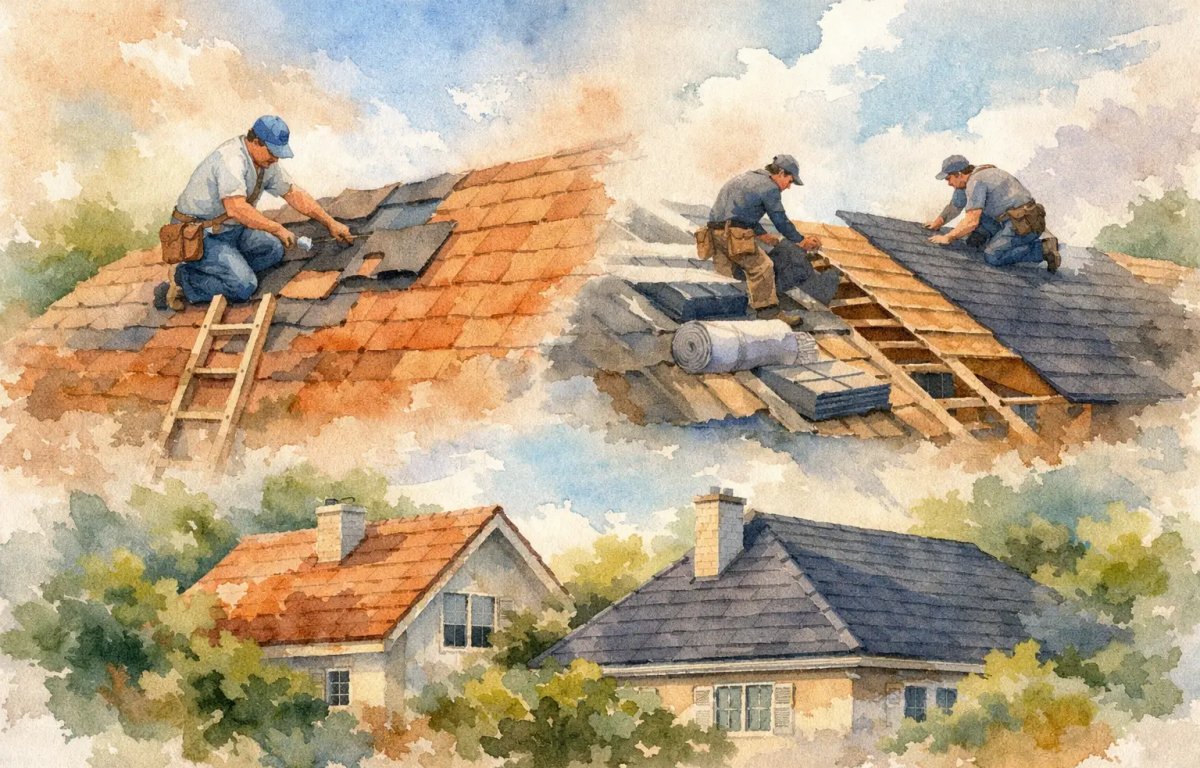
A few shingles in the yard after a thunderstorm may look like a small problem. A brown ceiling stain, granules collecting in the gutter, or a soft spot near the roof edge can signal something more serious. For Upstate South Carolina homeowners, choosing roof repair or reroofing is not just about the immediate cost. It is about stopping water intrusion before it affects insulation, framing, ceilings, and the value of the home.
The right answer depends on the condition of the entire roof, not only the damage you can see from the driveway. A careful inspection should identify whether the issue is isolated, whether a storm affected multiple areas, and whether the existing roof still has enough useful life to justify a repair.
When Roof Repair Is the Smart Move
Roof repair makes sense when damage is limited and the rest of the roofing system is in sound condition. A missing shingle from a wind gust, a damaged pipe boot, loose flashing around a chimney, or a small leak near a vent can often be repaired without replacing the whole roof.
The age of the roof matters. If a roof is relatively new, has no widespread granule loss, and shows no repeated leaking, a targeted repair may protect the home for years. This approach usually costs less upfront and avoids replacing materials that are still doing their job.
A repair should still match the existing roof as closely as possible. On older shingles, an exact color match may not be available because sun exposure changes the appearance of roofing over time. That does not automatically mean replacement is necessary, but it is a practical trade-off homeowners should understand before approving the work.
Repairs are also appropriate when the source of a leak is clearly identified. Water does not always enter a home directly above the stain. It can travel along decking or framing before appearing inside. That is why patching a visible spot without tracing the actual entry point can lead to another leak during the next hard rain.
Signs a Repair May Only Delay a Bigger Problem
A repair is not a bargain if it only buys a few months before another section fails. When problems are spread across the roof, replacement may be the more responsible investment.
Watch for several warning signs at once: widespread missing, cracked, or lifted shingles; heavy granule loss; exposed nail heads; sagging roof areas; repeated leaks; and visible storm strikes across multiple slopes. If repairs have become a regular expense, the roof may be nearing the end of its service life.
Storm damage deserves special attention. Hail can leave bruises or fractures that are difficult to spot from the ground. Strong wind can break the seal between shingles even when they remain in place. Those weakened areas may leak later, long after the storm has passed and after the homeowner has forgotten about the event.
The condition of the decking and ventilation also affects the decision. A roof that has trapped moisture, poor attic airflow, or deteriorated decking needs more than a surface patch. Addressing those underlying conditions during a larger project can help the new roof perform as intended.
Roof Repair or Reroofing: Know What “Reroofing” Means
Homeowners often use reroofing to mean any full roof replacement. Contractors sometimes use it more specifically to describe installing a new layer of shingles over an existing layer. Those are not always the same project, so ask for clear language in the written proposal.
A full replacement involves removing existing roofing materials, inspecting the roof deck, making necessary repairs, and installing a new roofing system. It provides the clearest view of what is underneath the old shingles. If hidden water damage, soft decking, or failing flashing is present, it can be corrected before the new materials go on.
An overlay, sometimes called a reroof, places new shingles over old ones when conditions and local requirements allow it. It can reduce labor and disposal costs, but it also has limitations. It adds weight, may hide problems below, and can make future repairs more difficult. It may not be suitable for a roof with existing damage, uneven surfaces, multiple old layers, or active leaks.
For most storm-damaged roofs, removal and replacement is often the more thorough path because the deck and all critical flashing areas can be inspected. Still, the best option depends on the roof’s history, structure, material condition, and the scope of the damage. A contractor should explain why a recommended approach fits your home instead of giving a one-size-fits-all answer.
Consider the Full Cost, Not Just Today’s Price
Repair is generally less expensive than replacement, especially when the issue is truly isolated. But comparing estimates only by the total at the bottom can be misleading. A lower repair price may not account for additional weak areas that could fail in the next storm season.
A replacement costs more because it involves more material, labor, protection of the property, debris removal, and installation of a complete system. It can also provide a fresh warranty and remove the uncertainty of an aging roof. For a homeowner planning to stay in the house, that predictability can be valuable.
Think about the cost of waiting as well. A small roof leak can damage drywall, paint, flooring, electrical components, and belongings. Moisture in an attic may encourage mold growth and reduce insulation performance. The expense of interior restoration can quickly exceed what an early roof repair would have cost.
Ask every contractor for a written scope of work. It should identify the damaged areas, materials to be used, flashing work, ventilation considerations, cleanup expectations, and any decking repairs that may be needed once the roof is opened. Clear documentation helps you compare proposals fairly.
How Insurance Can Affect the Decision
If wind or hail caused the damage, homeowners insurance may help cover a repair or replacement, subject to the policy deductible and the insurer’s findings. Normal aging, wear, poor maintenance, and pre-existing issues are commonly treated differently than sudden storm damage.
Do not assume that a leak is too small to inspect or that visible damage tells the whole story. A professional storm inspection can document damaged shingles, flashing, gutters, siding, and other exterior components. Photos and a detailed assessment give you a stronger starting point when speaking with your insurance carrier.
The claims process can feel frustrating, especially after a widespread storm when adjusters and contractors are busy. Keep records of the storm date, take photos before temporary repairs are made when it is safe to do so, and save receipts for emergency mitigation. If a tarp or temporary repair is needed to prevent additional damage, act promptly.
A qualified local contractor can help explain the damage and prepare documentation, but the insurance company makes the final coverage decision. Be cautious of anyone who promises approval, tells you to avoid reading your policy, or pressures you to sign before you understand the scope of work.
Start With an Inspection, Not a Guess
The most dependable way to decide is to have the entire roofing system inspected. That includes shingles, ridge caps, valleys, vents, flashing, penetrations, gutters, attic conditions when accessible, and signs of interior moisture. A good inspection separates urgent issues from cosmetic concerns and gives you a practical path forward.
Extreme Roofing works with homeowners across Laurens, Anderson, Greenwood, Greenville, and Spartanburg to assess storm-related exterior damage, explain the findings plainly, and manage repairs or replacement work with clear project oversight. Whether the answer is a focused repair or a full replacement, the goal is the same: protect your home without paying for work you do not need.
If a recent storm has left you uncertain, do not wait for the next heavy rain to make the decision for you. Get the roof checked, keep the documentation, and choose the solution that protects the whole home – not just the shingle you can see from the ground.