
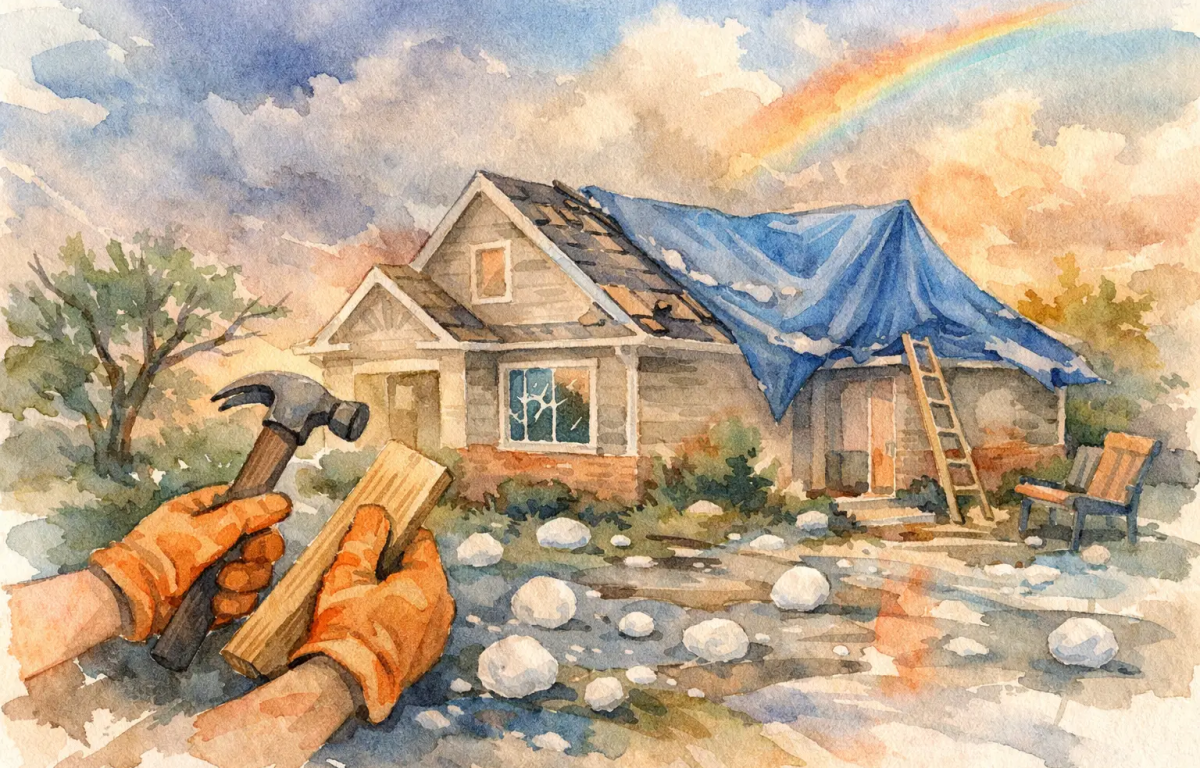
Hail can hit hard and leave just as quickly, but the damage it causes may not be obvious from the driveway. A roof can look mostly intact while bruised shingles, cracked flashing, dented gutters, and loosened siding create pathways for future leaks. Knowing how to protect home after hailstorm damage starts with acting safely, documenting what happened, and getting a qualified inspection before a small issue becomes a major repair.
For homeowners across Upstate South Carolina, the goal after a storm is simple: prevent further damage, protect your insurance claim, and make informed decisions about repairs.
Start With Safety and Prevent Immediate Water Damage
Do not climb onto the roof after a hailstorm. Wet roofing, loose shingles, and hidden weak spots make it dangerous, even for an experienced homeowner. Check the exterior from the ground instead, using binoculars if needed. Look for shingles on the lawn, metal pieces near downspouts, cracked skylights, bent gutters, damaged window screens, and dents on vehicles or outdoor equipment.
Inside, walk through the attic and upper rooms with a flashlight. Look for fresh water stains, dripping, damp insulation, or daylight showing through the roof deck. Water may travel along framing before it appears on a ceiling, so inspect around chimneys, vents, skylights, and exterior walls as well.
If water is entering the home, move furniture, electronics, rugs, and valuables away from the affected area. Use buckets to catch active drips and place towels around the area to reduce spreading water. If ceiling drywall is sagging or bulging, stay clear of it. A water-loaded ceiling can fail without much warning.
Temporary protection is appropriate when it prevents further loss. A professional can secure exposed areas with a properly installed tarp or emergency covering. Avoid driving nails, screws, or staples into roofing material yourself unless there is no safer option. Improvised repairs can cause additional damage and may complicate the permanent repair process.
Document Hailstorm Damage Before You Clean Up
Photographs and notes can make a real difference when you file an insurance claim. Take wide photos of the home from several angles, then take closer photos of visible damage. Capture hailstones next to a ruler or common object for size reference if they are still present. Photograph damaged gutters, downspouts, window trim, siding, fencing, screens, outdoor HVAC units, and personal property.
Write down the date and approximate time of the storm, along with what you observed. If you notice a leak, record where it appeared and when. Keep receipts for reasonable emergency expenses, such as a temporary tarp, water removal, or supplies used to protect the home.
Do not throw away damaged materials or begin major repairs before the insurer has had an opportunity to review the loss, unless work is necessary to stop ongoing water intrusion. Your responsibility is to mitigate damage, not to leave the home exposed while waiting for an adjuster.
How to Protect Your Home After a Hailstorm With a Professional Inspection
A hail impact does not always create an obvious hole. On asphalt shingles, it can knock away protective granules or bruise the mat beneath the surface. Those weak points can shorten the roof’s service life and make it more vulnerable during the next heavy rain or wind event.
A thorough storm inspection should look beyond the roof field. Hail can damage ridge caps, pipe boots, flashing, vents, skylights, gutters, fascia, soffit, siding, and trim. On older roofs, hail may expose existing wear that needs attention even if a full replacement is not necessary.
This is where a local storm restoration contractor can provide clarity. Ask for a detailed assessment of what was found, photographs of damage where possible, and a written proposal that explains the recommended scope of work. A dependable contractor should be licensed, bonded, and insured, and should not pressure you to sign a contract before you understand the findings.
At Extreme Roofing, homeowners can receive a detailed exterior inspection and practical guidance on the next steps, whether the property needs a focused repair, temporary protection, or a full restoration plan.
Contact Your Insurance Company, but Understand the Process
Notify your insurer promptly after you discover possible hail damage. Be ready to provide the storm date, your photos, a description of visible issues, and details about any emergency measures taken to prevent further damage. Ask about your deductible, claim deadline, and whether the insurer wants an adjuster to inspect the property before repairs begin.
An insurance adjuster’s inspection is a key part of the claim process, but it is not the same as having your own contractor assess the home. Adjusters work to evaluate the reported loss for the carrier. A qualified restoration contractor can identify damaged exterior components, prepare a clear repair scope, and help you understand questions that arise during the claim.
Avoid assumptions in either direction. Not every hailstorm results in covered roof damage, and not every dent in a gutter means the roof needs replacement. Coverage depends on your policy, the condition of the property, the documented damage, and the insurer’s findings. The right approach is evidence, not guesswork.
Be cautious of anyone who promises to waive your deductible, guarantees insurance approval, or insists that you sign immediately after a storm. Reputable contractors explain the work, provide documentation, and give you room to review the agreement.
Check the Parts of the Exterior Homeowners Often Miss
The roof deserves attention, but it is not the only part of the home that can be compromised. Gutters may be dented, pulled loose, or clogged with shingle granules and debris. If they cannot move water away from the house, rain can overflow near the foundation or back up under the roof edge.
Siding and trim can develop cracks, chips, and impact marks that allow moisture behind the exterior surface. Damaged window screens, cracked glazing beads, and bent metal wrap may seem minor, but they can affect appearance, weather resistance, and future maintenance costs. Skylights need careful inspection because hail cracks can be difficult to spot until water gets through.
After the initial assessment, clear loose branches and debris from the yard and drainage areas. Do not use a pressure washer on the roof or attempt to scrub away suspected hail marks. That can remove more protective granules and worsen the problem.
Make Repairs That Solve the Cause, Not Just the Symptom
A stain on the ceiling is not the repair. It is evidence that water found a way past your home’s exterior defenses. The repair needs to address the damaged roofing, flashing, skylight, siding, or drainage component that allowed water in.
For limited damage, a targeted repair may be the right and most cost-effective answer. If hail impacts are widespread, shingles are brittle, or the roof has multiple compromised areas, replacement may offer better long-term protection. The decision depends on the age and condition of the roof, the extent of storm damage, matching material availability, and the requirements of your insurance policy.
Ask your contractor what materials will be used, how nearby landscaping will be protected, who will manage the project, and how cleanup will be handled. A well-managed exterior restoration should leave your property protected and your yard clear of roofing debris and stray nails.
Keep Watching Your Home After the Storm
Some hail-related issues show up after the first few rains. Over the following weeks, check ceilings, attic spaces, and upper walls for new stains or musty odors. Watch gutters during rainfall to make sure water is flowing through downspouts instead of spilling over the edge. If you see a new concern, document it and report it promptly.
A hailstorm is stressful, but quick, level-headed action protects more than shingles. Protect the home, keep strong records, and work with professionals who explain the work clearly. That gives your family the best chance to move forward with a dry, secure home and confidence in the repairs being made.