
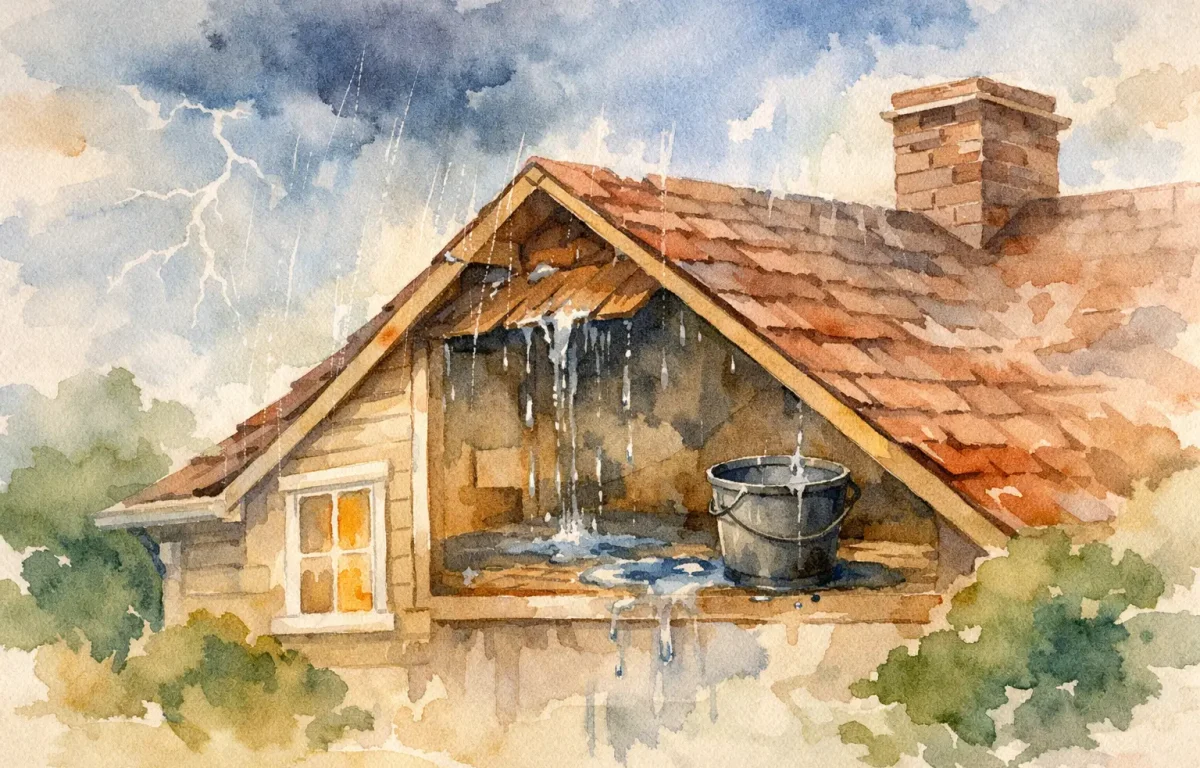
A roof leak rarely starts as a big dramatic event. More often, it shows up as a brown ceiling stain after a hard rain, a drip in the attic, or wet insulation you did not know was soaked until the damage spread. When that happens, one of the first questions homeowners ask is simple: does homeowners insurance cover roof leaks? The short answer is yes, sometimes. The real answer depends on what caused the leak, how quickly you respond, and whether the damage came from a sudden event or a problem that built up over time.
For homeowners across Upstate South Carolina, that distinction matters. Storms, hail, high winds, and heavy rain can damage shingles, flashing, gutters, and decking in a single afternoon. Insurance policies often cover sudden and accidental damage. They are far less likely to cover neglect, wear and tear, or an older roof that has simply reached the end of its service life.
When does homeowners insurance cover roof leaks?
In most cases, homeowners insurance covers roof leaks when the leak is tied to a covered peril. That usually means something sudden and unexpected damaged the roofing system and allowed water in. Think wind lifting shingles, hail bruising the roof surface, a falling tree limb punching through, or storm damage around vents, flashing, or skylights.
If a thunderstorm moved through Greenville, Anderson, or Spartanburg and your roof started leaking right after, there is a strong chance the cause may fall under your policy’s covered events. The same goes for hail impacts that crack shingles or tear away protective granules, even if the leak does not show up until the next heavy rain.
Coverage usually applies to the damaged portion of the home as well. That can include roof repairs or replacement depending on the extent of the loss, plus related interior damage such as wet drywall, insulation, paint, or flooring. The exact payout depends on your policy language, deductible, depreciation rules, and whether your insurer pays actual cash value or replacement cost.
When roof leak claims are often denied
This is where many homeowners get frustrated. Insurance is built to cover sudden damage, not maintenance issues. If the adjuster finds that the leak came from old age, cracked sealant, worn pipe boots, rotted decking, poor installation, or years of deferred repairs, the claim may be denied.
A few common examples cause problems. If shingles have been curling for years and finally let water in, that is usually considered wear and tear. If flashing around a chimney has been separating slowly and no one repaired it, that often falls under homeowner responsibility. If gutters were clogged and water backed up into the roof edge, insurers may argue the damage was preventable.
The timing matters too. Even if the original cause was storm-related, waiting too long can complicate a claim. Insurance companies expect homeowners to take reasonable steps to prevent further damage. If the roof leaked for weeks and no tarp, mitigation, or repair effort was made, the insurer may limit what they pay for the secondary damage.
The cause of the leak matters more than the leak itself
That is the key point. Insurance companies do not usually decide claims based only on the fact that water entered your home. They look at why it happened.
A roof leak caused by a sudden windstorm is very different from a roof leak caused by a 22-year-old shingle roof nearing failure. From the homeowner’s point of view, both are urgent. From the insurer’s point of view, one may be a covered loss and the other may be routine upkeep.
That is why a detailed inspection matters early. You need to know whether the issue points to hail strikes, lifted shingles, storm-created openings, damaged flashing, punctures from debris, or long-term deterioration. Clear documentation helps separate a valid insurance claim from a repair bill that will likely be out of pocket.
What to do as soon as you notice a leak
First, protect the inside of the home. Move furniture, place buckets under active drips, and dry what you can safely reach. If water is spreading through ceilings or light fixtures, treat it as a safety issue and cut power to the affected area if needed.
Next, document everything. Take photos of the ceiling stain, attic moisture, visible drips, damaged shingles if you can see them from the ground, and any debris from a recent storm. Write down the date you first noticed the issue and the approximate date of the storm or event that may have caused it.
Then arrange for a professional roof inspection as quickly as possible. A proper inspection can identify whether the leak is likely tied to storm damage, flashing failure, hail impact, missing shingles, or a different source entirely. In storm-prone areas of Upstate South Carolina, quick action can keep a small leak from turning into major decking, insulation, and mold problems.
If storm damage appears likely, contact your insurance company promptly. Be factual and specific. Report what you observed, when you noticed it, and whether a recent storm may have caused the problem. Avoid guessing about the final scope before an inspection is complete.
How insurance companies evaluate roof leak claims
Most insurers send an adjuster to inspect the property, although the process varies. The adjuster will usually look for signs of covered damage, signs of age-related deterioration, prior repairs, and any evidence that the issue existed before the claimed event.
They may also review the age of the roof and your policy terms. Some policies place limits on older roofs or calculate payment based on depreciated value instead of full replacement cost. That does not mean an older roof is never covered. It means the amount paid, and what is covered, may differ from a newer roofing system.
This is one reason many homeowners want an experienced contractor involved early. A contractor who understands storm damage can help identify what the adjuster should be looking at, including collateral damage to vents, ridge caps, flashing, gutters, siding, or skylights. In many cases, the leak you see inside is only one symptom of a larger storm-related loss.
Does homeowners insurance cover roof leaks from storms in South Carolina?
Often, yes. In South Carolina, wind-driven rain, hail, and fallen branches are common causes of roof damage, especially during severe weather season. If those events create an opening in the roof and water enters as a result, homeowners insurance often provides coverage subject to your deductible and policy terms.
But there is a trade-off to understand. Not every leak after a storm is automatically storm damage. Sometimes a storm exposes an existing weakness rather than creating a new one. For example, if flashing was already failing and heavy rain simply revealed the issue, coverage becomes less certain. The facts on the roof matter more than the timing alone.
That is why local experience helps. A contractor who works regularly in Laurens, Greenwood, Greenville, Anderson, and Spartanburg knows what storm patterns typically do to roofing systems in this region and how to document those findings clearly.
Repair first or file the claim first?
In an emergency, stop the leak first. Temporary protection like tarping or immediate mitigation is usually the right move if active water intrusion is threatening the home. Insurance companies generally expect homeowners to prevent further damage, and waiting for perfect paperwork while water keeps entering can make things worse.
That said, avoid making permanent repairs before the damage is documented unless safety leaves no choice. If you replace damaged sections too quickly, it may be harder to show the insurer what happened. The best approach is usually to document the damage, perform emergency mitigation, and move through the claim process with support from a qualified roofing professional.
What homeowners get wrong about roof leak coverage
The biggest mistake is assuming a leak is either always covered or never covered. Neither is true. The answer depends on cause, condition, timing, and documentation.
Another common mistake is focusing only on the interior stain. Water can travel along decking, rafters, insulation, and wall cavities before it appears inside. The spot on your ceiling may be several feet away from the actual roof damage. A surface-level guess can miss the real cause.
Homeowners also sometimes wait because the leak seems minor. That delay can lead to bigger repair costs and harder insurance conversations. Small leaks do not stay small for long in humid conditions.
A practical way to think about it
If the leak came from sudden storm damage, there is a good chance insurance may help. If it came from age, neglect, or long-term wear, it probably will not. The challenge is proving which one you are dealing with before more damage spreads.
That is where a thorough inspection and solid documentation make all the difference. Companies like Extreme Roofing work with homeowners through that process every day, helping identify storm-related damage, protect the home quickly, and support clear communication during the claim.
If your roof is leaking after a storm, do not assume and do not wait. Get the roof checked, protect the home, and make decisions based on what the damage actually shows. A fast, informed response can save you money, protect your house, and take a lot of stress out of an already stressful situation.