
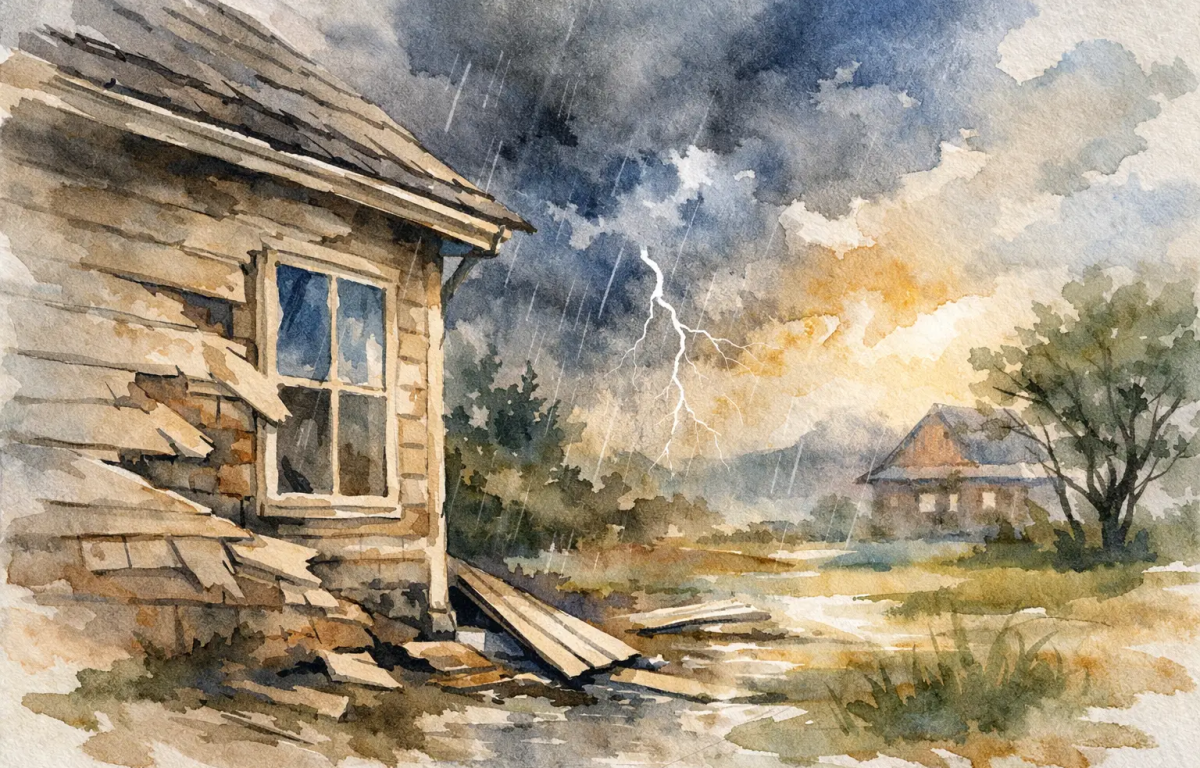
A hard Upstate South Carolina storm can leave more behind than scattered branches and a few loose shingles. Wind-driven rain, hail, and flying debris can damage siding in ways that are easy to miss from the yard. This guide to storm damaged siding helps homeowners recognize the warning signs, protect the home from further exposure, and make smart decisions before a small exterior problem becomes costly interior damage.
Start With Safety and a Ground-Level Check
After severe weather, do not rush onto a ladder or pull at loose siding panels. Damaged sections may be unstable, and downed power lines, broken tree limbs, and wet ground create real hazards. Start with a walk around the home once conditions are safe.
Look for obvious signs such as cracked, split, warped, or missing panels. Vinyl siding may show dents, punctures, or pieces pulled loose at the seams. Fiber cement siding can crack or chip after impact. Wood siding may split, loosen, or begin absorbing water through damaged paint and exposed edges.
Pay close attention to corners, areas around windows and doors, gable ends, and the wall beneath rooflines. These spots take a heavy hit from wind and rain. If you find loose material, take clear photos from the ground and avoid trying to force it back into place.
A few clues commonly point to storm damage:
- Dents, bruises, cracks, holes, or impact marks from hail or debris
- Panels that are bent, bowed, buckled, lifted, or missing entirely
- Loose trim, soffit, fascia, shutters, or exterior light fixtures
- Water stains, damp drywall, peeling paint, or a musty smell inside
- Granules, siding pieces, or trim fragments collecting near the foundation
Not every mark means the entire wall needs replacement. A professional inspection determines whether the damage is cosmetic, localized, or severe enough to compromise the weather barrier behind the siding.
Why Storm-Damaged Siding Needs Prompt Attention
Siding is not just there for curb appeal. It works with your trim, flashing, house wrap, and roof system to direct water away from the structure. When a panel cracks or separates, wind-driven rain can get behind it. That moisture may reach sheathing, insulation, framing, and interior walls before you see a visible leak.
This is especially concerning after repeated storms. A single small opening can allow water in during every heavy rain, creating conditions for rot, mold growth, and damaged insulation. Repairing a loose panel early is usually much simpler than replacing deteriorated sheathing or addressing hidden moisture in a wall cavity.
Wind damage can also spread. Once one siding panel comes loose, the next strong gust may catch its edge and pull more material away from the home. Temporary protection can help, but it should not replace a proper repair.
What to Do in the First 24 to 48 Hours
Your first priority is preventing additional damage while preserving evidence of what happened. Take wide photos of each side of the house, then move closer for detailed photos of cracks, dents, displaced panels, damaged gutters, roof damage, and debris. If possible, photograph the date-stamped weather alert or note the storm date and approximate time.
Next, check the interior walls and ceilings that sit behind the damaged area. Look in closets, around windows, and near exterior outlets for moisture stains or soft drywall. If water is entering the home, move furniture and valuables away from the affected wall. Use towels or containers to manage active water, but do not ignore the source.
Avoid throwing away damaged siding pieces, torn screens, or fallen trim until the damage has been documented. These materials may help support an insurance claim. Keep receipts for reasonable emergency measures, such as temporary covering or water mitigation, and ask your insurer what documentation they require.
If siding has blown off, is allowing water inside, or has exposed wood or sheathing, call a licensed exterior contractor quickly. A qualified contractor can assess the full exterior, recommend appropriate temporary protection, and identify related damage that may not be visible from the ground.
How to Tell Repair From Replacement
The right solution depends on the siding material, the age of the installation, the location of the damage, and whether water has gotten behind the wall covering. A small number of damaged vinyl panels may be repairable if matching material is available and the surrounding panels are secure. The same can be true for isolated cracks in fiber cement or wood siding.
Replacement becomes more likely when storm damage affects multiple elevations, panels are brittle from age, matching materials are unavailable, or the underlying wall system has been exposed. Color matching can also be difficult. Even if the same product line still exists, older siding may have faded from sun exposure. A replacement panel can look noticeably different from the rest of the wall.
There is also a practical trade-off to consider. Spot repairs may cost less upfront, but they are not always the best long-term value if widespread wind damage, repeated moisture intrusion, or aging materials are present. An inspection should explain both options clearly, including what is damaged now and what could fail next.
A Guide to Storm Damaged Siding Insurance Claims
Homeowners insurance may cover sudden storm damage from wind, hail, or falling debris, but coverage depends on your policy, deductible, exclusions, and the cause of loss. Normal wear, long-term moisture damage, poor maintenance, and pre-existing deterioration are often treated differently from a documented storm event.
Start the claim process by reviewing your policy and contacting your carrier promptly. Provide the storm date, photos, a description of the damage, and information about any emergency steps taken to protect the property. Be accurate and direct. Do not guess about the extent of hidden damage before an inspection has been completed.
A detailed contractor inspection can be valuable because siding damage often appears alongside roof, gutter, fascia, trim, or window damage. An exterior restoration professional can document visible conditions, create a written proposal, and help you understand the scope of work. The insurance company makes coverage decisions, but strong documentation gives the adjuster a clearer picture of the damage.
Be cautious with anyone who promises to cover your deductible, pressures you to sign immediately, or offers a storm repair price without inspecting the property. After major weather events, homeowners often hear from out-of-town crews. Local accountability, proper licensing, insurance, written scope details, and a clear point of contact matter when your home is open to the weather.
Questions to Ask Before Hiring a Siding Contractor
The contractor you choose should be prepared to explain what they found, what needs immediate attention, and what can wait. Ask whether the inspection includes the roof, gutters, trim, flashing, and areas around windows and doors. Storm damage rarely stays limited to one material.
You should also ask how the contractor will protect landscaping, remove old materials, manage cleanup, and handle unexpected findings behind the siding. If replacement is recommended, ask about product options, color availability, ventilation details, water-resistive barriers, trim work, and warranty coverage.
A written proposal should separate repairs from replacement work and make the project scope easy to understand. You deserve to know who will manage the work, how long it is expected to take, and how the crew will communicate if weather delays the schedule.
For homeowners across Laurens, Anderson, Greenwood, Greenville, and Spartanburg, Extreme Roofing provides storm-focused inspections and exterior restoration support designed to keep the process organized from the first assessment through final cleanup.
Do Not Forget the Parts Around the Siding
Siding performance depends on the details around it. Damaged gutters can overflow onto walls and saturate the area behind siding. Bent fascia or loose soffit can leave roof edges exposed. Failed caulk around windows, damaged flashing, or torn trim can create water entry points that look like siding problems from the inside.
That is why a full exterior inspection is more useful than checking a single cracked panel. The goal is not simply to make the wall look better. The goal is to restore the protective system that keeps wind and water outside where they belong.
If a storm has left you unsure about the condition of your siding, take photos, watch for interior moisture, and arrange a professional inspection before the next round of heavy rain. Fast action now can protect your home, your insurance documentation, and your peace of mind.