
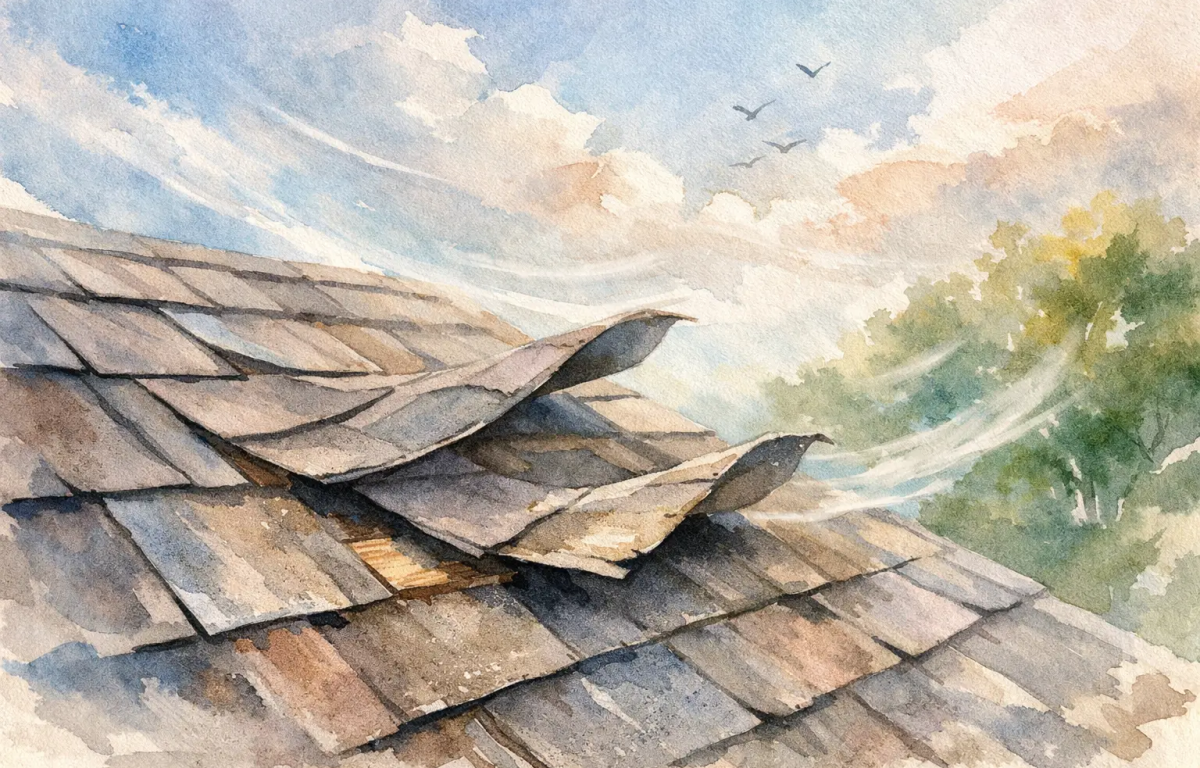
A strong thunderstorm can leave a roof looking perfectly normal from the driveway while loosening shingles in ways that invite the next hard rain inside. That is why knowing how to identify wind lifted shingles matters for homeowners across Upstate South Carolina. Catching the signs early can mean a focused repair instead of damaged decking, stained ceilings, or a larger insurance claim.
Wind lifting happens when gusts get beneath the exposed edge of an asphalt shingle. The force can break its seal, bend the shingle backward, loosen fasteners, or crease the material near the nail line. Sometimes the shingle settles back into place afterward, but it may no longer provide the same protection against wind and water.
How to Identify Wind Lifted Shingles From the Ground
Start with a careful walk around your home after the storm has passed and conditions are safe. Stand far enough back to see the roof planes from several angles. Morning or late-afternoon sunlight is especially helpful because raised edges and uneven areas create shadows that are easier to spot.
Look for shingles that sit higher than the surrounding rows, especially along ridges, eaves, and the corners of roof sections. A lifted shingle may have a visible curled edge, an uneven horizontal line, or a darker gap beneath it. On a roof that was previously flat and uniform, those small changes are worth attention.
Pay close attention to the side of the home that faced the strongest wind. In our area, storm winds may approach from different directions, so check every roof slope rather than assuming only the front or back of the house was affected. Wind can also wrap around corners and create strong uplift at roof edges, valleys, and near chimneys.
A pair of binoculars can help you inspect safely from the ground. Do not climb onto the roof to tug on shingles or lift their edges. Walking on a storm-damaged roof can cause additional damage, and a loose shingle or damp surface makes a fall far too likely.
The Most Common Signs of Wind Lift Damage
Wind damage does not always look like a missing shingle. In fact, a shingle that remains attached but has lost its seal is one of the easier problems to miss. Watch for these warning signs during your exterior check:
- Shingle tabs that are bent, curled, or lifted at the corners
- Creases or sharp horizontal folds across a shingle
- Exposed black adhesive strips where shingles should be sealed together
- Missing shingles, torn pieces, or bare areas on the roof deck
- Loose ridge caps along the peak of the roof
- Granules collecting in gutters, downspouts, or at the bottom of roof valleys
- Roofing nails that are visible, raised, or backed out
- Pieces of shingle material, flashing, or metal trim on the ground
Creasing deserves special attention. When a gust folds a shingle back, it can leave a line that resembles a crack or bend. Even if the shingle lays flat again, that crease can weaken the asphalt mat and shorten the shingle’s service life. It may be more vulnerable during the next round of wind, rain, and summer heat.
Granule loss can also support a wind-damage finding, but it should be viewed in context. Older shingles naturally shed some granules over time. A sudden concentration after a storm, especially near a roof area with lifted or torn shingles, is more concerning than a small amount of normal wear in a gutter.
Check Inside the Home, Too
Your attic and ceilings can reveal a problem that is not visible from the driveway. After a heavy storm, use a flashlight to look in the attic for damp insulation, dark wood, fresh water marks, or a musty smell. Check around roof penetrations such as vents, chimneys, skylights, and plumbing stacks, since wind can loosen surrounding shingles or flashing.
Inside living spaces, look for new ceiling discoloration, bubbling paint, damp spots near exterior walls, or water around window trim. A leak does not always appear directly below the damaged shingle. Water can travel along roof decking, framing, or insulation before it becomes visible.
If you see active water intrusion, move belongings away from the area and place a container under the drip if it is safe to do so. Avoid poking holes in ceilings or attempting a roof repair during wet or windy conditions. A qualified roofer can determine where water is entering and install appropriate temporary protection if needed.
Wind Lifted Shingles vs. Normal Wear
Not every uneven shingle is storm damage. Age, poor ventilation, heat exposure, manufacturing defects, and installation issues can all cause curling or distortion. The difference often comes down to the pattern and timing.
Normal aging usually appears gradually across broad areas of the roof. You may see widespread granule loss, brittle edges, or consistent curling on many shingles. Wind damage is more likely to be concentrated on one slope, near edges and ridges, or in a pattern that follows the storm’s direction. It may also include fresh creases, torn tabs, broken seals, or missing material.
There is also a middle ground. An older roof may already have wear, and a storm can make that condition worse. In those cases, the right solution depends on the extent of damage, the roof’s age, whether matching shingles are available, and whether repairs will restore reliable protection. A detailed inspection provides clearer answers than a quick glance from the yard.
Why a Broken Seal Should Not Be Ignored
Asphalt shingles are designed to bond together through adhesive strips. Once those seals are broken, a shingle can catch wind again and again. Each lift can stress the fasteners and surrounding shingles, creating a chain reaction during a future storm.
Broken seals can also allow wind-driven rain to reach places it should not. The damage may begin as a small issue under one tab, then spread to underlayment, decking, insulation, and interior finishes. Acting before the next storm is usually simpler and less costly than waiting for a visible leak.
This is particularly relevant in Upstate South Carolina, where spring and summer storms can bring sudden high winds, heavy rain, and hail. A roof needs to be ready for the weather that follows, not just the storm that already passed.
Document What You See Without Creating More Damage
If you suspect wind lift, take clear photos from the ground before debris is moved. Capture wide shots of each side of the home as well as close photos of shingles, gutters, downspouts, siding, screens, and any debris you find. Note the date of the storm and save photos of local weather alerts if you have them.
Do not patch, nail down, or apply roofing cement to lifted shingles before they are documented and inspected unless a professional advises you to take emergency protective action. Improvised repairs can make it harder to identify the original damage and may create new leaks. They can also complicate an insurance review.
A professional roof inspection should include more than a look at the most obvious area. The inspector should evaluate shingles, ridge caps, flashing, vents, valleys, gutters, and related exterior components. Ask for findings in writing, including whether the issue appears limited to repairable areas or whether broader restoration may be warranted.
When to Call a Roofing Professional
Call promptly if you see missing or creased shingles, exposed roof decking, loose ridge caps, interior water stains, or pieces of roofing material in your yard. It is also smart to schedule an inspection after a severe wind event even when damage is uncertain, particularly if your roof is older or has been repaired before.
A licensed, bonded, and insured local contractor can inspect the roof safely, document storm-related conditions, and explain the practical options. If an insurance claim may be appropriate, detailed photos and a written assessment can help you understand the damage before you make decisions. Extreme Roofing helps homeowners throughout Laurens, Anderson, Greenwood, Greenville, and Spartanburg move from inspection to restoration with clear communication and hands-on project oversight.
Your roof does not need to be missing half its shingles to need attention. If something looks uneven after the wind dies down, trust that instinct, keep your feet on the ground, and have it checked before the next storm tests the same weak spot.