
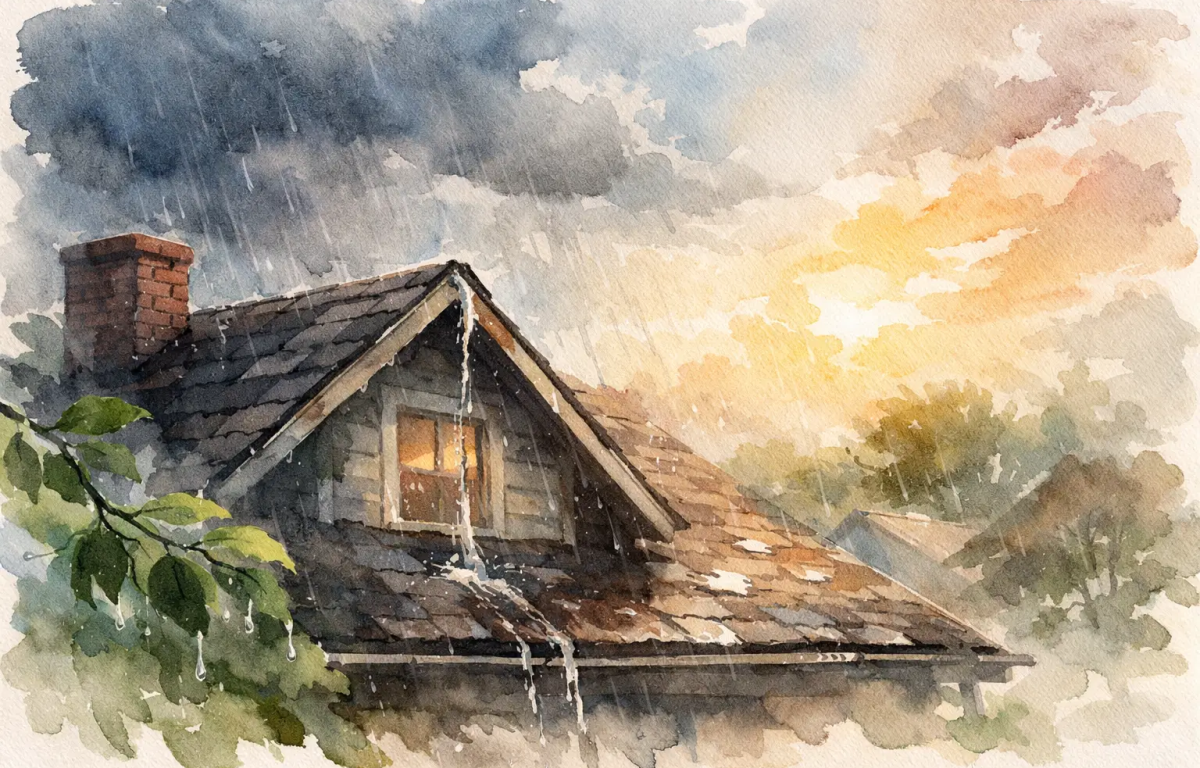
A storm can be over in 20 minutes, but the water damage it leaves behind can keep spreading for days. A few missing shingles, a bent flashing edge, or gutters packed with debris may be enough to let water into your attic, walls, and ceilings during the next rain. Knowing how to prevent leaks after storm damage gives you a chance to protect your home before a small exterior issue becomes a major restoration project.
For homeowners across Laurens, Anderson, Greenwood, Greenville, and Spartanburg, the first priority is safety. Do not climb onto a wet or damaged roof, walk beneath sagging ceilings, or touch electrical fixtures near active water. Start with a safe inspection from the ground and move quickly to control water inside the home.
Start With a Safe Post-Storm Inspection
Once lightning, high winds, and heavy rain have passed, walk around your property in daylight. Look for obvious signs that the roof or drainage system took a hit. You may spot shingles in the yard, loose metal trim, branches on the roof, damaged siding, or gutters pulling away from the fascia.
From inside, check the attic with a flashlight if it is safe and accessible. Look for wet insulation, dark wood, damp rafters, rusty nails, or daylight showing through the roof deck. In living spaces, watch for brown ceiling rings, bubbling paint, damp spots around windows, or water running down a wall. These signs do not always point directly to the leak’s source, but they tell you water has found a path inside.
Take clear photos and videos before moving debris or making temporary repairs. Documentation can help establish the storm-related condition of your property if you need to file an insurance claim. Photograph wide shots of each roof slope from the ground, then capture close-ups of fallen shingles, damaged gutters, interior stains, and any water you collect.
How to Prevent Leaks After a Storm Before Repairs Begin
The goal is to limit additional water intrusion until a qualified roofing contractor can inspect the home. Temporary protection is not a replacement for repair, but acting early can save drywall, flooring, insulation, and personal belongings.
Inside the house, place buckets or waterproof containers beneath active drips. Move furniture, electronics, rugs, and valuables away from the affected area. If water is pooling in a ceiling and creating a visible bulge, keep people out from beneath it. A ceiling can collapse when it becomes saturated. If you are confident the area is clear of electrical wiring or fixtures, carefully releasing the trapped water into a bucket may reduce the chance of a larger collapse. When in doubt, call a professional rather than taking the risk.
If water is entering around a window or exterior door, use towels to absorb moisture and remove standing water promptly. Run fans and a dehumidifier once the leak has stopped to reduce the risk of mold growth. Do not simply paint over a water stain. The source of the water needs to be identified and corrected first.
For exterior damage, avoid climbing onto the roof to install a tarp yourself. Wet shingles, loose decking, hidden punctures, and wind-damaged edges make roofs dangerous after storms. A professional can install an emergency tarp or temporary cover correctly, without creating more damage or compromising your safety.
Check the Areas Where Storm Leaks Often Start
A roof leak does not always begin in the middle of a roof field. In fact, many leaks start at transitions, penetrations, and drainage points where materials meet or water collects.
Missing, Lifted, or Cracked Shingles
High winds can break the seal between shingles or pull them loose completely. Even if a shingle remains in place, a lifted edge can allow wind-driven rain underneath. Water may travel along the underlayment or roof deck before appearing inside, which is why the ceiling stain may be several feet from the actual damage.
Flashing Around Chimneys, Vents, and Skylights
Flashing is the metal material that directs water away from vulnerable roof openings. Storms can bend it, loosen fasteners, or break the sealant around it. Chimneys, plumbing vents, attic vents, and skylights deserve close attention after severe weather because a small failure in these areas can create a persistent leak.
Gutters, Downspouts, and Fascia
Gutters are part of your roof’s water-management system. When branches, leaves, or shingle grit block them, rainwater can overflow behind the gutter and soak the fascia board. Over time, this can lead to wood rot, damaged soffits, and water entering the roof edge.
After a storm, check for sagging gutter sections, detached downspouts, and standing water in the channels. Clear light debris only when you can do so safely from the ground. If gutters are bent, pulling away, or full of heavy debris, schedule service rather than trying to force them back into place.
Wind-Damaged Siding and Window Trim
Not every post-storm leak starts on the roof. Cracked siding, loose trim, damaged caulking, and impact damage around windows can let rain reach the wall cavity. Pay particular attention to the side of the home that faced the strongest wind. Water stains beneath a window, peeling paint, or a musty odor can indicate moisture behind the exterior finish.
Do Not Delay a Professional Roof Inspection
A roof can look acceptable from the driveway and still have damage that allows water in. Granule loss, bruised shingles from hail, lifted flashing, and damaged roof vents are not always visible from the ground. A detailed inspection helps determine whether your home needs a minor repair, emergency protection, or a larger restoration plan.
Timing matters. If you wait until the next storm exposes the problem, the damage may extend beyond the roof into insulation, framing, drywall, and flooring. Early inspection also gives you a clearer record of storm damage while evidence is still visible.
Look for a licensed, bonded, and insured contractor that provides a written assessment and explains what was found in plain language. You should understand what needs immediate attention, what can be monitored, and what the proposed repair includes. A reliable contractor should not pressure you into replacing a roof without evidence that replacement is warranted.
For storm-related losses, it also helps to work with a team experienced in insurance documentation. Your insurer decides coverage, but thorough photos, measurements, and damage details can make the claims process less confusing. Keep copies of inspection reports, repair proposals, receipts, and all communication related to the storm.
Make Permanent Repairs That Stop Repeat Leaks
The right repair depends on the age of the roof, the extent of the damage, and how far water has traveled. Replacing a few wind-damaged shingles may be enough on a newer roof with localized damage. On an older roof with widespread lifting, hail impact, failing flashing, or recurring leaks, repair may only postpone a larger problem.
A quality repair should address more than the visible opening. That may include replacing damaged decking, installing new underlayment, repairing flashing, resealing penetrations, restoring gutter drainage, and replacing wet insulation where necessary. If the roof deck is soft or deteriorated, covering it with new shingles without correcting the wood beneath can leave the home vulnerable.
This is also the right time to address conditions that can make the next storm worse. Trim back limbs hanging over the roof, repair loose fascia, secure gutter sections, and make sure downspouts direct water away from the foundation. For homes with skylights, verify that the flashing system and surrounding shingles are in good condition, not just the glass itself.
Know When a Leak Is an Emergency
Some situations need same-day action. Call for emergency help if water is actively pouring into the home, a ceiling is sagging, part of the roof is exposed, a tree has struck the structure, or water is near electrical equipment. Turn off power to the affected area only if you can safely reach your electrical panel without standing in water.
Even a slow drip deserves prompt attention. Moisture trapped in an attic or wall can lead to mold, wood decay, and insulation damage long after the surface looks dry. The sooner the exterior is secured and the interior is dried, the better your chances of avoiding a more expensive repair.
Extreme Roofing helps Upstate South Carolina homeowners assess storm damage, protect vulnerable areas, and manage repairs from inspection through final cleanup. After severe weather, a fast, honest evaluation can bring clarity when your home needs it most.
Your home does not need to show dramatic damage to deserve attention after a storm. A careful check, documented evidence, and timely professional repairs can stop a small leak from becoming the next major problem inside your walls.