
A shingle out of place after a South Carolina storm might not look like much from the driveway. A week later, that same small problem can turn into a ceiling stain, wet insulation, and a much bigger repair bill. If you are searching for how to roof repair shingles, the first thing to know is simple – some shingle repairs are manageable, but storm damage often runs deeper than what you can see from the ground.
In Upstate South Carolina, wind-driven rain, hail, and falling limbs can damage more than the surface layer. That is why the smartest approach is not just patching what looks bad. It is finding out whether the shingles alone are the issue, or whether the underlayment, flashing, decking, gutters, or nearby roof features took a hit too.
When shingle repair makes sense
Not every damaged roof needs a full replacement. In many cases, targeted repair is the right move. A few missing shingles after a wind event, cracked tabs in one section, or isolated nail pops can often be fixed without tearing off the whole roof.
That said, repair only makes sense when the surrounding roof system is still in solid shape. If shingles are brittle from age, losing granules across multiple slopes, or showing widespread storm impact, spot repairs may only buy you a little time. A good inspection matters because the right answer depends on the condition of the whole roof, not just the most obvious damage.
How to spot shingle damage before it spreads
Homeowners usually notice the inside signs first. A water stain on the ceiling, damp attic insulation, or a drip near a vent can all point back to roof damage. Outside, the warning signs are often easier to miss unless you know what to look for.
From the ground, check for dark patches where granules have worn off, tabs that look lifted or bent, shingles lying in the yard, and debris impact around valleys or roof edges. After a storm, also look at gutters and downspouts. If you see a heavy buildup of shingle granules, that can signal surface wear or hail damage.
If you can safely inspect from a ladder at the eave without climbing onto the roof, look for shingles that are creased, torn, curling, or no longer lying flat. Pay close attention around flashing, chimneys, skylights, and pipe boots. Leaks often show up there first.
How to roof repair shingles step by step
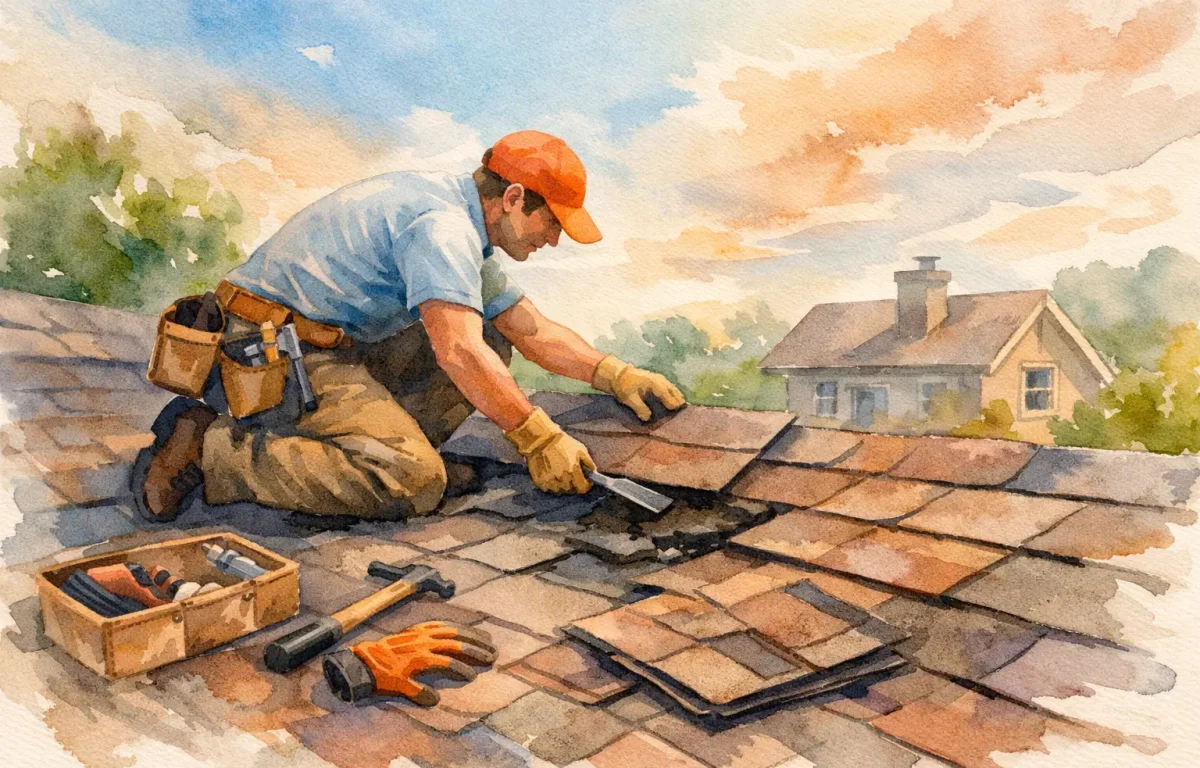
If the damage is limited and the roof is safe to access, a basic shingle repair usually involves removing the damaged piece, checking the materials underneath, and installing a matching replacement shingle with proper sealing. The process sounds straightforward because, on paper, it is. The problem is that roofing work is rarely as simple as it looks from a video or hardware store guide.
Start by confirming the weather. Never attempt repairs on a wet roof, during high winds, or when storm conditions are still moving through. Roofing surfaces get slick fast, and steep slopes make even a small repair dangerous.
Once the area is dry and stable, the damaged shingle has to be loosened carefully. Shingles are layered and sealed to each other, so removing one without damaging the surrounding pieces takes patience. Roofing nails from the shingle above may also pin it in place. If the surrounding shingles are older and brittle, trying to lift them can crack more tabs and create a larger repair area than you started with.
After the damaged shingle is removed, the decking and underlayment need to be checked. This is where a lot of DIY repairs go wrong. Homeowners replace the visible shingle but miss soft decking, torn felt, or moisture that has already moved beneath the surface. If that lower layer is compromised, a new shingle alone will not stop the leak for long.
If the base is sound, the replacement shingle should match the existing type, exposure, and color as closely as possible. It must be nailed in the correct pattern and sealed properly so it resists future wind uplift. Improper nailing is one of the most common reasons repairs fail. Nails placed too high, too low, or driven at the wrong angle can leave the shingle vulnerable in the next storm.
The most common DIY mistakes
The biggest mistake is underestimating the damage. A homeowner sees one missing shingle and assumes the repair starts and ends there. In reality, wind can loosen neighboring shingles, bend flashing, or open a pathway for water farther upslope.
The second mistake is using the wrong materials. Different shingle brands and product lines can vary in thickness, seal strip placement, and wind rating. Close enough is not always good enough on a roof. If the replacement does not integrate correctly with the surrounding field, it can fail early.
A third issue is timing. Temporary patching during an active leak may be necessary, but waiting too long for a full inspection can allow hidden moisture to spread into decking, soffits, insulation, and interior finishes. What starts as a repair can become structural work if it is ignored.
Storm damage changes the equation
In this part of South Carolina, roof problems often follow hail or high wind events. That matters because storm damage claims are not just about what you can fix in one afternoon. They are about documenting what happened, identifying all affected exterior systems, and making sure no related damage gets missed.
For example, a roof may show a few torn shingles, but the same storm might also damage ridge caps, flashing, gutters, siding, or skylight components. If you patch only the obvious spot and move on, you may lose the chance to fully address the storm-related damage while the evidence is fresh.
That is one reason many homeowners call a licensed contractor after severe weather even if the damage looks minor. A professional inspection can separate cosmetic wear from functional damage and help you understand whether repair, replacement, or insurance documentation makes the most sense.
When to call a professional instead of doing it yourself
Some situations call for a contractor right away. If your roof is steep, if the damage is near a valley or flashing detail, if water is already entering the home, or if the shingles are part of broader storm damage, it is time to bring in a pro.
The same goes for homes with older roofing systems. A repair on a newer architectural shingle roof is one thing. A repair on aged, brittle shingles is another. Trying to lift and replace one section can easily break adjoining tabs and leave the roof in worse shape.
A professional also helps when insurance may be involved. Clear photos, a documented inspection, a written scope of work, and guidance through the claim process can make a stressful situation a lot easier to manage. For homeowners across Laurens, Anderson, Greenwood, Greenville, and Spartanburg, that kind of support often matters as much as the repair itself.
What a proper shingle repair should accomplish
A good repair does more than cover the hole. It should restore water shedding, maintain the roof’s wind resistance, and blend with the existing system as cleanly as possible. It should also answer the bigger question: was this isolated damage, or a sign of something wider?
That is why a real repair includes inspection around the damaged area, not just directly on top of it. Flashing should be checked. Vent penetrations should be reviewed. Gutters, fascia, and nearby siding may need a look too, especially after hail or wind events.
At Extreme Roofing, this is the kind of practical approach homeowners need after bad weather. Fast response matters, but so does taking the time to identify the full scope of damage before the next storm tests the roof again.
Repair now or replace later?
This is where honesty matters. Sometimes a repair is the smart, cost-effective move. Sometimes it is a short-term fix on a roof that is already near the end of its service life. If the roof is otherwise healthy, a targeted repair can protect your home and extend the system’s life. If the roof has widespread wear, multiple leak points, or repeated storm damage, replacement may be the better investment.
There is no one-size-fits-all answer. The right call depends on roof age, shingle condition, how much of the roof is affected, and whether moisture has reached the decking or interior. A trustworthy contractor should explain the trade-offs clearly, not push a bigger job than you need.
If you are dealing with missing, lifted, or cracked shingles, move quickly. The longer water has to work its way in, the more expensive the fix tends to become. A prompt inspection today can save you from major repairs tomorrow and help you protect what matters most – your home and the people in it.