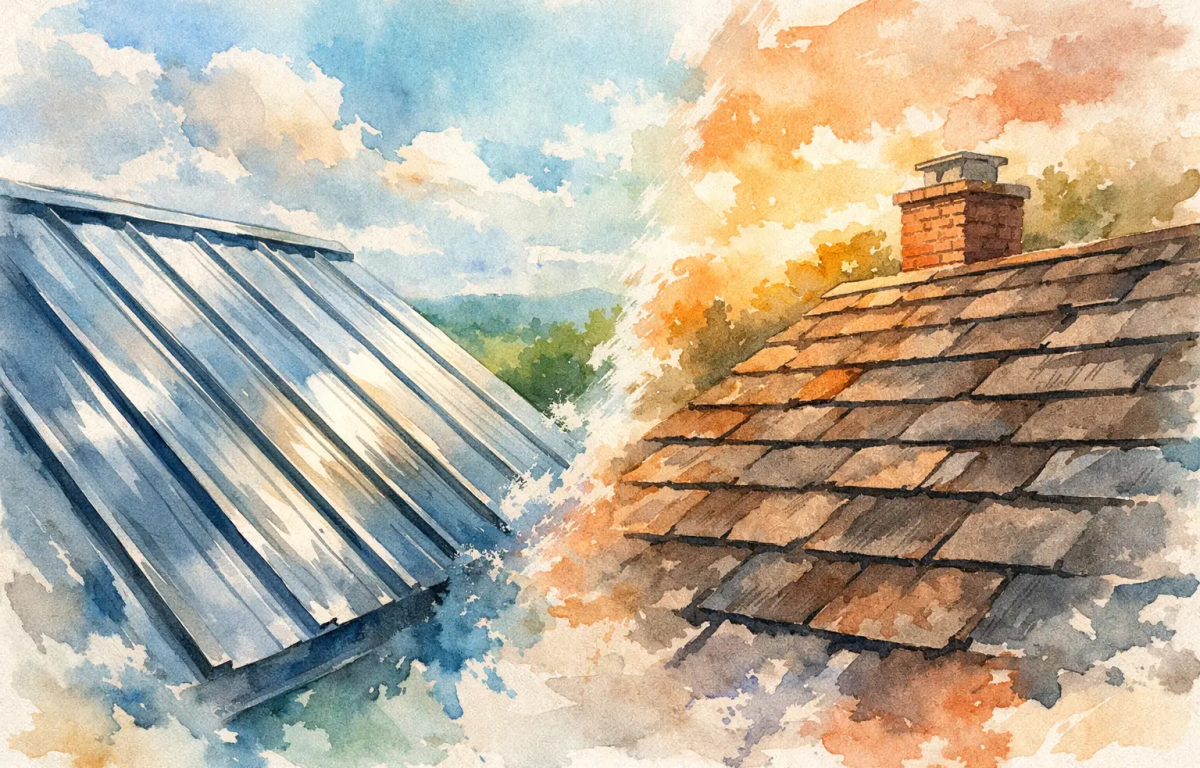
A roof choice can feel very different after a hard Upstate South Carolina storm. When shingles are scattered across the yard or a ceiling starts to stain, metal roofing versus asphalt shingles becomes more than a curb-appeal question. It becomes a decision about cost, protection, insurance documentation, and how long you plan to stay in your home.
Both materials can protect a home well when they are correctly installed. The better fit depends on your budget, roof design, storm history, neighborhood, and long-term plans. Here is what homeowners in Laurens, Anderson, Greenwood, Greenville, and Spartanburg should weigh before committing.
Metal Roofing Versus Asphalt Shingles: The Big Difference
Asphalt shingles are the most common residential roofing material in South Carolina. They are familiar, versatile, and available in a wide range of colors and price points. A quality architectural shingle roof can provide dependable protection without placing the largest upfront burden on a homeowner’s budget.
Metal roofing costs more at installation, but it is built for a longer service life. Standing seam metal roofs use vertical panels with concealed fasteners, while exposed-fastener panels are generally a more economical option. Metal can also be formed to resemble shingles, slate, or tile, though those premium styles carry a higher price.
The practical difference is simple: asphalt shingles are usually the lower initial investment, while metal is often the longer-term investment. Neither choice is automatic. A well-installed shingle roof can be the smart answer for a home that needs a fast, insurance-supported replacement after storm damage. A metal roof may make more sense for a homeowner who expects to stay put for decades and wants to reduce future replacement cycles.
Upfront Cost and Long-Term Value
For most homeowners, price starts the conversation. Asphalt shingles generally cost less in materials and labor because installation is familiar and replacement components are widely available. If storm damage has triggered an insurance claim, comparable asphalt shingles may also align more closely with the existing roof and the carrier’s approved scope of work.
Metal roofing has a higher initial cost. The final price depends on the panel system, roof slope, number of valleys and penetrations, trim details, and whether the old roofing must be removed. Complex roofs with chimneys, skylights, dormers, and multiple elevations require more cutting and flashing work regardless of material, but metal details can require additional labor and precision.
That higher investment can spread out over time. Many metal roofs can last 40 to 70 years or more with proper installation and maintenance. Architectural shingles often last around 20 to 30 years, although severe weather, heat, ventilation problems, and installation quality can shorten that range. If you expect to own your home long term, metal may offer value through durability and fewer full replacements.
Do not base the decision on a material warranty alone. Warranties have conditions, and they do not replace a proper inspection after a damaging storm. Workmanship, flashing details, attic ventilation, and the condition of gutters and trim all matter to the life of any roof.
Storm Performance in Upstate South Carolina
Upstate South Carolina roofs face a demanding mix of heavy rain, hail, high winds, summer heat, falling limbs, and occasional ice. No roofing material is damage-proof. The goal is to select a system that suits your home and is installed to manage water and wind correctly.
Metal roofs are known for strong wind resistance when engineered and installed according to manufacturer requirements. Their interlocking panels and fastening systems can perform very well in wind events. Metal also sheds rain quickly, which is useful during the downpours common across the region.
Hail is more nuanced. Metal may resist punctures well, but it can dent from larger hail. A dented metal panel may still be functional, yet the appearance can be a concern, especially on highly visible roof slopes. Whether cosmetic hail damage is covered under an insurance policy can depend on the policy language, so homeowners should review coverage rather than assume.
Asphalt shingles can lose granules, crack, lift, or blow off in severe wind. Impact-resistant shingles are available and can provide added protection in hail-prone areas. They cost more than standard shingles, but they may be worth considering for homes that have had repeated storm claims or sit in exposed locations.
After a storm, the material is only part of the picture. Damaged pipe boots, lifted flashing, bent gutters, and missing ridge caps can all allow water in. A detailed inspection should look at the entire exterior system, not only the visible roofing surface.
Appearance, Energy Use, and Home Design
Asphalt shingles remain popular because they work with nearly every home style. Architectural shingles can add depth and dimension, and homeowners have broad choices in color and texture. For many neighborhoods, shingles provide the traditional appearance buyers expect.
Metal roofing has moved far beyond the look of old agricultural buildings. Standing seam panels can give a home a clean, modern profile, while metal shingle and stone-coated options can fit more traditional designs. Still, metal makes a stronger visual statement. Before choosing it, consider your home’s architecture, nearby homes, and any homeowners association guidelines.
A properly specified metal roof can reflect more solar heat than many dark shingle roofs, which may help reduce heat gain during South Carolina summers. Color, coating, insulation, attic ventilation, and the roof assembly all affect energy performance. A new roof alone will not fix an under-ventilated attic or inadequate insulation.
Repairs and Future Maintenance
Asphalt shingle repairs are often straightforward when matching materials are available. A qualified contractor can replace a limited damaged area, reseal flashing, or address a few missing shingles. Color fading can make a repair noticeable on an older roof, but individual components are generally easier to work with.
Metal roofs need less routine maintenance in many cases, but repairs are more specialized. If a panel is damaged, replacing it may involve removing adjacent panels or carefully working around seams and trim. Penetrations for vents, skylights, and other roof-mounted equipment must be flashed correctly from the start. Improper work on a metal roof can create leaks that take time to trace.
Both systems should be checked after major weather events. Look for debris buildup, loose gutters, damaged flashing, exposed fasteners, and signs of water inside the attic. Addressing a small problem early is far less expensive than waiting for rot, mold, or interior damage.
When Asphalt Shingles Are the Better Choice
Asphalt shingles are often the practical choice when a homeowner needs to control upfront costs, replace a storm-damaged roof quickly, or maintain a traditional neighborhood look. They also work well for homeowners who may sell within the next several years and want a dependable new roof without paying for a lifespan they may not personally use.
The key is not to treat all shingles as equal. Ask about the shingle grade, wind rating, underlayment, ice and water protection in vulnerable areas, ridge ventilation, and flashing. The system underneath the shingles matters as much as the shingles themselves.
When Metal Roofing Is Worth Considering
Metal can be a strong choice for long-term homeowners, houses with simple-to-moderate roof designs, and properties that see frequent wind-driven rain or falling debris. It may also appeal to homeowners who want a distinctive appearance and are prepared to invest more now for a roof that may outlast multiple shingle installations.
Make sure the proposal clearly identifies the metal type, panel gauge, finish, underlayment, fastener system, trim, and flashing approach. “Metal roof” is a broad term, and the quality of the system can vary significantly.
Get the Decision Right Before Work Begins
A roof replacement should start with facts, not pressure. Before choosing metal or shingles, document storm damage, review your insurance policy, check local or HOA requirements, and compare written proposals that spell out materials and scope. If your roof was hit by wind or hail, photographs and a thorough inspection can help establish what needs to be repaired or replaced.
Extreme Roofing helps Upstate homeowners inspect damage, understand their options, and manage exterior restoration from the roofline to gutters, trim, and cleanup. The right roof is the one that protects your home, fits your budget, and is installed with care before the next storm arrives.