
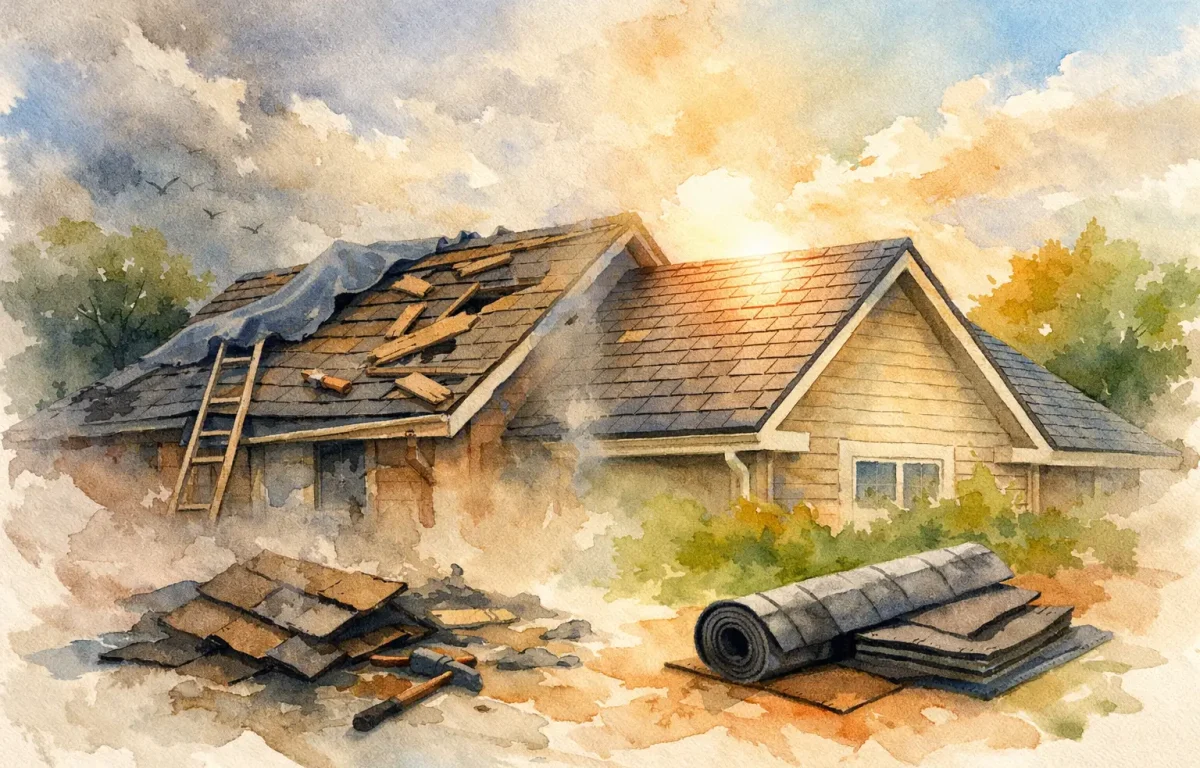
A roof leak after a South Carolina storm can put you in a tough spot fast. You see a water stain on the ceiling, a few shingles in the yard, or granules washing out of the gutters, and the first question is usually the same: roof repair vs replacement – which one actually makes sense for your home?
The honest answer is that it depends on more than the leak itself. The age of the roof, how widespread the damage is, whether hail or wind compromised the system, and what your insurance carrier may cover all matter. A quick patch can be the right move in one situation and a short-term bandage in another.
Roof repair vs replacement starts with the extent of damage
If the damage is isolated, repair is often the smarter and more affordable option. A few missing shingles, a lifted flashing section around a chimney, a minor pipe boot failure, or a small area of storm impact can usually be corrected without tearing off the full roof. When the rest of the roofing system is still in solid shape, a focused repair can stop leaks and give you more useful years.
Replacement becomes more likely when the damage is spread across multiple sections or when the roof system has started failing in more than one way. That may mean repeated leaks, soft decking, widespread shingle loss, hail bruising, damaged underlayment, or granule loss that leaves shingles exposed and aging fast. In those cases, fixing one spot may not solve the bigger problem.
This is why a proper inspection matters. Homeowners sometimes assume the visible leak is the whole issue, but water rarely travels in a straight line. What looks small from inside may be tied to broader storm damage on the slope, ridge, flashing, or roof penetrations.
When a roof repair is the better call
Repair makes the most sense when the roof still has life left and the damage is limited to one clear area. If your roof is newer and the materials are otherwise holding up well, there is no reason to replace the entire system just because one section was hit by wind or a branch.
Repairs also make sense when the goal is to prevent a small problem from turning into structural damage. A minor leak around flashing can lead to soaked insulation, stained drywall, mold concerns, and rotten decking if it sits too long. Taking care of that issue early is often the most cost-effective choice.
There is also a practical side to timing. Some homeowners are not ready for a full replacement because they are in the middle of another major home project or because the roof has enough remaining life to justify a repair now and a planned replacement later. That can be a smart move if it is based on a real inspection and not just wishful thinking.
Still, repair has limits. If your contractor is fixing one leak after another every storm season, the money spent on patches may start adding up without giving you lasting protection.
Signs repair may be enough
A repair is often appropriate when shingles are missing in one section, flashing damage is localized, the leak source is identifiable, and the roof is still within a reasonable service life. Matching materials can also play a role. If replacement shingles are available and the repaired area can blend in well, repair becomes even more practical.
When replacement is the safer investment
A full replacement is usually the better path when your roof is near the end of its expected lifespan or has suffered enough storm damage that repairs would be temporary. Asphalt shingle roofs do not fail all at once. They wear down over time, and storms speed that process up.
If shingles are brittle, curling, cracking, or shedding granules across large areas, the roof may no longer be reliably weather-tight. If decking underneath has moisture damage, simply installing a few new shingles on top will not address the real problem. And if prior repairs have created a patchwork roof with different aging materials, replacing the whole system can give you a cleaner, stronger result.
Replacement can also make sense financially. If repair costs are high and there is a strong chance more issues will show up soon, putting that money toward a new roof may protect your home better and save money over time. For many homeowners, peace of mind matters too. A roof that has been repeatedly damaged can create constant stress every time a strong storm rolls through.
Signs replacement may be the smarter move
If storm damage affects multiple slopes, leaks are recurring, the roof is older, or an inspection shows compromised decking and underlayment, replacement is often the more dependable option. It is not just about fixing what you can see today. It is about restoring full protection.
Age matters more than many homeowners realize
Two roofs can have the same leak and need very different solutions based on age alone. A ten-year-old roof with one wind-damaged area is often a repair candidate. A twenty-plus-year-old roof with that same issue may be telling a different story.
Older roofs are more fragile. Shingles can crack during repair work, seal strips may no longer hold properly, and color matching can be difficult or impossible. Even if you fix one area, other weak spots may be close behind. That does not mean every older roof needs replacing right away, but age should weigh heavily in the decision.
In Upstate South Carolina, heat, humidity, heavy rain, and storm activity can shorten a roof’s effective service life. Manufacturer timelines are useful, but local weather tells the real story. A roof that looks acceptable from the ground may be much further along in wear than expected.
Insurance can affect the repair vs replacement decision
After hail or wind damage, the scope of work may depend partly on what your insurance inspection finds. If the damage is limited, insurance may only approve repairs. If the carrier determines the roof sustained broader storm damage, replacement may be covered, subject to your policy terms, deductible, and depreciation rules.
This is where documentation matters. Photos, test squares, notes on collateral damage like gutters or siding, and a clear explanation of how the storm affected the roofing system can all help support the claim process. Homeowners should not guess their way through that after a major weather event.
A good contractor should be able to explain what was found, what is storm-related, and whether a repair would genuinely restore the roof. If a repair is enough, that should be said plainly. If replacement is the only reliable fix, you should hear that clearly too.
The real cost question is long-term value
Most homeowners naturally focus on the upfront number, and that is understandable. Repair almost always costs less today than replacement. But the better question is what each option buys you.
A quality repair buys targeted protection and more time from a roof that still has solid remaining life. A replacement buys a reset. You get a full roofing system designed to work together, not just a corrected problem area. You may also improve ventilation, address hidden deck issues, and reduce the chance of future leaks tied to older materials.
There is also resale value to consider. If you may sell your home in the next few years, an aging roof with a repair history can raise buyer concerns. A newer roof can be a stronger selling point, especially in storm-prone areas where buyers know roofing condition matters.
Why inspections should never be rushed
The wrong decision usually comes from one of two things: panic or oversimplification. Homeowners under stress want the fastest fix, and some contractors push a one-size-fits-all answer. Neither serves you well.
A dependable inspection should look beyond the obvious leak point. It should evaluate shingles, flashing, penetrations, valleys, decking condition where visible, ventilation performance, and signs of storm impact across the entire exterior. If gutters, trims, siding, or skylights were affected too, those pieces should be part of the conversation.
That full-picture approach is especially important after severe weather. A roof is not separate from the rest of the exterior. Damage to one system often shows up in another, and repairs need to account for that if you want the home truly restored.
For homeowners in Laurens, Anderson, Greenwood, Greenville, and Spartanburg, the best next step is not choosing repair or replacement from the kitchen table. It is getting a clear inspection from a licensed contractor who understands storm damage, local weather patterns, and how to document the job correctly. Extreme Roofing works with homeowners through that process every day, helping them make a decision based on real conditions, not pressure.
If your roof has taken a hit, do not wait for the next storm to make the choice for you. Get the facts, understand the trade-offs, and choose the option that protects your home for the long haul.