
A hard Upstate South Carolina rain can send hundreds of gallons of water off a roof in a short time. If gutters are undersized, clogged, loose, or leaking at the joints, that water can wash out landscaping, stain siding, flood a crawl space, and work its way toward the foundation. The choice between seamless gutters versus sectional gutters affects how well your home handles that water, especially after the kind of heavy storms common in Laurens, Greenville, Anderson, Greenwood, and Spartanburg.
Neither option is automatically right for every home. The better choice comes down to your roofline, budget, existing drainage problems, and how long you plan to stay in the property. Here is what homeowners should know before scheduling gutter replacement.
Seamless Gutters Versus Sectional Gutters: The Main Difference
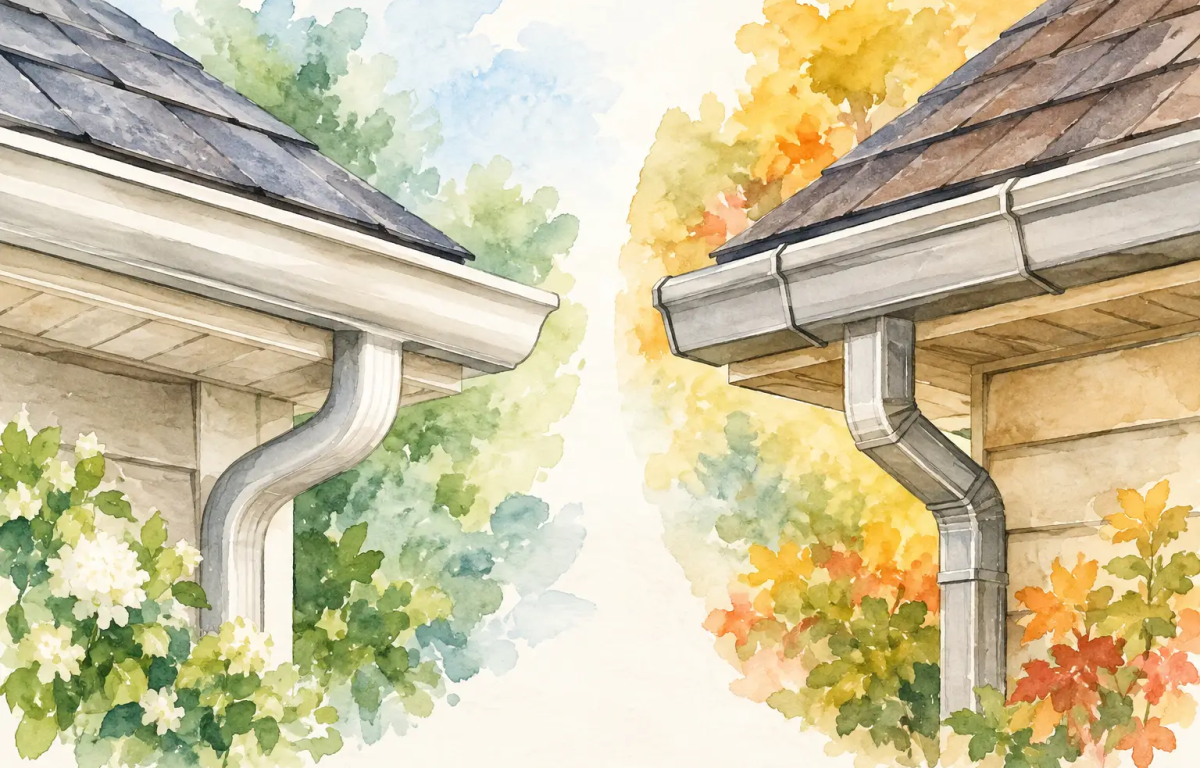
Sectional gutters come in pre-cut pieces, usually sold in standard lengths. Installers join those pieces with connectors, sealant, fasteners, and end caps to create a run along the edge of the roof. They are widely available and can be installed on many homes without custom fabrication.
Continuous-style gutters are formed from a coil of metal on-site to match the exact length of a roof edge. They still need end caps and outlets where downspouts connect, but the straight runs have far fewer joints. Most are aluminum, though copper and steel options are also available for specific applications.
That difference in joints is the heart of the decision. Every gutter system moves rainwater toward downspouts. More connection points generally mean more places that can eventually loosen, clog, or leak.
Why Fewer Joints Matter in Heavy Rain
A sectional system can perform well when it is installed correctly and maintained regularly. The concern is not that each joint fails immediately. It is that sealant ages under sun exposure, temperature swings, standing water, and storm debris. Over time, small gaps can allow water to drip behind the gutter or spill onto fascia boards.
For homes surrounded by pine trees, oaks, or other mature trees, leaves and grit tend to collect at joints. That buildup slows water flow and adds weight to the system. During a hard downpour, water may spill over the front edge rather than reach the downspout.
Custom-formed aluminum runs reduce those weak points. They are especially useful on long, straight rooflines where a sectional setup would require several connections. Less joint maintenance is one reason many homeowners choose them as a long-term replacement solution.
Still, fewer joints do not eliminate maintenance. Downspouts can clog. Hangers can pull loose. Storm branches can dent the metal. A gutter system needs proper slope, secure fastening, clear outlets, and drainage that carries water away from the home.
Cost: Upfront Price Versus Long-Term Value
Sectional gutters usually have a lower upfront material cost. Standard pieces are easy to source, and a homeowner may be able to replace a short damaged section rather than the full run. For a small outbuilding, a short-term property, or a simple budget-conscious repair, that can be a reasonable advantage.
Custom-formed gutters normally cost more at installation because they require specialized equipment, measured fabrication, and professional fitting. The final price also depends on the gutter size, number of stories, roof access, downspout placement, corners, material, and whether damaged fascia or trim needs attention first.
The lowest initial price is not always the lowest ownership cost. Repeated resealing, joint repairs, water damage at the fascia, and frequent cleaning can narrow the gap over time. If your existing sectional gutters leak in several places or pull away after every major storm, replacing isolated pieces may only delay a larger repair.
A detailed written proposal should separate gutter work from related repairs so you can see what the home actually needs. If storm damage is involved, photos and measurements also help document conditions for an insurance claim.
Installation Quality Matters More Than the Label
A well-installed sectional system can outperform a poorly installed custom system. Gutters must be sized for the roof area and rainfall volume, then pitched correctly toward the downspouts. If the pitch is too flat, water sits in the channel. If it is too steep, the run can look uneven and may not capture water properly at the high end.
Attachment is equally important. Gutters should be fastened securely to sound fascia, with hanger spacing that can handle heavy water and debris loads. If fascia boards are soft from rot, covering them with new gutters does not solve the underlying problem.
Downspouts deserve the same attention. A gutter can be large and properly pitched but still overflow if there are too few downspouts or if discharge lands beside the foundation. Extensions, underground drainage, and grading may all be part of the answer, depending on your property.
For this reason, a gutter inspection should look beyond the channel itself. A qualified exterior contractor checks roof edges, drip edge, fascia, soffit, siding near overflow areas, downspout flow, and ground conditions below.
Appearance and Fit for Your Home
For many homeowners, appearance is a deciding factor. Custom-formed gutters create long, clean lines with fewer visible connectors. They can be color-matched to complement roof trim, siding, or fascia. On a well-kept home, that cleaner finish can make a noticeable difference.
Sectional gutters have more visible seams and connectors, particularly along long roof edges. That does not make them unattractive, but the hardware is easier to spot. They may be a practical fit for garages, workshops, sheds, or homes where replacement needs to stay within a tight budget.
Material also affects appearance and durability. Aluminum is popular because it resists rust and is available in many colors. Steel is strong but needs appropriate coating protection. Copper develops a distinctive patina and carries a much higher cost. For most residential homes in Upstate South Carolina, professionally installed aluminum offers a practical balance of performance, appearance, and value.
Repair Considerations After Storm Damage
Wind, hail, falling limbs, and overflowing water can damage any gutter style. With sectional gutters, a contractor can often replace a specific bent or split piece if the surrounding system is in good condition. That can be helpful after a localized impact.
With a continuous-style system, a major dent or damaged portion may require replacing an entire run rather than swapping out one short piece. This is a real trade-off homeowners should understand. The design has fewer routine leak points, but localized cosmetic or impact damage can involve a larger repair.
After a storm, do not assume gutters are fine because they remain attached to the house. Look for fresh dents, separated corners, sagging runs, peeled paint, missing fasteners, water marks on siding, and soil trenches beneath downspouts. Also check inside for ceiling stains near exterior walls. Water management problems and roof damage often show up together.
If you are filing a storm claim, document conditions before temporary repairs or cleanup change the evidence. Extreme Roofing can inspect the roof, gutters, trim, and other exterior components together, helping homeowners understand what is damaged and what should be addressed before the next storm.
Which Gutter System Is Right for You?
Choose sectional gutters when you need an affordable solution for a short run, a minor targeted replacement, or a secondary structure. They can work reliably when installed with care and inspected regularly. They also make sense when immediate budget is the primary concern.
Choose custom-formed gutters when you want fewer joints, cleaner roofline appearance, and a durable system for a primary residence. They are often the stronger choice for long gutter runs, homes exposed to frequent heavy rain, and homeowners who want to reduce ongoing joint-related maintenance.
The best system also depends on drainage design. A home with poor grading or undersized downspouts will not be protected simply by installing new gutters. The goal is to collect roof runoff, move it through the system without overflow, and release it far enough from the home to protect the foundation and landscaping.
Before committing to either option, ask for a full exterior assessment rather than a quick measurement at the roof edge. A contractor who identifies hidden fascia damage, roof runoff patterns, and downspout problems can help you spend money where it actually protects your home. The next hard rain should be a test your gutter system passes, not the moment you discover where water has been going.