
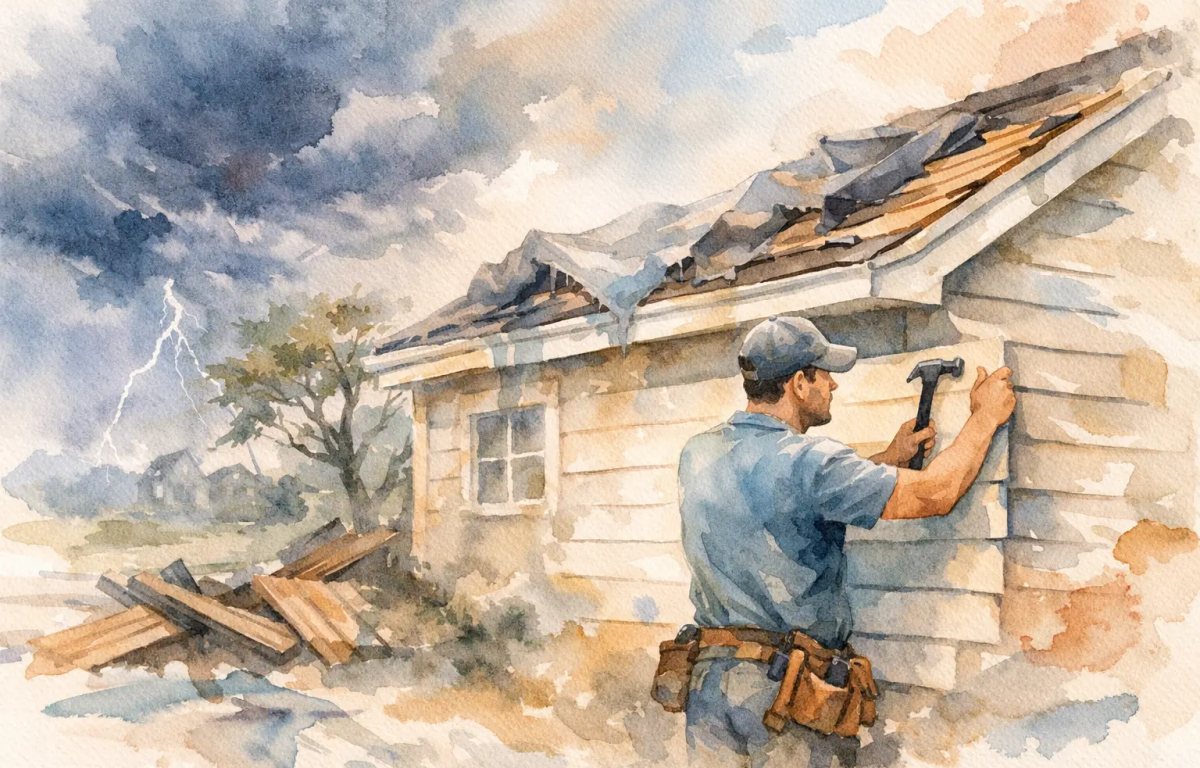
A hard storm can leave siding damage that is easy to miss from the driveway. A loose panel may look minor, but it can allow wind-driven rain behind the wall. Hail can crack vinyl without creating an immediate leak. A fallen limb can damage trim, gutters, roofing, and siding in the same area. That is why experienced siding contractors do more than replace what is visibly broken. They inspect how the entire exterior is protecting your home.
For homeowners across Upstate South Carolina, fast action matters after severe wind, hail, or heavy rain. The right contractor can document the damage, explain whether repair or replacement makes sense, and manage the work without adding more stress to an already difficult situation.
What Siding Contractors Should Check After a Storm
Siding is part of a larger exterior system. It works alongside your roof, flashing, windows, doors, trim, gutters, and drainage to keep water where it belongs: outside. When one part is damaged, nearby components deserve a close look too.
A thorough inspection starts with obvious concerns such as cracked, split, warped, dented, or missing panels. It should also include areas that are harder to see, including siding seams, corners, trim boards, window surrounds, soffit, fascia, and the lower sections of walls where splashback can cause damage. On older homes, contractors may also look for fading, brittleness, hidden moisture, loose fasteners, or rot behind damaged materials.
Wind damage can pull panels loose without fully removing them. Hail damage may appear as small chips, punctures, fractures, or impact marks. Water intrusion can show up indoors as peeling paint, stains, musty odors, or soft drywall, but waiting for interior signs is not a good strategy. By then, moisture may already be affecting wall sheathing or framing.
A qualified contractor should explain what they found in plain language and show you the affected areas when possible. You should not have to guess whether a recommendation is necessary or simply an upsell.
Repair or Replacement: What Makes Sense?
Not every damaged wall needs complete siding replacement. A targeted repair can be the practical choice when the damage is limited, the surrounding siding is in good condition, and a matching material is available. Refastening loose panels, replacing a damaged corner, repairing trim, or addressing a small impact area can restore protection at a lower upfront cost.
Replacement becomes more reasonable when damage is widespread, the material is aging or brittle, moisture has gotten behind the siding, or matching the existing color and profile is no longer realistic. Vinyl and fiber cement can fade over time, so even an exact product match may look noticeably different from older siding. In some cases, replacing one elevation creates a cleaner result than patching multiple visible areas.
The decision also depends on the source of damage. Storm-related damage may be part of an insurance claim, while long-term wear, poor installation, and deferred maintenance may not receive the same coverage. A contractor should separate storm findings from pre-existing conditions clearly. That helps you make decisions based on the facts and gives your insurance carrier useful documentation.
How to Compare Siding Contractors With Confidence
Price matters, but the lowest number on an estimate does not always mean the lowest total cost. A rushed installation, poor moisture protection, or incomplete cleanup can create problems that cost far more later. Look for a contractor that is licensed, bonded, and insured, with a local track record and a clear process for communication.
A written proposal should identify the scope of work. That includes the siding material, color or style, trim work, damaged substrate repairs if needed, flashing details, disposal, cleanup, and warranty information. If a contractor plans to remove existing siding, ask how they will inspect the wall behind it and how any discovered damage will be handled.
It also helps to ask who will oversee the job. Exterior restoration projects have moving parts, especially when roofing, gutters, fascia, or window trim are involved. An assigned project manager gives you a clear point of contact from inspection through final walkthrough. That accountability matters when weather changes, materials arrive, or questions come up during the work.
Be cautious with anyone who pressures you to sign immediately, offers a vague estimate, or cannot provide proof of insurance. Homeowners should also be wary of promises that sound too certain before a full inspection or insurance review. A dependable contractor can move quickly without rushing you into a decision.
Questions Worth Asking Before You Hire
Before selecting a contractor, ask how they identify hidden moisture damage, whether they handle trim and gutter repairs, and how they protect landscaping and driveways during the project. Ask how long the work is expected to take and what happens if rain delays installation.
If storm damage is involved, ask whether the contractor can provide photos, measurements, and a detailed estimate for your claim. They should be able to support the documentation process without making coverage guarantees. Your insurance company makes the final coverage decision, but good documentation can make the review process more straightforward.
Why Proper Installation Matters as Much as the Material
Even quality siding cannot perform as intended if it is installed incorrectly. Panels need room to expand and contract with temperature changes. Fasteners must be placed properly. Flashing around windows, doors, roof-to-wall connections, and other transitions must direct water away from vulnerable areas. Details like these are not always visible once the project is finished, but they are essential to long-term protection.
The same is true for trim. Trim helps create a finished appearance, but it also seals transitions and supports water management. Damaged fascia, rotted corner boards, or failed window trim can allow moisture behind new siding if they are ignored. A full-service exterior contractor looks at these conditions before covering them up.
For many Upstate homes, coordinating siding with gutter and roofing work is especially valuable. A roof leak can run behind siding. Overflowing gutters can soak trim and lower walls. Wind that damages siding may also lift shingles or bend metal components. Handling related repairs in one coordinated project can reduce delays, avoid duplicate work, and give the exterior a more consistent finish.
What the Project Should Look Like From Start to Finish
The process should begin with an inspection and a written explanation of recommended work. If the damage follows a storm, take photos before temporary repairs or cleanup hide the evidence. Keep receipts for emergency protective measures, and report the loss to your insurer according to your policy requirements.
Once the scope is approved, the contractor should schedule materials and explain what to expect on installation day. You may need to move patio furniture, vehicles, grills, wall décor, or fragile items away from the work area. Contractors should protect nearby landscaping as reasonably as possible and keep the site organized.
During installation, crews remove damaged materials, inspect the wall condition, complete approved repairs, and install siding and trim according to the manufacturer’s requirements. Good crews clean up daily when practical, collect nails and debris, and avoid leaving hazards around your home.
The final walkthrough is your chance to review the completed work. Look at panel alignment, trim joints, corners, caulking where appropriate, and cleanup. Ask about material and workmanship warranties, as well as simple maintenance steps for your specific siding type. A professional contractor should welcome these questions and make sure you understand the finished project.
Local Help When the Exterior Takes a Hit
Storm recovery is rarely limited to one damaged panel. A careful inspection can reveal whether your siding, roof, gutters, and trim are still working together to protect the home you have worked hard to maintain. Extreme Roofing helps homeowners throughout Laurens, Anderson, Greenwood, Greenville, and Spartanburg evaluate exterior storm damage and move from inspection to restoration with a clear plan.
If you see loose siding, impact marks, cracked trim, water stains, or debris against your exterior after a storm, do not wait for a small opening to become a larger repair. A prompt, documented inspection gives you a clearer picture of your home’s condition and a practical next step toward protecting it.