
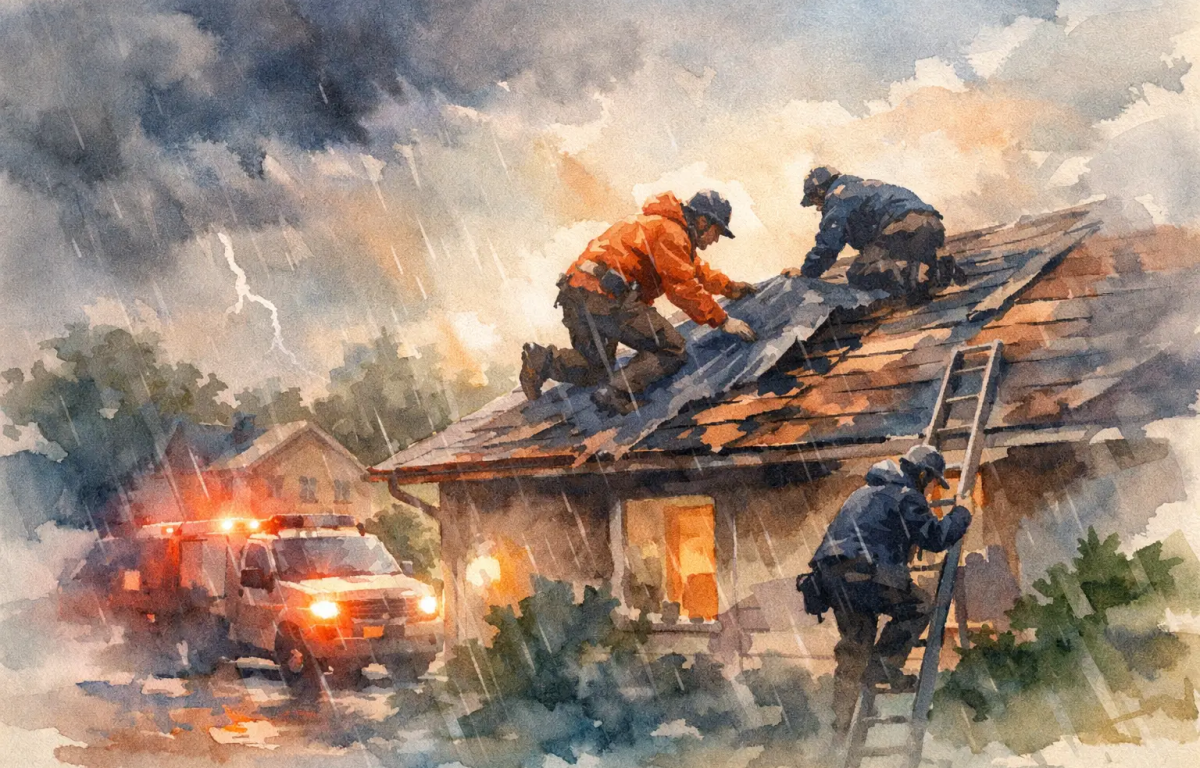
A roof problem never shows up at a convenient time. It starts with a water stain on the ceiling after midnight, shingles scattered across the yard after a storm, or a branch that came down harder than expected. When that happens, emergency roof repair services are not about cosmetics. They are about stopping active damage, protecting what is inside your home, and making sure a bad situation does not get more expensive by the hour.
For homeowners across Upstate South Carolina, that urgency is real. Storms can move through Laurens, Greenville, Anderson, Greenwood, and Spartanburg fast, and the damage they leave behind is not always obvious from the ground. A small puncture, lifted flashing, or a few missing shingles can turn into soaked insulation, stained drywall, mold growth, and damaged framing if it is left alone too long.
What emergency roof repair services actually cover
A lot of homeowners hear the word emergency and assume it only applies when a tree crashes through the roof. That is one kind of emergency, but it is not the only one. Any roof issue that leaves your home exposed to water intrusion or creates a safety risk can call for immediate attention.
That may include active leaks, missing shingles after wind, hail damage that cracked or bruised roofing materials, flashing failures around chimneys or skylights, damaged ridge caps, punctures from falling limbs, or areas where the decking has become soft and unstable. In some cases, the emergency work is a targeted repair. In others, the first priority is temporary protection, such as tarping or sealing the damaged section until full repairs can be completed safely.
The key point is this: emergency service is meant to stabilize the home first. A good contractor does not guess, slap on a quick patch, and leave you to figure out the rest. The right team inspects the damage, explains what is urgent versus what can wait a short time, and puts a clear plan in writing.
When to call for emergency roof repair services
If water is actively entering your home, call right away. That one is straightforward. But there are other situations where homeowners wait too long because they are hoping the damage is minor.
If you notice shingles missing after high wind, dents from hail, sagging roof sections, wet attic insulation, dripping around a vent pipe, or interior ceiling spots that appeared right after a storm, it is smart to get the roof checked as soon as possible. The same goes for damage to gutters, fascia, siding, or skylights, because roof systems and exterior components work together. A storm does not always damage only one part of the house.
It also depends on timing. A roof issue at the start of a rainy week is a bigger risk than the same issue during a stretch of dry weather. That does not mean dry conditions make the problem safe. It just means the response plan may vary based on how exposed your home is and how quickly more weather is coming.
The first few hours matter most
The biggest mistake homeowners make after storm damage is waiting for visible proof inside the house. By the time you see water stains on drywall, moisture may already be inside the attic, under shingles, or around decking joints.
Fast action helps in three ways. First, it limits damage to insulation, ceilings, flooring, and personal belongings. Second, it gives you a better chance of preserving evidence for an insurance claim. Third, it helps prevent a temporary problem from becoming a structural one.
That does not mean every damaged roof needs full replacement that same day. In many cases, the most responsible move is emergency mitigation first, then a detailed inspection, then the right repair or replacement plan based on the full condition of the roof.
What a reliable emergency response should look like
Homeowners under stress do not need vague answers. They need a contractor who shows up, documents the damage, explains the next step clearly, and keeps the job moving.
A strong emergency response usually starts with an on-site assessment to identify the source of intrusion and any immediate safety concerns. From there, the crew may tarp exposed areas, secure loose materials, seal vulnerable penetrations, or remove debris that is causing further damage. After the roof is stabilized, the contractor should walk you through what was found, what needs permanent repair, and whether the damage appears related to wind, hail, or another covered event.
This is also where experience matters. Storm damage is not always clean and obvious. Wind may loosen materials without tearing them completely off. Hail can shorten the life of shingles even when the roof still looks passable to an untrained eye. An experienced local contractor understands what severe weather in Upstate South Carolina tends to do and knows where to look beyond the most visible trouble spots.
Emergency repair vs. full roof replacement
This is where honesty matters most. Sometimes a roof can be repaired effectively. Sometimes emergency work is only the first step toward replacement.
If the damage is isolated and the rest of the roof is in solid condition, a repair may be the right call. That is often true with limited flashing issues, a smaller puncture, or a section of shingles lost in a recent storm. But if the roof is older, has widespread hail impact, multiple leak points, or damaged decking beneath the surface, a patch may only buy a little time.
A dependable contractor should not push replacement when repair will do, and should not promise a simple fix when the roof has bigger problems. The right answer depends on the roof’s age, material condition, storm severity, and whether matching materials are still available.
Why documentation matters after storm damage
In many emergency calls, the roofing work and the insurance process go hand in hand. That is one reason homeowners often feel overwhelmed. They are trying to stop a leak, protect their home, and figure out what their policy may cover all at once.
Detailed documentation can make that process smoother. Photos of the damage, notes from the inspection, measurements, and written descriptions of affected areas all help create a clear record. If interior damage is present, that should be documented too. The more organized the inspection is from the start, the easier it is to show the full scope of loss.
This is where a contractor with storm restoration experience can be a real asset. Companies like Extreme Roofing understand that homeowners do not just need nails and shingles. They need someone who can help them make sense of the damage, provide a written proposal, and keep the project moving from emergency response through final cleanup.
Choosing a contractor when the pressure is on
Emergency situations make homeowners vulnerable to rushed decisions. That is exactly why it helps to slow down just enough to ask a few important questions.
Is the contractor licensed, bonded, and insured? Do they provide a clear written scope of work? Can they explain what is temporary and what is permanent? Are they local enough to return if follow-up work is needed? Do they inspect the full exterior system, including gutters, siding, flashing, and skylights, rather than only the most obvious leak point?
A fast response matters, but speed without accountability is not enough. You want a contractor who treats the emergency as the beginning of the job, not the end of it.
What homeowners can do before help arrives
Safety comes first. If water is entering the home, move valuables, place containers under drips, and avoid any area where ceilings are sagging or electrical hazards may be present. If it is safe to do so, take photos of interior damage and visible exterior damage from the ground. Do not climb onto a storm-damaged roof yourself.
If a branch has fallen or shingles are missing, keep children and pets away from the area and wait for trained professionals to assess it. A roof may look stable from below and still have hidden weak spots. The goal is to reduce immediate loss without creating a second emergency.
A damaged roof can shake your sense of control fast. The right response is not panic and it is not delay. It is getting qualified help on site quickly, stopping the damage at the source, and working with a team that knows how to protect both your home and the path forward.