
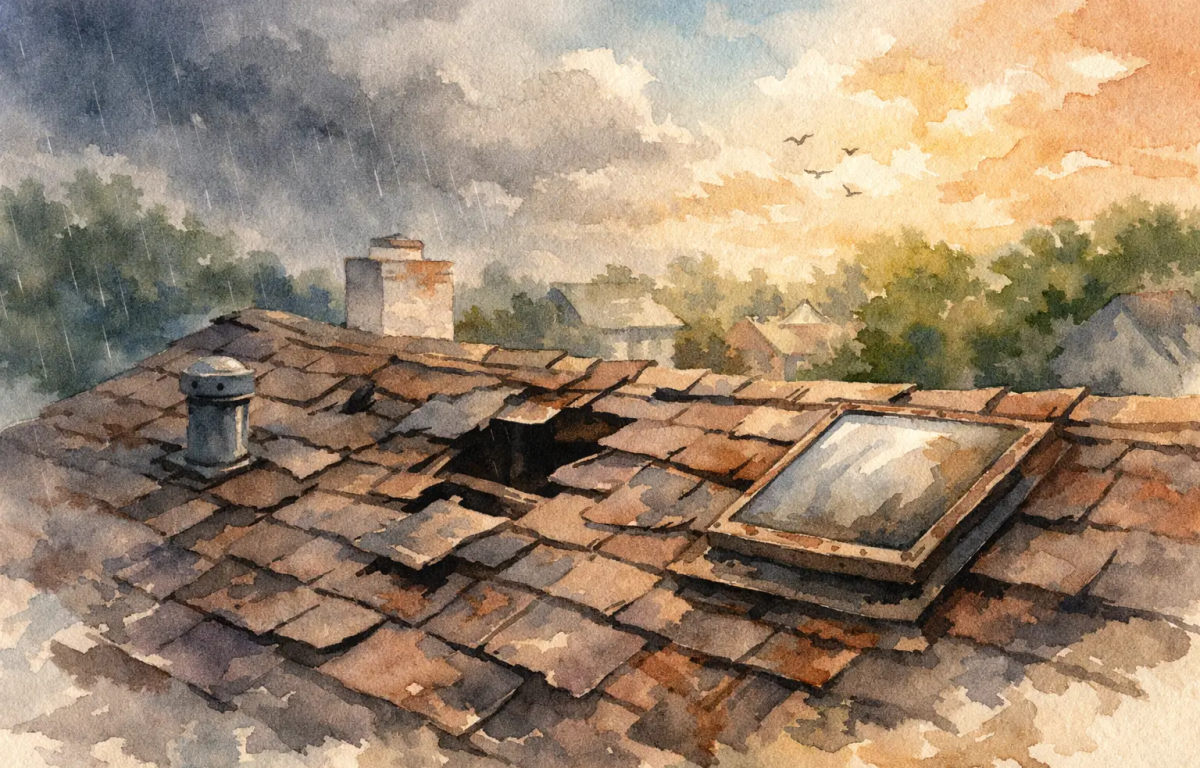
A roof rarely fails all at once. More often, it starts with a few loose shingles after a strong Upstate South Carolina storm, a small water spot on the ceiling, or granules collecting near a downspout. Knowing the top signs your roof needs replacement gives you a chance to act before a manageable roofing problem turns into damaged framing, insulation, drywall, or belongings.
For homeowners in Laurens, Anderson, Greenwood, Greenville, and Spartanburg, wind, hail, heavy rain, heat, and humidity can all shorten a roof’s service life. A professional inspection can tell you whether a targeted repair will solve the problem or whether replacement is the safer investment.
Your Roof Is Near or Past Its Expected Age
Age alone does not automatically mean you need a new roof. Installation quality, ventilation, shingle type, storm exposure, and previous repairs all matter. Still, a standard asphalt shingle roof commonly lasts about 20 to 25 years under normal conditions. In areas that see repeated severe weather, its useful lifespan may be shorter.
If you are unsure when your roof was installed, check closing documents, past invoices, permits, or manufacturer paperwork. A roof approaching the end of its expected life deserves a thorough inspection, especially before storm season. Replacing an aging roof on your schedule is usually less stressful than responding to a sudden leak during a hard rain.
Shingles Are Missing, Cracked, Curling, or Lifting
Shingles are your roof’s first line of defense. When they lose their seal, crack, curl at the edges, or blow away, water can work beneath the roofing system. One missing shingle does not always require a full replacement. If the surrounding roof is in good condition and matching materials are available, a repair may be enough.
The concern grows when shingle damage appears across several roof slopes or keeps returning after repairs. Widespread cracking and curling often point to age, heat exposure, poor attic ventilation, or failing materials. Lifted shingles are also vulnerable to the next wind event, which can quickly turn a small exposed area into a larger problem.
After a storm, inspect from the ground for uneven shingle lines, bare patches, pieces of roofing in the yard, or tabs that appear loose. Do not climb onto a roof to investigate. Storm-damaged surfaces can be unsafe, and some damage is only visible to a trained inspector.
Granules Are Filling Gutters or Washing Out at Downspouts
Asphalt shingles are covered with protective granules that help block sunlight and weather. It is normal to see a small amount of loose granules, particularly on a newer roof. What is not normal is a steady buildup in gutters, downspouts, or at the base of the home.
Heavy granule loss can leave shingles looking darker, patchy, or worn smooth. Without that protective layer, shingles can age faster under South Carolina sun and become more susceptible to cracking. Granule loss does not always mean immediate replacement, but it is a clear reason to have the roof evaluated.
Gutters should also be checked after storms. A gutter system that is clogged, loose, or pulling away can force water where it does not belong and make roof-edge problems worse.
You See Water Stains, Active Leaks, or Musty Odors Indoors
A brown ceiling stain, peeling paint near the top of a wall, damp insulation, or a musty smell in the attic should never be ignored. Water may travel along decking or framing before it becomes visible inside, so the stain is not always directly below the source.
Not every leak means the entire roof has failed. Flashing around a chimney, vent pipe, skylight, or wall transition may need repair. But if leaks are recurring, appear in multiple areas, or return after previous patchwork, replacement may offer better long-term protection than repeated service calls.
Take photos of interior damage as soon as you notice it, especially after hail or wind-driven rain. Documentation can be helpful if storm damage leads to an insurance claim. Then arrange an inspection promptly. Waiting allows moisture to spread, encourages mold growth, and can damage the roof deck.
Storm Damage Is Visible – or Suspected
Hail damage can be difficult to spot from the ground. It may leave dark impact marks, bruised areas, fractured shingle surfaces, or missing granules. High winds can crease shingles, break their seals, damage ridge caps, and tear away flashing. Even if your roof does not leak immediately, the damage can reduce its ability to handle the next storm.
Look beyond the roof itself. Dented gutters, damaged siding, torn window screens, fallen branches, and debris around the property are signs your home took a significant hit. If neighbors are replacing roofs after the same storm, it is smart to schedule an inspection rather than assume your roof is fine.
A detailed storm inspection should assess shingles, flashing, vents, roof penetrations, gutters, and other exterior components. For a potential claim, clear photographs and a written assessment help establish what happened and what repairs are needed. Extreme Roofing can help homeowners document storm-related issues and understand the restoration process without adding confusion to an already stressful situation.
The Roof Deck Is Sagging or the Roofline Looks Uneven
A straight, consistent roofline is a good sign. A dip, sag, or wavy section can indicate a more serious issue below the shingles, such as water-damaged decking, weakened framing, or long-term moisture exposure. This is not a cosmetic concern to put off.
From the attic, watch for daylight showing through the roof, dark or soft-looking wood, damp insulation, or obvious sagging between rafters. Do not disturb compromised areas. Call a qualified roofing professional quickly, particularly if the sag is new or has grown after a storm.
A full roof replacement may be needed when damage has reached the roof deck or when the roofing system can no longer protect the structure reliably. The exact scope depends on what an inspection finds, but prompt action protects both your home and your safety.
Flashing, Vents, and Skylights Keep Causing Problems
Many roof leaks begin at transitions, not in the middle of a shingle field. Flashing around chimneys, valleys, skylights, dormers, and vent pipes has to direct water away from vulnerable openings. Rusted metal, cracked sealant, loose flashing, or improperly installed components can create persistent leak paths.
If the rest of the roof is healthy, repairing flashing or resealing a penetration may be the right fix. However, recurring issues at multiple roof details can be a sign of an aging system or poor past installation. A replacement project gives you the opportunity to correct underlying workmanship problems and address ventilation, skylight flashing, and drainage as one complete system.
Repairs Are Becoming a Regular Expense
A repair is often the responsible choice when damage is isolated. Replacing a few wind-damaged shingles, correcting a flashing issue, or repairing a small puncture can preserve a roof with years of useful life remaining.
The calculation changes when repairs become frequent. If you have paid for repeated leak fixes, cannot find matching shingles, or are patching damage across several sections, those costs can add up without delivering dependable protection. A replacement may cost more upfront, but it can eliminate recurring vulnerabilities and give you a clear warranty path.
Ask for a written proposal that explains the condition of the current roof, the recommended work, materials, and any decking or ventilation concerns found during inspection. Straight answers make it easier to compare repair versus replacement based on the real condition of your home.
What to Do When You Notice These Roof Replacement Signs
Start by documenting what you can safely see from the ground and inside the home. Note the date of the storm, take photos of visible issues, and move valuables away from any active leak. If water is entering the home, use containers to catch it and avoid electrical fixtures or outlets near the affected area.
Next, schedule a professional roof inspection. A qualified local contractor can identify whether the problem is isolated, storm-related, or part of broader roof failure. They can also inspect gutters, trims, siding, and skylight areas that may have been affected by the same event.
Your roof does more than improve curb appeal. It protects the structure, the people inside it, and the investment you have made in your home. When the warning signs appear, a timely inspection can stop a small issue from becoming a much bigger restoration job.