
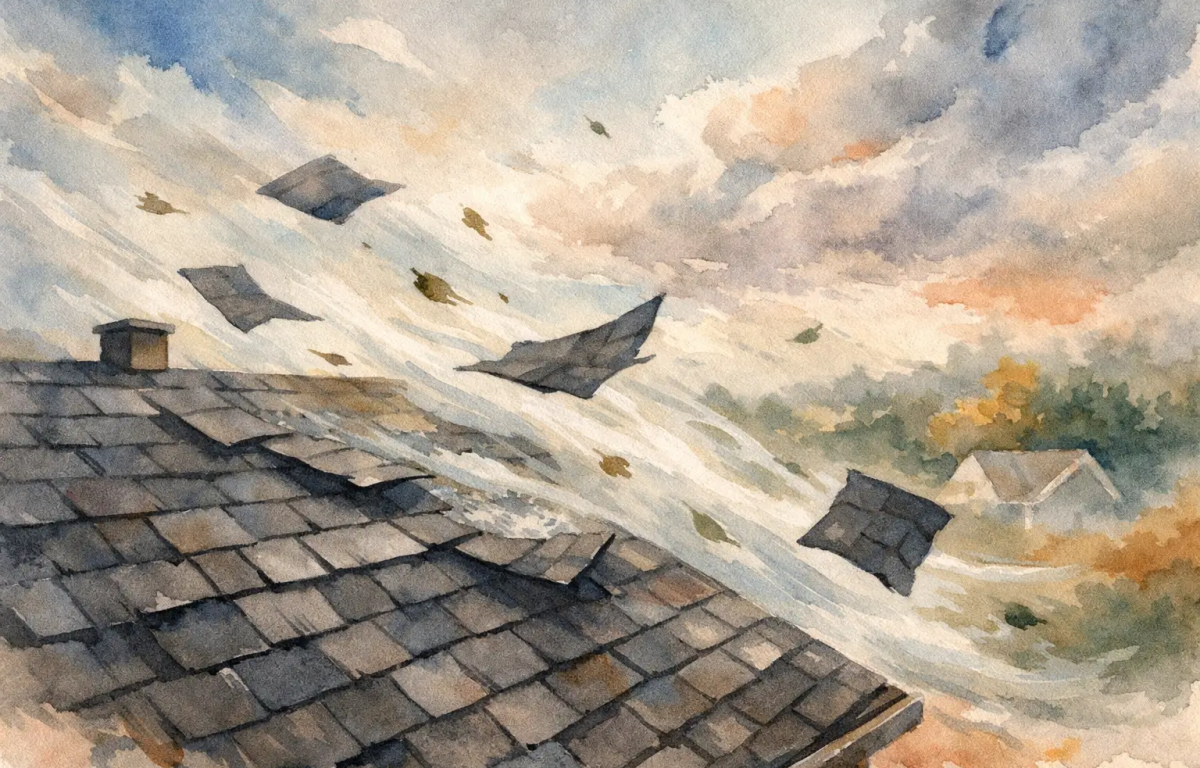
A few missing shingles after a hard Upstate South Carolina storm can feel like a minor cleanup job. But when homeowners ask, why do shingles keep blowing off, the answer is often bigger than one gust of wind. Repeated shingle loss can point to a problem with installation, aging materials, roof ventilation, or storm damage that has weakened the roof system over time.
A roof does not have to be old to lose shingles. It does, however, need every layer to work together – from the decking and underlayment to the starter strip, fasteners, flashing, and shingles themselves. Finding the real cause early helps stop leaks, prevent interior damage, and protect your home before the next storm rolls through.
Why Do Shingles Keep Blowing Off After Storms?
Wind is usually the event that exposes the problem, not always the original cause. Strong thunderstorm winds can lift a properly installed shingle, especially at roof edges, ridges, valleys, and areas around chimneys or skylights. Once the seal is broken, the next storm can catch underneath that shingle and pull it free.
In the Greenville, Spartanburg, Anderson, Greenwood, and Laurens areas, fast-moving storms can bring sudden wind gusts, driving rain, and hail in the same afternoon. A roof that looks fine from the ground may have lifted tabs, creased shingles, damaged ridge caps, or loose flashing after one of these events. Those issues leave the roof more vulnerable every time the wind picks up.
The key question is whether the missing shingles are isolated storm damage or a sign that the roof can no longer hold up as a system. A detailed inspection can tell the difference.
The Most Common Reasons Shingles Blow Off
Improper installation or weak fastening
Shingles depend on correct placement and fastening. If nails were driven too high, too low, at an angle, or through the shingle mat, they may not provide the holding power the manufacturer intended. Too few nails can create the same problem. In high-wind areas or on steep roof sections, the correct number and placement of fasteners matter even more.
Overdriven nails are another frequent issue. A nail head that cuts through the shingle instead of securing it can allow the shingle to work loose over time. The roof may survive several years of average weather, then begin shedding shingles when stronger winds arrive.
A missing or poorly installed starter strip can also cause trouble along the eaves and rake edges. These perimeter shingles are often the first ones wind tries to lift. If they were not secured correctly, wind damage can start at the edge and travel across the roof.
Old, brittle, or worn-out shingles
Asphalt shingles do not stay flexible forever. Sun exposure, heat, rain, and normal expansion and contraction gradually dry out the material. Older shingles can become brittle, lose protective granules, crack, and stop sealing tightly to the course below.
This does not mean every older roof needs replacement. Some roofs have plenty of service life left and only need targeted repair. But if shingles are lifting in multiple areas, breaking during repair, or losing granules across broad sections, patching may only buy a little time. The condition of the full roof matters more than the number of visible missing shingles.
Failed adhesive seals
Most asphalt shingles have a factory-applied sealant strip that bonds shingles together after installation. When that seal activates properly, it adds meaningful wind resistance. When it does not, shingles can flutter and lift.
Cold-weather installation, dusty shingles, improper alignment, shaded roof sections, and age can all affect adhesion. Storm damage can break an existing seal as well. A lifted shingle does not always blow away immediately, which is why a roof can look intact after one storm but lose tabs during the next one.
Decking or structural movement below the shingles
Shingles need a stable surface underneath them. Soft, water-damaged, delaminated, or improperly secured roof decking can compromise fastening and allow the roof surface to move. If the plywood or oriented strand board has been weakened by a long-term leak, nails may no longer hold as they should.
This is one reason surface repairs should not be rushed. Replacing a few shingles without checking the roof deck can hide a problem that will return. A qualified contractor should inspect for soft spots, sagging areas, moisture staining, and signs that the roof structure needs attention.
Poor attic ventilation and moisture problems
Heat and trapped moisture in the attic can shorten the life of roofing materials. Excessive attic heat can age shingles faster, while moisture can contribute to decking damage and mold growth. In colder periods, warm indoor air meeting a cold roof deck can create condensation that quietly affects the roof from below.
Ventilation is not a one-size-fits-all fix. The right approach depends on the roof design, insulation, intake ventilation, exhaust ventilation, and the home’s overall airflow. Still, if repeated shingle problems come with unusually hot upstairs rooms, peeling paint, attic moisture, or warped decking, ventilation should be part of the inspection.
Missing Shingles Create More Risk Than Many Homeowners Expect
A missing shingle is an opening in your home’s first line of defense. Underlayment provides temporary backup, but it is not meant to remain exposed to weather for long. Wind-driven rain can work beneath surrounding shingles, soak the decking, and eventually reach insulation, ceilings, walls, and electrical components.
Even shingles that remain attached may be compromised. Wind creases often leave a horizontal bend or fracture that weakens the shingle. It may lay flat again and appear normal from the yard, yet fail later because the fiberglass mat or seal has been damaged.
Watch for shingles in the yard, dark patches where granules have worn away, lifted corners, exposed nail heads, water stains on ceilings, or damp attic insulation. Also pay attention to gutters and downspouts. A large amount of shingle granules after a storm can be a sign of wear or impact damage, although some granule loss is normal on a newly installed roof.
What to Do When Shingles Keep Coming Off
Start with safety. Do not climb onto a wet, steep, or visibly damaged roof, and do not attempt a temporary repair during active wind conditions. From the ground, take clear photos of missing shingles, debris around the property, damaged gutters, and any visible damage to siding or trim. Inside, document water spots, drips, and attic moisture.
If water is entering the home, move belongings away from the affected area and use containers to catch drips. Avoid puncturing a sagging ceiling unless a qualified professional advises you to do so, since damaged ceilings can be unstable and water may be near electrical wiring.
Then arrange a prompt roof inspection. A proper evaluation should look beyond the obvious missing tabs. The inspector should check roof slopes, ridges, valleys, flashing, penetrations, roof edges, attic conditions when accessible, and related exterior damage. Written findings and photos give you a clearer path whether the solution is a repair, a larger restoration, or a replacement.
Repair or replacement: it depends on the full roof condition
A focused repair can be the right answer when the roof is relatively new, damage is limited to one area, matching shingles are available, and surrounding materials remain in good shape. A repair can restore the weather barrier quickly and cost less than replacement.
Replacement may make more sense when wind damage is widespread, shingles are brittle across the roof, multiple repairs have already been made, or the roofing system has installation and ventilation issues that cannot be solved by swapping a few tabs. If a storm damaged several exterior components at once, coordinating roof, gutters, trim, siding, and skylight work can also prevent gaps between separate contractors.
For storm-related losses, keep records of the weather event, photos, repair receipts, and inspection notes. Insurance coverage depends on your policy, the cause of damage, deductible, and the adjuster’s findings. A contractor can document visible damage and help you understand the repair scope, but the insurance carrier makes the final coverage decision.
Preventing the Next Round of Wind Damage
The best prevention is not simply choosing a thicker shingle. Material selection matters, but correct installation and a sound roof system matter just as much. A replacement roof should use compatible components, proper edge protection, manufacturer-required fastening, careful flashing work, and ventilation that fits the home.
After major storms, take a quick walk around the property and schedule an inspection if you notice debris or signs of damage. Annual roof checks are also useful for catching loose flashing, damaged sealants, clogged gutters, and aging shingles before they become an emergency.
Extreme Roofing helps homeowners across Upstate South Carolina assess storm damage, document roof conditions, and manage repairs or restoration with clear communication from inspection through cleanup. The goal is straightforward: stop leaks, correct the cause of the damage, and restore confidence in the roof over your family.
If shingles keep blowing off, do not wait for a ceiling stain to confirm the problem. A timely professional inspection can turn a stressful storm issue into a clear, practical plan for protecting your home.