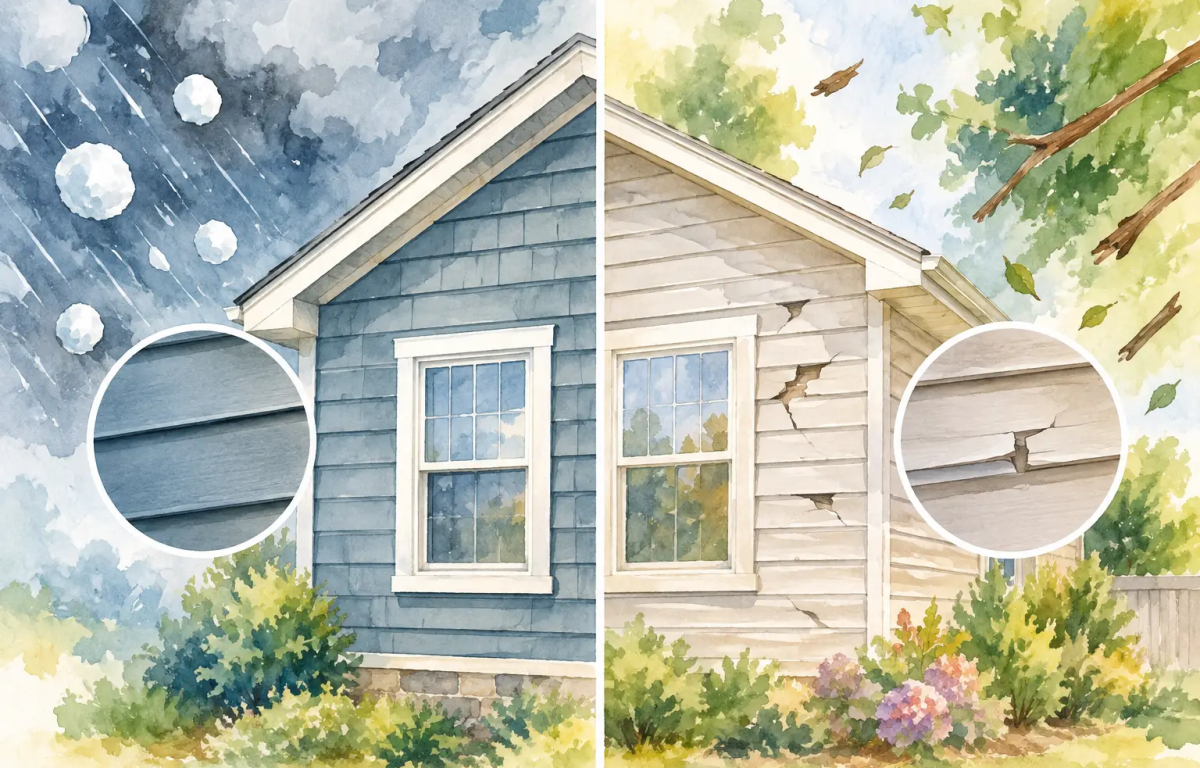
A hailstorm can leave behind more than a few dents. In Upstate South Carolina, siding may take repeated hits from hail, windblown branches, lawn equipment, and debris before damage becomes obvious. When comparing impact resistant versus standard siding, the right choice comes down to your home’s storm exposure, your budget, and how long you plan to own the property.
Standard siding can be a smart, cost-effective option for many homes. Impact-resistant siding can offer another level of protection in areas that see frequent severe weather. The key is understanding what each product is built to handle – and what neither one can guarantee after a major storm.
Impact Resistant Versus Standard Siding: The Real Difference
Standard siding is designed to protect the exterior of your home from normal weather conditions, moisture, and everyday wear. Vinyl siding remains a common choice because it is affordable, low-maintenance, and available in many colors and profiles. Fiber cement and engineered wood are also standard siding options, each with its own strengths.
Impact-resistant siding is made or reinforced to better withstand sudden force. Depending on the product, that may mean a thicker vinyl panel, a rigid polymer formulation, reinforced backing, or a material engineered to resist cracking and chipping. It is not simply regular siding with a stronger marketing label. A quality impact-resistant product should have manufacturer specifications that explain its tested performance and warranty coverage.
That difference matters when hail strikes a wall at an angle, a branch scrapes the side of the home, or high winds send loose debris across your property. Standard siding may crack, split, puncture, or loosen under those conditions. Impact-resistant siding is more likely to absorb or resist a smaller impact without visible damage.
“More likely” is the right phrase. No siding is invincible. Large hail, falling limbs, flying metal, or a direct hit from storm debris can damage nearly any exterior material.
What Standard Siding Does Well
Standard siding is not a poor choice just because an upgraded product exists. For homeowners replacing older, faded, warped, or damaged siding, standard vinyl or another conventional material can restore curb appeal and provide dependable protection at a lower initial cost.
It is often the practical fit for homes with limited storm exposure, rental properties, or projects where keeping the budget under control is the top priority. Proper installation is especially important. Even a high-quality panel can fail early if it is nailed too tightly, flashed incorrectly around windows, or installed without attention to wall conditions underneath.
Standard siding also makes sense when only a limited section of the exterior needs repair and a close match is available. Replacing an entire home’s siding with a premium impact-resistant product may not be necessary after every claim or repair. A detailed inspection should guide that decision.
The trade-off is that standard siding can show damage sooner after hail and wind events. Small cracks can allow water behind the siding, where it may affect sheathing, trim, and insulation over time. That is why a post-storm exterior inspection matters, even when the damage initially looks minor.
Where Impact-Resistant Siding Earns Its Cost
Impact-resistant siding is built for homeowners who want extra confidence during storm season. It can be particularly worthwhile for exposed homes, houses near mature trees, or properties in areas that regularly see hail and high winds.
The first benefit is durability. A stronger panel may resist dents, cracks, and breaks caused by routine impacts that would damage standard siding. That can mean fewer repair calls, less cosmetic damage, and a cleaner-looking exterior over the years.
The second benefit is protection of the wall system. When siding remains intact, it is better able to keep wind-driven rain away from the materials behind it. This does not replace proper flashing, housewrap, trim work, or gutter performance, but it is one more layer of defense for your home.
The third benefit is long-term value. Homeowners planning to stay in place for many years may find that the higher initial investment is easier to justify when it reduces maintenance concerns and supports the home’s appearance. Buyers may also appreciate an exterior designed with storm resistance in mind, although resale results depend on the neighborhood, material, color, condition, and overall presentation of the property.
Cost Is More Than the Price Per Square Foot
Impact-resistant siding usually costs more than standard siding, both for materials and, in some cases, installation. The price difference depends on the siding type, profile, color, insulation, trim details, wall repairs, and the complexity of the home.
A simple price comparison can be misleading. Consider the full scope: removal of existing siding, moisture or rot repairs, replacement of damaged trim, new flashing, soffit and fascia work, and cleanup. If your exterior was affected by a storm, there may also be related roof, gutter, or window concerns that should be evaluated at the same time.
Insurance may cover storm-caused siding damage when the loss is covered by your policy, but coverage is never automatic. Policies, deductibles, matching provisions, and damage documentation vary. An experienced local contractor can help identify visible damage, prepare a clear estimate, and provide the documentation you need for the claims process. The insurance company makes the final coverage decision.
Material Matters as Much as Impact Resistance
Not every impact-resistant siding product performs the same way, and not every standard material has the same weaknesses. The label alone should not make the decision for you.
Thicker vinyl siding can be a practical choice for homeowners who want a lower-maintenance exterior with improved resistance to everyday bumps and weather. Insulated vinyl may add rigidity and help panels sit flatter, though insulation performance depends on the full wall assembly.
Fiber cement siding offers a different set of advantages, including a substantial appearance and resistance to rot and insects. It can perform well in harsh weather when installed and maintained correctly, but it is not maintenance-free. Paint, caulk, clearances, and installation details still need attention.
Engineered wood can offer the warmth of a wood-style exterior with improved manufacturing consistency. It must be installed carefully and kept protected from prolonged moisture exposure. For any material, ask to see product specifications, warranty terms, and samples before making a final selection.
How to Choose for Your Upstate South Carolina Home
Start with your storm history. If your neighborhood has experienced repeated hail claims, wind damage, or falling-limb issues, investing in more impact resistance may be reasonable. Also consider the placement of your home. An open lot, ridge location, or heavily wooded property can face different risks than a sheltered home on a quiet street.
Next, look at the condition of the entire exterior. Siding damage often appears alongside bent gutter runs, dented downspouts, damaged window wraps, loose trim, or roof impacts. Addressing the system together can prevent a patchwork result and help protect the home more effectively.
Finally, think about your ownership timeline. If you expect to sell soon and the current siding has limited damage, a well-installed standard replacement may be the better financial decision. If this is your long-term home and you are tired of worrying about every storm forecast, impact-resistant siding may provide value that goes beyond appearance.
Do Not Skip the Inspection and Installation Details
The best siding choice can still underperform when the installation is rushed. Before siding work begins, the contractor should inspect the wall surfaces, identify moisture damage, review flashing around openings, and explain how trim, vents, and transitions will be handled.
After a storm, photographs and written findings are especially useful. They help homeowners understand what happened and create a clearer record if an insurance claim is involved. At Extreme Roofing, our team looks at the exterior as a connected system, not just a single damaged panel. That means identifying the work needed to restore protection, appearance, and peace of mind.
Whether you choose standard or impact-resistant siding, choose a material that fits your home, your storm exposure, and your budget – then make sure it is installed by a licensed, insured contractor who stands behind the work. A careful decision before the next storm can save you from a much harder one afterward.