
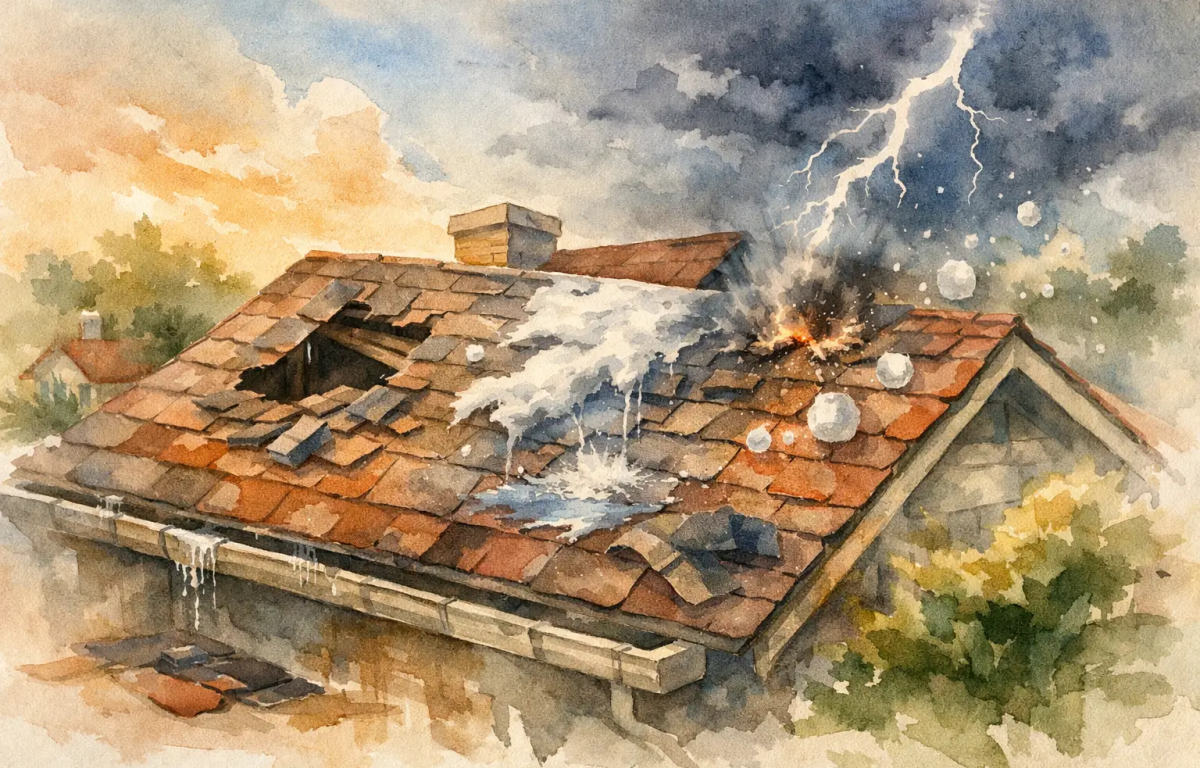
A hard Upstate South Carolina storm can leave a roof looking nearly normal from the driveway while hiding lifted shingles, hail strikes, or broken seals that lead to leaks weeks later. Homeowners often ask: what damage qualifies for a roof claim? The answer comes down to the cause of the damage, the condition of the roof before the storm, and the coverage written into your specific policy.
Insurance is designed to help with sudden, accidental damage from a covered event. It is not a maintenance plan for an aging roof. Knowing the difference before you file can help you document the right evidence, avoid costly delays, and make informed decisions about repair or replacement.
What Damage Qualifies for a Roof Claim?
Most roof claims involve a covered weather event or a sudden outside force. Wind, hail, falling trees, fire, and certain types of water damage are common examples. The key question an adjuster will ask is not simply whether the roof is damaged. They will ask what caused it and whether that cause is covered by the policy.
Wind damage
Strong wind can lift, crease, crack, or remove shingles. It can pull flashing loose around chimneys and walls, damage ridge caps, or expose the underlayment beneath the shingles. Wind damage is common after thunderstorms and tropical systems in Laurens, Anderson, Greenwood, Greenville, and Spartanburg.
A missing shingle is easy to spot, but not all wind damage is obvious. A shingle may still be in place while its seal has been broken or its surface has creased. Those conditions can shorten the roof’s service life and create a path for water. A professional inspection can identify damage that is difficult to see safely from the ground.
Hail damage
Hail can knock granules off asphalt shingles, create bruised areas in the shingle mat, dent metal vents, and damage gutters, downspouts, skylights, siding, and window trim. The size of the hail matters, but so do wind direction, roof slope, shingle type, and the age of the material.
Insurers look for functional hail damage, meaning damage that affects how the roof performs. A few marks on a metal vent do not automatically prove the roof needs replacement, but collateral damage to soft metals and other exterior surfaces can help establish that a hail event occurred at the property.
Other sudden covered events
Depending on your policy, a roof claim may also apply after:
- A tree limb or other falling object punctures or crushes part of the roof.
- Fire, lightning, or an explosion damages roofing materials or framing.
- A sudden water event causes covered damage after the roof is breached.
- Vandalism causes direct damage to the roof or attached exterior components.
Every policy has its own terms, exclusions, deductibles, and endorsements. Coverage for wind, hail, and cosmetic damage can vary, so the policy language and the insurer’s investigation control the final decision.
Damage That Usually Does Not Qualify
A roof does not have to be brand-new to qualify for a claim. However, insurance companies generally do not pay for problems caused by normal aging, poor installation, neglected maintenance, or damage that existed before the reported storm.
For example, curled shingles, widespread granule loss from age, deteriorated pipe boots, old leaks, and rotten decking may be maintenance issues rather than storm damage. If wind tears off shingles from a roof that was already near the end of its life, the insurer may cover the direct storm damage while excluding unrelated deterioration. That distinction matters.
Cosmetic damage can also be a gray area. Some policies cover dents or marks that do not affect the roof’s ability to shed water, while others specifically exclude them. A damaged gutter may be covered even if a roof is not, or the opposite may be true. Do not assume an approval or denial for one part of the exterior applies to the entire property.
The amount paid can depend on the policy as well. A replacement cost policy may pay the cost to restore covered damage, usually in stages. An actual cash value policy factors in depreciation, which can leave the homeowner with a larger out-of-pocket balance. Your deductible also applies, and wind or hurricane deductibles may be different from the standard deductible.
Document Storm Damage Before It Gets Worse
The strongest roof claim starts with clear, timely documentation. After a storm, begin from a safe location. Take wide photos of the home and close photos of visible missing shingles, fallen branches, dented gutters, damaged siding, or broken skylights. Note the date of the storm and save weather alerts, repair receipts, and photos taken before the event if you have them.
Inside the home, photograph water spots, wet insulation, ceiling stains, peeling paint, or active leaks. Move furniture and valuables away from water, then take reasonable steps to prevent additional damage. A temporary tarp or emergency repair may be necessary, but keep the invoice and photographs of the condition before and after the work.
Do not climb onto a wet, steep, or visibly damaged roof. It is not worth the risk. A qualified local contractor can inspect the roof, identify storm-related conditions, and provide documentation for your records. The contractor can explain what they see, but the insurance company makes the coverage decision.
Why a Detailed Inspection Matters
A storm inspection should look beyond the shingles. Roof systems work as connected parts, and a claim may involve more than the visible roof covering. A thorough inspection can evaluate ridge caps, flashing, valleys, vents, pipe boots, skylights, gutters, downspouts, fascia, soffit, siding, and interior signs of water intrusion.
This broader view is especially useful after hail or high wind. Damage to gutters, metal accessories, siding, and trim may support the storm timeline and show the full scope of restoration needed. It also helps prevent a partial repair from overlooking the source of a future leak.
At Extreme Roofing, inspections focus on documenting the actual condition of the exterior and explaining the findings in plain language. Homeowners should receive a clear assessment and written proposal, not pressure to file a claim before the damage has been properly evaluated.
Repair or Replacement: What Will the Claim Support?
A qualifying loss does not always mean the insurance company will approve a full roof replacement. If the covered damage is limited and matching materials are available, a targeted repair may be the appropriate solution. If damage is widespread, shingles cannot be repaired without compromising the system, or the roof has sustained functional impacts across multiple slopes, replacement may be justified.
Local building requirements can affect the scope as well. Some policies include ordinance or law coverage that helps pay for code-required upgrades when a covered loss triggers them. Others provide limited coverage. Your contractor and adjuster should evaluate the damaged areas, repairability, and applicable requirements before work begins.
Be cautious of anyone who promises that insurance will buy a new roof before an inspection or policy review. Honest claim support means documenting facts, meeting the adjuster when needed, and helping you understand the scope – not guaranteeing an outcome no contractor can control.
Questions Homeowners Ask About Roof Claims
Can I file a claim if my roof is old?
Yes, an older roof can still have legitimate covered storm damage. Its age may affect the amount paid under an actual cash value policy, but age alone does not automatically disqualify a claim. The damage must still be tied to a covered event rather than ordinary wear.
How long do I have to file after a storm?
Policies set reporting deadlines, and waiting can make storm damage harder to prove. Report damage promptly after you discover it, especially if there is an active leak or visible exterior damage. Check your policy for the specific deadline.
Should I call my insurer or a roofing contractor first?
If there is an immediate emergency, protect the home and notify your insurer. For non-emergency damage, a professional inspection before filing can help you understand whether there is evidence of a covered loss. That gives you a clearer foundation for the conversation with your carrier.
After a storm, small roof problems rarely stay small through another South Carolina downpour. If you see missing shingles, dents, water stains, or debris on the roof, get a professional inspection while the evidence is fresh and take the next step with confidence.