
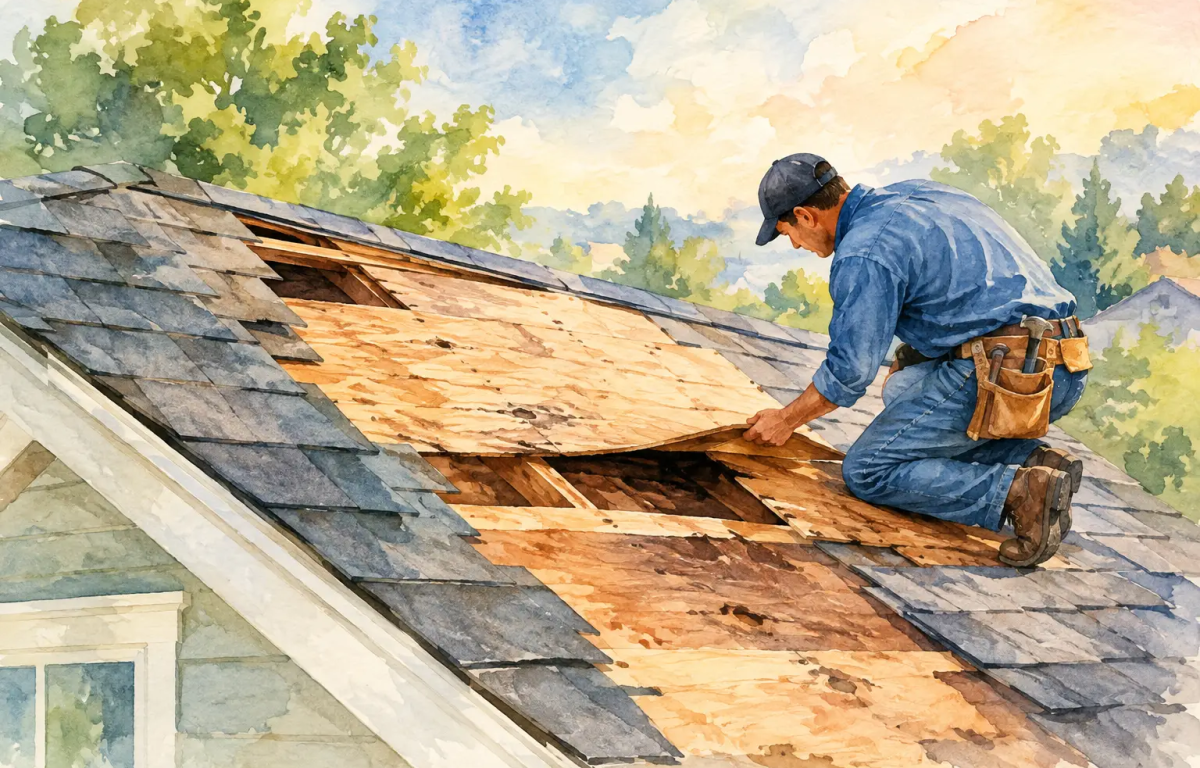
A roof can look fine from the driveway while the wood beneath the shingles is taking on water. If you are asking, when should roof decking be replaced, the answer usually comes down to moisture, structural condition, and how long the damage has been left untreated. For Upstate South Carolina homeowners, wind-driven rain, hail, fallen limbs, and humid summers can turn a small roofing problem into hidden deck damage faster than expected.
Roof decking is not a cosmetic part of your roof. It is the wood paneling attached to the roof framing, and it gives shingles, underlayment, and other roofing materials a solid surface to perform on. When decking is weak, rotted, warped, or cracked, a new layer of shingles will not fix the real problem.
When Should Roof Decking Be Replaced?
Roof decking should be replaced when it can no longer securely support roofing materials or protect the structure below. That may mean replacing a few damaged sheets during a repair or replacement, not necessarily re-decking the entire roof.
A professional inspection is the right way to make that call. Decking is often concealed beneath shingles and underlayment, so its condition cannot always be confirmed from the ground. During a roof replacement, contractors can inspect exposed decking closely and identify soft spots, decay, gaps, and moisture damage before installing new materials.
The key is not to cover damaged wood and hope for the best. New shingles installed over compromised decking may fail to lie flat, may not hold fasteners properly, and can leave your home vulnerable to more leaks.
Signs Your Roof Decking May Be Damaged
Some decking problems show up inside the home before they become obvious on the roof. Others become apparent after a major storm or when old shingles are removed.
Watch for these warning signs:
- A sagging or wavy roofline, especially in one concentrated area
- Water stains on ceilings, damp attic insulation, or visible attic mold
- Soft spots or a spongy feel on the roof during a professional inspection
- Shingles that dip, buckle, or appear uneven without a clear wind-damage pattern
- Wood visible from the attic that is darkened, swollen, split, rotted, or crumbling
A single stain on a ceiling does not automatically mean the entire roof deck needs replacement. It does mean water has found a path into the home, and the source should be located quickly. Leaks can travel along framing or under roofing materials, so the stain may not sit directly below the damaged decking.
Sagging Is a Structural Warning
A roofline should look straight and consistent. If it sags between rafters or trusses, the decking may have weakened from prolonged moisture exposure. In some cases, damaged framing, excessive weight, or poor ventilation also contributes to the problem.
Do not assume a sagging area is only a shingle issue. It deserves a thorough inspection because roof structure and decking work together to keep the system stable.
Rot and Delamination Mean the Wood Has Lost Strength
Many homes have plywood or oriented strand board, often called OSB, as roof decking. Both materials can deteriorate when water repeatedly reaches them. Plywood can delaminate, with layers separating from one another. OSB can swell at the edges, soften, and lose its ability to hold nails.
Once the material has lost structural integrity, drying it out is not enough. Replacement is usually the responsible repair.
Storm Damage Can Put Decking at Risk
After hail or high winds move through Laurens, Anderson, Greenwood, Greenville, or Spartanburg, homeowners naturally look for missing shingles and damaged gutters. Those are important signs, but wind-driven rain can also force water beneath lifted shingles, damaged flashing, or torn underlayment.
Decking damage is more likely when a roof already has aging materials or weak points around vents, chimneys, skylights, valleys, and pipe boots. A storm may not create a visible hole, yet it can expose an existing weakness that allows water into the roof system.
Fallen branches present another concern. Even if a branch does not punch through the roof, the impact can crack decking or loosen materials around the strike area. If debris hits your roof, a prompt inspection can document damage and help prevent a delayed leak from becoming a larger restoration project.
Does Every Roof Replacement Need New Decking?
No. A roof replacement does not automatically require all-new decking. Sound decking can often remain in place after it is inspected, cleaned, and prepared for the new roofing system. Replacing only damaged sections is common and can be the most practical solution.
The trade-off is that an accurate decking assessment often cannot happen until the old roof is removed. A responsible contractor should explain this before work begins. Your written proposal should clarify how concealed deck damage will be handled, including the cost structure for replacing bad sheets if they are found.
This is not an unnecessary add-on. Roofing nails need solid wood to anchor shingles correctly. Covering rotten or soft decking can compromise the life of a brand-new roof and may lead to premature repairs, leaks, and avoidable expense.
What Causes Roof Decking to Fail?
Most failed decking traces back to moisture, but the source matters. A roof leak caused by storm damage needs a different solution than chronic condensation from poor attic ventilation.
Common causes include aging shingles, failed flashing, missing shingles, ice-related water intrusion, improper ventilation, bathroom exhaust vented into the attic, plumbing leaks, and previous repairs that did not address the full source of the problem. In Upstate South Carolina, high humidity can make attic ventilation especially important. Warm, damp air trapped in the attic can contribute to mold, condensation, and shortened roof life.
Poor installation can also play a role. If roofing materials were installed without proper underlayment, flashing details, or ventilation planning, the decking may be exposed to conditions it was never meant to handle.
How a Professional Decking Inspection Works
A proper inspection begins inside and outside the home. From the attic, a roofing professional looks for active moisture, staining, mold, daylight through the roof, weakened panels, and signs that fasteners are not holding as they should. From the exterior, they inspect the roofline, shingles, flashing, penetrations, gutters, and storm-related damage.
During a replacement project, the most complete decking inspection occurs after tear-off. Each exposed area can be checked by sight and by feel before underlayment and shingles go on. Damaged panels are removed, replaced with suitable material, and secured properly so the new roof has a stable foundation.
Homeowners should be cautious about climbing onto a roof or walking across suspect areas themselves. A weakened section can be unsafe, and storm-damaged roofs may be more unstable than they appear from the ground.
Insurance and Roof Decking Replacement
If a covered storm event damaged your roof and led to decking repairs, insurance may help pay for the related work. Coverage depends on your policy, the cause of damage, the age and condition of the roof, and the documentation available.
That is why early inspection matters after a storm. Photos, damage notes, and a detailed scope of work can support the claims process. It is also wise to address emergency conditions promptly. Waiting on an active leak can allow secondary water damage to spread, which complicates both repairs and claims.
Extreme Roofing helps homeowners understand the condition of their roof and provides clear project details so they can make informed decisions during a stressful time. The goal is straightforward: repair what can be repaired, replace what is no longer dependable, and protect the home from the next round of weather.
Do Not Wait for the Ceiling to Leak
By the time water reaches a living-space ceiling, it may have already affected insulation, decking, framing, or electrical areas above. A musty attic smell, a new roofline dip, loose shingles after wind, or a ceiling stain are all reasons to schedule an inspection.
Your roof decking is the foundation under every shingle. If a storm, leak, or aging roof has put that foundation in question, getting clear answers now can stop a small hidden problem from becoming a much larger restoration.