
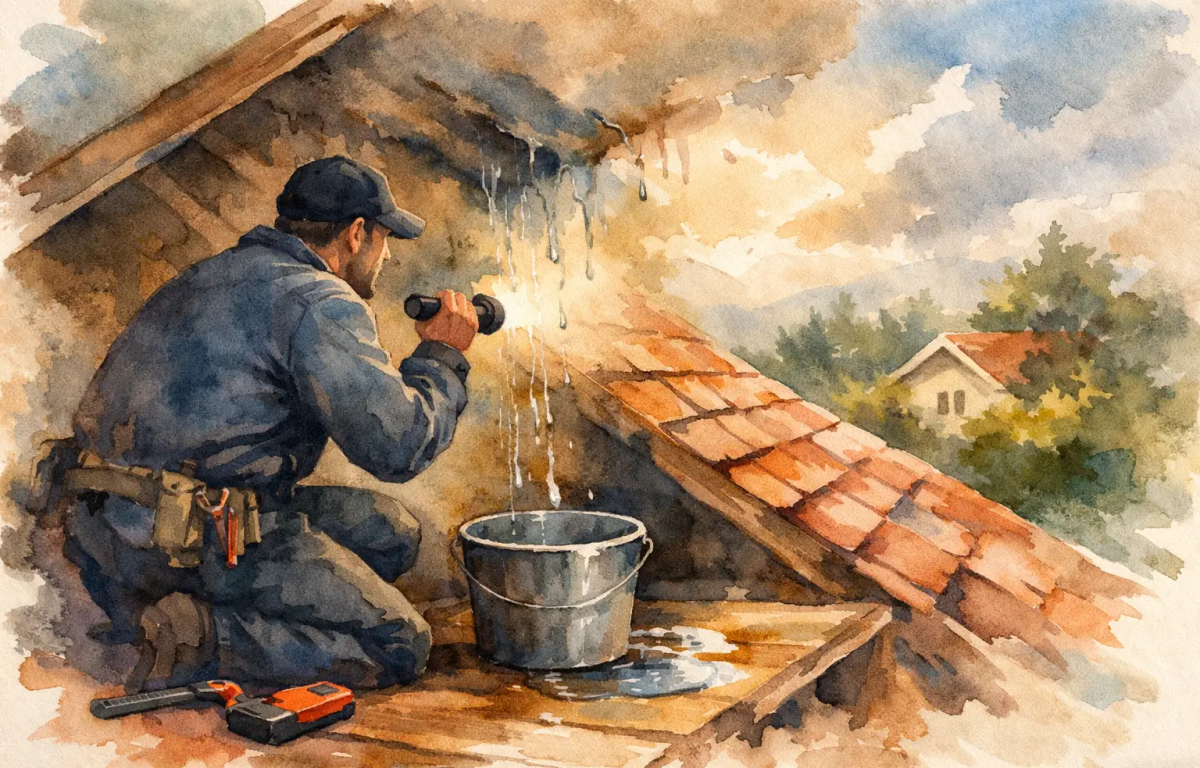
A water stain on the ceiling rarely tells you where the problem started. Water can enter near a ridge, chimney, vent, skylight, or damaged shingle, then travel along decking or framing before it drips into a bedroom or hallway. That is why professional leak detection matters. The goal is not to patch the visible stain. It is to find the actual entry point, stop further damage, and make sure the repair protects your home through the next Upstate South Carolina storm.
For homeowners in Laurens, Anderson, Greenwood, Greenville, and Spartanburg, a roof leak can become urgent fast. Heavy rain, wind-driven storms, hail impacts, and falling limbs can all create openings that are easy to miss from the ground. Acting early can help limit damage to insulation, framing, drywall, flooring, and personal belongings.
Why Roof Leaks Are Often Hard to Locate
A roof is a connected system, not just a layer of shingles. Water may enter through a small opening and follow the path of least resistance beneath the roofing materials. By the time it reaches your ceiling, it may be several feet away from the original problem.
This is especially common around roof penetrations and transition points. Flashing around chimneys, plumbing vents, skylights, walls, valleys, and dormers must direct water away from vulnerable areas. If flashing is loose, rusted, improperly installed, or damaged by wind, water may work behind it without leaving obvious exterior signs.
Storm damage can make the situation more complicated. A shingle may be lifted but not completely missing. Hail may crack or bruise the surface of a shingle. A branch can loosen flashing or puncture a section of roof without causing an immediate indoor leak. These conditions may only show themselves when the next hard rain arrives.
Signs You Need Leak Detection
An active drip is a clear sign that you need help, but it is not the only one. Homeowners should also watch for brown or yellow ceiling marks, bubbling paint, peeling wallpaper, damp drywall, musty odors, or warped trim near the ceiling.
In the attic, look for wet insulation, darkened roof decking, mold-like staining, rusty nails, or damp wood around vents and rafters. Do not assume every attic stain is new. Some marks may be from an older issue, but a qualified inspection can determine whether moisture is active and whether repairs are needed now.
Outside, missing shingles, curled edges, exposed nail heads, cracked pipe boots, bent flashing, clogged gutters, and granules collecting near downspouts all deserve attention. A gutter issue does not always cause a roof leak, but overflow can force water where it does not belong and damage fascia, soffits, siding, and trim over time.
After a major storm, it is smart to schedule an inspection even if you do not see water indoors. Small storm-related openings can worsen quietly, especially when repeated rain and humidity keep materials wet.
What Professional Leak Detection Looks For
Reliable leak detection begins with a full inspection of the roof and the areas below it. A contractor should not make a diagnosis from one ceiling stain or a quick look from a ladder. The inspection needs to connect the indoor evidence with the condition of the roofing system.
A thorough evaluation may include checking shingles for wind and hail damage, examining valleys and flashing, inspecting roof penetrations, reviewing skylight seals, and looking at gutters and drip edges. Inside, the attic and affected ceilings can reveal moisture paths, compromised insulation, and signs of long-term water intrusion.
The right repair depends on what the inspection finds. A failed pipe boot or small flashing issue may call for a focused repair. Widespread storm damage, brittle shingles, repeated leaks, or an aging roof may point toward replacement as the more dependable long-term solution. The least expensive repair is not always the best value if it leaves other damaged areas unaddressed.
At Extreme Roofing, the focus is on identifying the condition of the full exterior system, providing a clear written proposal, and helping homeowners understand what needs immediate attention and what can be planned for later.
What to Do When You Find a Leak
Your first priority is limiting water damage and staying safe. Move furniture, electronics, rugs, and valuables out of the affected area if you can do so safely. Place a bucket under an active drip and use towels to protect flooring. If the ceiling is bulging with water, keep people out from underneath it. A water-filled ceiling can collapse without much warning.
Do not climb onto a wet roof or try to secure a tarp during high winds, lightning, or heavy rain. Falls are a serious risk, and temporary coverings installed incorrectly can create more damage. If water is close to electrical fixtures, outlets, or your breaker panel, use extra caution and contact a qualified professional.
Take clear photos and videos of the interior damage, the active leak if visible, and any storm-related exterior damage you can safely document from the ground. This information can be useful if you need to file a homeowners insurance claim. Keep receipts for reasonable emergency mitigation steps as well.
Then arrange a professional inspection as soon as conditions allow. The faster the source is identified, the better chance you have of preventing hidden moisture from spreading through the home.
When a Leak May Be an Insurance Claim
Insurance coverage often depends on the cause of the damage, not simply the presence of a leak. Sudden storm damage from wind, hail, or a fallen tree may be covered under your policy, subject to your deductible and policy terms. Damage related to wear, poor maintenance, or an old roof near the end of its service life may be treated differently.
A detailed roof inspection can provide the documentation you need to make an informed decision before contacting your carrier. Photos, notes on damaged materials, and a repair or replacement scope can help show what happened and what work is necessary. A local storm restoration contractor can also help you understand the process and communicate clearly about the condition of the roof.
No contractor should promise what an insurance company will approve. What they should provide is honest evidence, a clear estimate, and dependable support as you work through the claim. That clarity matters when you are trying to protect both your home and your budget.
Preventing the Next Leak
Not every roof leak can be prevented, particularly after severe wind or hail. Still, routine attention helps catch small problems before they become major repairs. Have your roof inspected after significant storms and periodically as it ages. Keep gutters clear so water can drain correctly, and address loose shingles, damaged flashing, and cracked seals before the next round of rain.
Pay attention to trees near the home as well. Overhanging limbs can scrape shingles, clog gutters, and become a serious hazard in high winds. Trimming branches away from the roof can reduce that risk, but tree work near power lines or the roof itself should be handled carefully by qualified professionals.
If your roof has been repaired more than once in the same area, do not keep treating it as a simple patch job. Repeated leaks can signal a broader issue with aging materials, flashing design, ventilation, or storm damage that was never fully addressed.
A dry ceiling is not always proof that a roof is healthy, and a small stain is not always a small problem. When your home shows signs of water intrusion, a careful inspection can replace uncertainty with a clear plan. Stop the leak at its source, protect what you have worked for, and get ahead of the next storm before it has a chance to do more damage.