
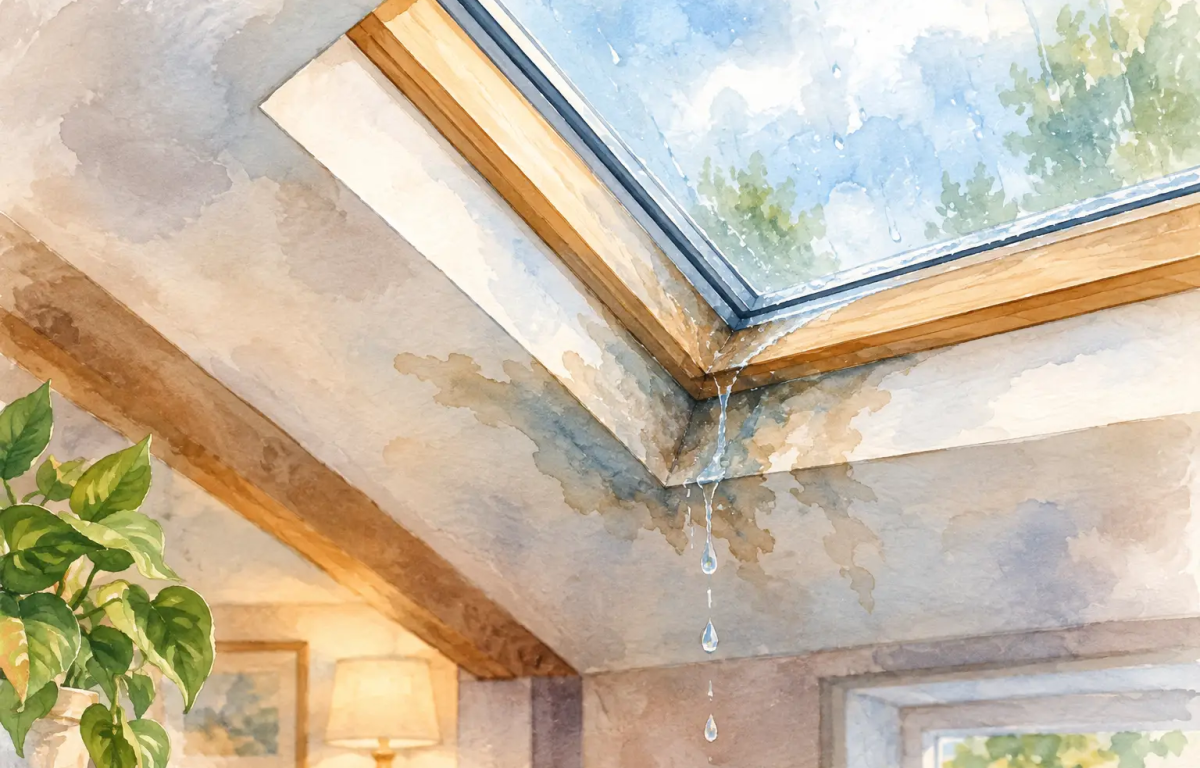
A skylight can turn a dark hallway or living room into one of the best spaces in the house. But when a brown water stain appears around it after a hard Upstate South Carolina storm, homeowners understandably ask: can skylights cause roof leaks? They can, but the skylight itself is not always the problem. Most leaks come down to damaged flashing, aging seals, poor installation, or roof damage that lets water travel before it shows up near the skylight.
The key is to act before a small drip turns into wet insulation, damaged drywall, mold growth, or rotten roof decking. A careful inspection can identify where water is entering and whether a focused repair or a larger roof repair is the right call.
Can Skylights Cause Roof Leaks? Yes, but There Is Usually a Reason
A properly selected and correctly installed skylight should not leak. Modern skylight systems are designed with flashing kits, underlayment, and drainage channels that move rainwater safely around the opening. When every part of that system is in good condition, the skylight can perform well for years.
Trouble begins when one part of the system fails. Heavy rain, wind-driven rain, hail, falling limbs, and years of sun exposure all take a toll on roofing materials in Laurens, Greenville, Anderson, Greenwood, Spartanburg, and nearby communities. A skylight creates an opening in the roof, so it requires more careful waterproofing than a standard field of shingles.
That does not mean homeowners should avoid skylights. It means the installation and maintenance need to match the roof, the slope, and the weather conditions the home faces.
The Most Common Reasons Skylights Leak
Failed or damaged flashing
Flashing is the metal and waterproof material installed around the perimeter of a skylight. Its job is to direct water away from the opening and onto the roof surface. If flashing is bent, corroded, improperly layered, or pulled loose by storm damage, water can get behind it.
This is one of the most common causes of skylight leaks. It can also happen when a skylight was installed without the manufacturer-approved flashing system or when a past repair relied too heavily on caulk. Caulk can help seal small details, but it is not a substitute for properly integrated flashing.
Worn seals or cracked skylight components
The weather seal around the glass or acrylic can dry out, shrink, or crack with age. On older skylights, the glazing may fail, allowing moisture between panes or around the frame. Plastic dome skylights are especially vulnerable to cracking after long-term UV exposure or impact from hail and debris.
If condensation forms between glass panes, that points to a failed insulated glass seal. If water appears at the interior trim only during rain, the source is more likely outside the unit or in the roof system around it.
Roof damage above the skylight
Water does not always enter where it becomes visible. A missing shingle, nail pop, cracked pipe boot, damaged ridge cap, or puncture several feet uphill from the skylight can send water down the roof deck. It may then appear at the skylight opening because that is the first easy path into the ceiling.
This is why simply resealing the visible area may not solve the problem. A professional inspection should check the roof slope above the skylight, the surrounding shingles, and the decking beneath the roofing materials when needed.
Improper installation
A skylight has to work with the roof, not fight against it. Incorrect placement, a poorly cut opening, missing ice-and-water protection, improper shingle overlap, or the wrong flashing kit for the roof pitch can all lead to leaks.
Installation issues may show up soon after the work is completed, but they can also stay hidden until the first severe storm. Wind-driven rain can expose small weaknesses that ordinary showers never reveal.
Condensation mistaken for a leak
Not every drop of water around a skylight comes from the roof. Warm indoor air can hit a cold skylight surface and form condensation, especially in bathrooms, kitchens, and poorly ventilated rooms. This often occurs during cooler weather and may look like a leak.
Condensation usually appears as widespread moisture or droplets on the glass rather than a localized stain after rainfall. Improving ventilation may help, but a contractor should still rule out a roof leak if there is any question.
Warning Signs You Should Not Ignore
A skylight leak rarely begins with water pouring into the room. It often starts with smaller signs that are easy to overlook. Watch for yellow or brown stains around the skylight shaft, bubbling paint, soft drywall, peeling trim, or a musty smell in the room.
You may also notice damp carpet or flooring beneath the skylight after storms, visible gaps around the exterior flashing, lifted shingles, or debris collecting uphill from the unit. If the ceiling stain grows after rain, treat it as an active moisture issue even if the drip stops when the weather clears.
In Upstate South Carolina, a storm can expose damage that was already developing. High winds may lift shingles or flashing edges, while hail can bruise roofing materials and create cracks that worsen over time. Documenting the damage with photos before temporary repairs can also be helpful if an insurance claim may be involved.
What to Do When a Skylight Starts Leaking
Start by protecting the inside of your home. Move furniture and valuables away from the area, place a container under active drips, and use towels to limit water spread. If the ceiling is bulging with trapped water, avoid standing beneath it. A wet ceiling can become unstable.
Do not climb onto a wet roof or attempt to cover the skylight during a storm. Roof surfaces become slippery quickly, and wind can make an already dangerous situation worse. If water is entering rapidly, a qualified roofing professional can assess the roof safely and install an appropriate temporary solution if conditions allow.
After the immediate threat is under control, schedule an inspection that looks beyond the skylight frame. The right inspection should evaluate the unit, flashing, nearby shingles, underlayment, roof decking, attic conditions, and the path water may be taking. This approach helps prevent a temporary patch from becoming a repeat repair.
Repair or Replace the Skylight?
The answer depends on the age and condition of both the skylight and the roof. If the skylight is relatively new and the issue is limited to damaged flashing or shingles, a targeted repair may be the most practical option. Repairing the surrounding roof system can stop the leak without replacing a functioning unit.
Replacement often makes more sense when the skylight is old, cracked, fogged between panes, repeatedly leaking, or nearing the end of its service life. It is also smart to evaluate older skylights when replacing an entire roof. Installing a new roof around a worn-out skylight can create an unnecessary future disruption if the unit fails a few years later.
There is a cost trade-off. Repair may have a lower immediate price, while replacement can provide a longer-term solution when the existing unit is clearly aging. A written proposal should explain the condition found, the recommended scope of work, and why that option fits the home.
How to Help Prevent Future Skylight Leaks
The best prevention starts with quality installation and regular roof care. Keep branches trimmed back from the roof, clear heavy debris that can trap water uphill from the skylight, and have the roof inspected after major storms. Avoid using roof cement or sealant as a permanent do-it-yourself fix. Those materials can hide the real issue and make professional repairs more difficult later.
Pay attention to the roof as a complete system. Gutters that overflow, damaged shingles, inadequate attic ventilation, and aging pipe boots can all contribute to moisture problems that get blamed on the skylight. A dependable contractor will look at the full picture instead of treating the visible stain as the only problem.
Extreme Roofing helps homeowners across Upstate South Carolina identify storm-related roof and skylight issues, explain repair options clearly, and manage restoration work with the care the home deserves. If a stain or drip has appeared around your skylight, getting it inspected now can protect far more than the view overhead.