
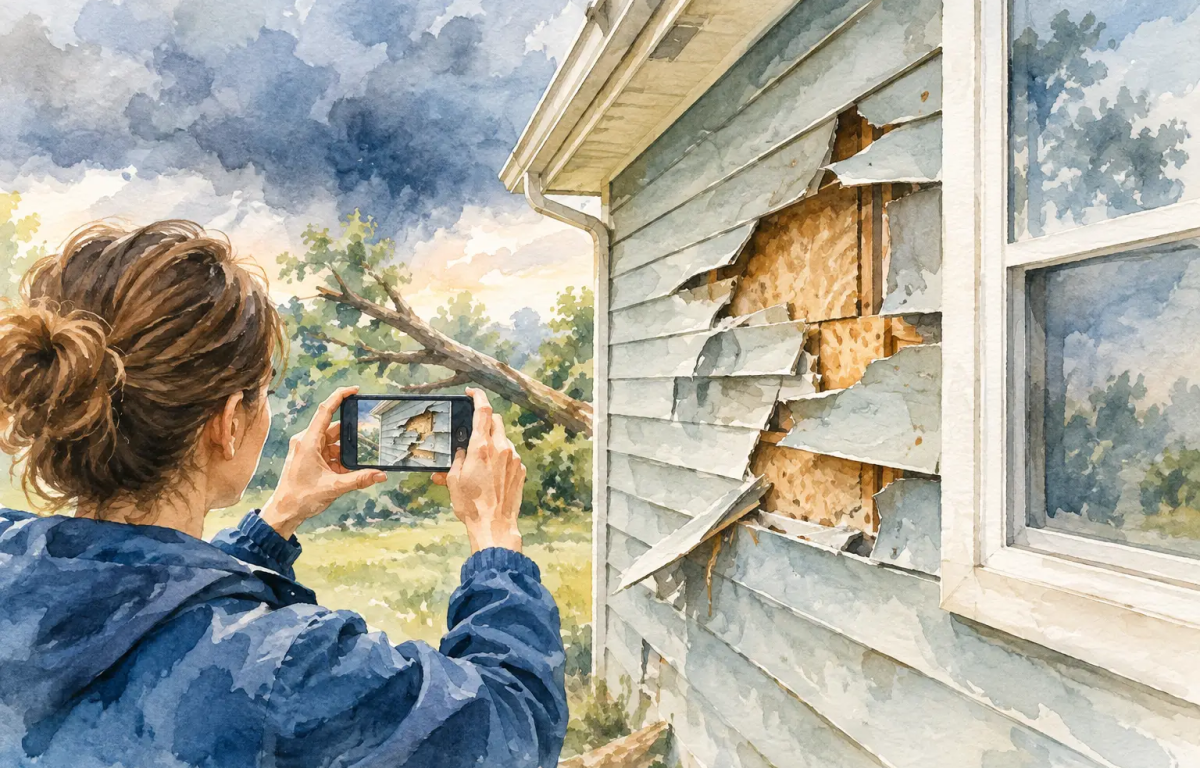
A hailstorm can leave siding full of small impact marks that are easy to miss from the driveway. High winds can loosen panels, crack trim, and force water behind the exterior where the damage is not obvious at first. Knowing how to document siding storm damage gives you a clear record of what happened before cleanup, repairs, or another round of weather changes the evidence.
For homeowners across Upstate South Carolina, speed matters, but safety comes first. Do not climb ladders, remove damaged panels, or put yourself near downed power lines to get better photos. Start from the ground, protect the home from active water intrusion if you can do so safely, and bring in a qualified exterior contractor for a closer inspection.
Start Documenting Siding Storm Damage Right Away
Document the property as soon as conditions are safe. A short delay can make a real difference after hail, strong wind, or wind-driven rain. Loose siding may shift, rain can wash away debris, and temporary repairs can cover evidence an insurance adjuster may need to see.
Take wide photos first. Stand far enough back to capture each side of the home, including the roofline, gutters, windows, doors, downspouts, and visible siding. These overview shots establish where damage appears and show the general condition of the property immediately after the storm.
Then move closer and photograph every suspected area. Capture cracked vinyl, dents, chips, holes, loose or missing panels, bent trim, separated seams, and punctures. If hail is the concern, photograph the impact marks from more than one angle. Side lighting from the sun or a flashlight can make shallow dents and fractures easier to see.
Keep your original image files. Avoid filters, edits, or screenshots when possible, because original files may retain useful date and time information. Back up photos to cloud storage, email them to yourself, or save them in a dedicated claim folder.
What Siding Damage Should You Photograph?
Storm damage does not always look dramatic. Vinyl siding may show small circular impacts, fractures along the edges of panels, or splits where a panel became brittle under force. Fiber cement may chip or crack. Aluminum siding can dent. Wood siding may split, lift, or show fresh water staining around joints.
Photograph the siding itself, but do not stop there. Storm damage is often easier to support when the full pattern is documented. Take clear photos of:
- Damaged siding panels, corners, soffit, fascia, window trim, and exterior doors
- Hailstones, fallen branches, debris, or other storm evidence on the property
- Dented gutters, damaged downspouts, torn window screens, and marked AC units
- Roof damage visible from the ground, including displaced shingles or damaged vents
- Water spots, wet drywall, peeling paint, or other interior signs of water entry
Use a common object for scale when it is safe to do so. A ruler is best, but a tape measure, coin, or other familiar object can help show the size of a crack, dent, or hole. Take one photo without the scale and one with it. Do not place anything against sharp edges or unstable material.
Capture Location, Not Just Damage
A close-up of a crack is useful, but it means more when the location is clear. Take a series of photos that starts wide and gets closer: the front elevation of the house, the affected wall, then the individual damaged panel. Repeat that process for each side of the property.
As you work, make simple notes. Write down whether the damage is on the front, rear, left, or right side of the home. Include landmarks such as “below the kitchen window” or “next to the garage corner.” This saves time later when you are discussing the loss with an adjuster or contractor.
Record the Storm Details While They Are Fresh
Your photos should be paired with a written timeline. Start with the date and approximate time the storm moved through your neighborhood. Note what you observed: hail, high wind, heavy rain, fallen limbs, or debris striking the home. If you heard siding rattling, saw a panel come loose, or noticed water entering indoors, record that too.
Keep the notes factual. You do not need to diagnose the damage or guess at repair costs. A statement such as “noticed three cracked panels on the west wall after hail at approximately 5:30 p.m.” is more helpful than a broad statement that the siding is ruined.
If neighbors had similar conditions, that may provide useful context, but document your own property carefully. Every house has different exposure, siding age, prior repairs, and maintenance history. Your claim should be supported by evidence from your home, not assumptions about the entire neighborhood.
Do Not Throw Away Evidence Too Soon
If a piece of siding, trim, or gutter has fallen to the ground, photograph it where it landed before moving it. Then, if it can be stored safely, keep it in a dry place until the inspection or claim process is underway. Take photos of both sides, especially where fasteners pulled through or material fractured.
The same rule applies to storm-related receipts. Save invoices for emergency tarping, temporary water mitigation, boarding, or other reasonable steps taken to prevent additional damage. Make a copy of each receipt and note why the work was needed.
You are expected to take reasonable steps to protect your property from further damage, but permanent repairs should usually wait until the damage has been documented and your insurer has had an opportunity to inspect. If immediate repair is necessary to stop water from getting inside, photograph the condition before, during, and after the temporary work.
Request a Professional Exterior Inspection
Siding damage can be difficult to identify from ground level, especially on upper walls, gable ends, and areas behind landscaping. A professional inspection provides a more complete assessment of the exterior system, including siding, trims, gutters, roof components, and likely paths for water intrusion.
Ask for a written inspection report with photos and clear findings. A dependable contractor should explain what was found in plain language, identify whether damage appears storm-related, and distinguish between storm impact, age, installation issues, and normal wear. That distinction matters because insurance coverage depends on your policy and the cause of damage.
Be cautious with anyone who promises claim approval or tells you to sign paperwork before you understand the scope of work. A contractor can provide documentation, repair recommendations, and support during the process, but your insurance carrier makes the coverage decision.
For homeowners in Laurens, Anderson, Greenwood, Greenville, and Spartanburg, Extreme Roofing can inspect storm-damaged exteriors and provide detailed findings to help you move forward with confidence.
Organize Your Claim File Before You Call
Put photos, videos, notes, inspection reports, estimates, receipts, and policy information in one folder. Name files clearly, such as “north-wall-crack-close-up” or “hail-damage-gutter-front-elevation.” A well-organized file makes it easier to answer questions without scrambling through your phone weeks later.
When you contact your insurer, record the claim number, the representative’s name, and the date of each conversation. After an adjuster visit, write down what was discussed and keep copies of any paperwork provided. If you receive a scope of loss, compare it carefully with the contractor’s inspection findings. Differences are not always a problem, but they should be understood before repair work begins.
Avoid These Common Documentation Mistakes
The biggest mistake is waiting until the damage becomes more obvious. Another common problem is taking only a few close-ups with no wide shots to show location. Homeowners also sometimes clean up debris, replace a damaged panel, or discard broken material before photographing it.
Do not rely on photos alone if there is an active leak or possible hidden damage. Water behind siding can affect sheathing, insulation, trim, and interior walls. A timely inspection helps identify the full extent of the issue while the evidence is still clear.
Your home does not need to look severely damaged to deserve attention after a storm. A careful set of photos, straightforward notes, and a professional inspection can protect your position and help prevent a small siding problem from becoming a much larger repair.