
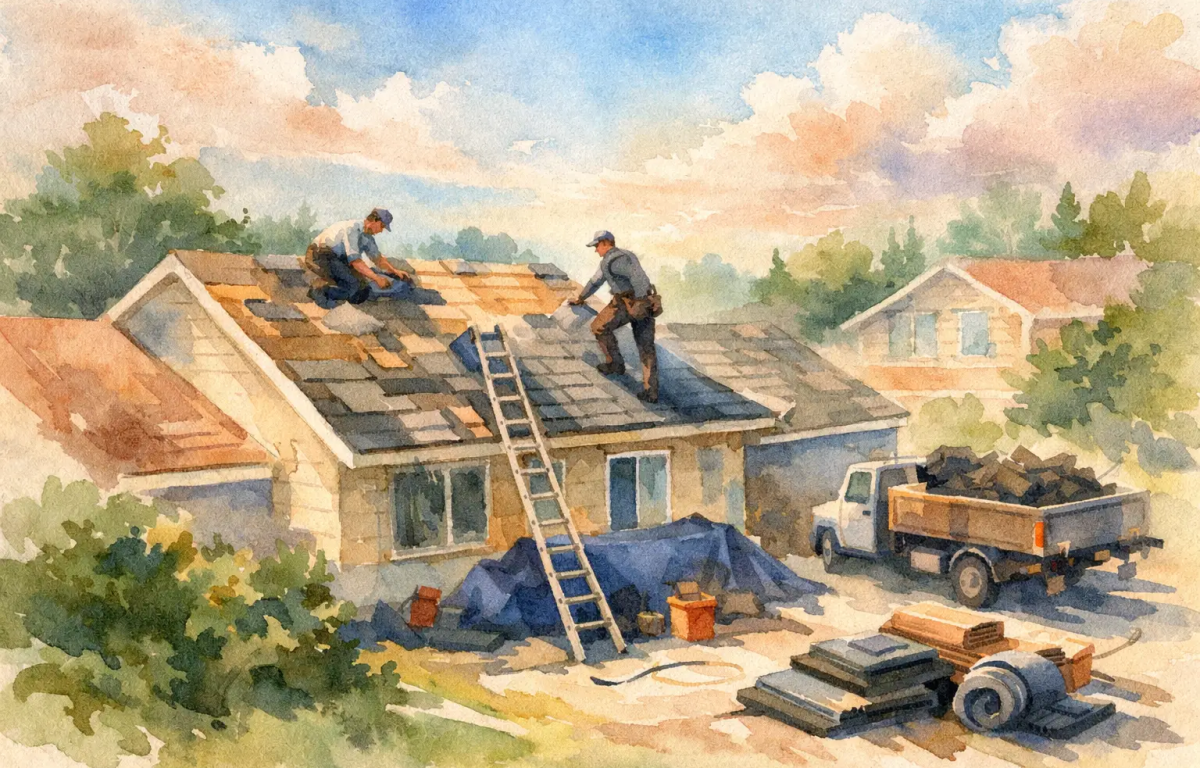
A roof replacement rarely lands on a convenient week. In Upstate South Carolina, homeowners often start planning after a hailstorm, high winds, a new ceiling stain, or shingles scattered across the yard. This residential roof replacement planning guide helps you make clear decisions before the work begins, so you can protect your home, understand the scope, and avoid costly surprises.
Start With a Complete Roof and Exterior Inspection
Do not plan a replacement based only on what you can see from the driveway. Missing shingles and visible leaks matter, but storm damage can also show up as lifted shingle edges, bruised asphalt, damaged flashing, cracked pipe boots, bent gutters, or impact marks on siding and trim. Some damage is easy to miss from the ground and can worsen with the next heavy rain.
A professional inspection should look at the full roofing system, not just the shingle field. That includes valleys, ridges, roof penetrations, chimney flashing, ventilation, gutters, and areas where the roof meets walls or skylights. Ask for clear findings and a written proposal that explains whether repair is practical or whether replacement is the better long-term move.
Replacement is often the right call when damage affects multiple roof planes, the roof is near the end of its service life, leaks have become recurring, or a repair would create a patchwork appearance without addressing the underlying condition. On the other hand, a localized issue on a newer roof may be repairable. A dependable contractor should explain that difference honestly instead of treating every inspection as an automatic replacement.
Document Storm Damage Before You File a Claim
If wind or hail may have damaged your home, document conditions as soon as it is safe to do so. Take photos from the ground of fallen shingles, damaged gutters, dented metal vents, torn screens, and interior water spots. Note the date of the storm and save any temporary repair receipts.
Avoid climbing onto a wet, steep, or damaged roof. The goal is not to prove the claim yourself. It is to preserve useful information before cleanup, additional weather, or time makes the evidence harder to see.
Your insurance policy, deductible, roof age, and the cause of damage all affect what may be covered. Normal wear is not the same as sudden storm damage. A contractor experienced in restoration work can help document visible conditions, meet with an adjuster when appropriate, and explain the proposed scope in plain language. They should not promise a claim outcome or tell you to ignore your deductible. Those are warning signs, not customer service.
Set a Budget That Accounts for the Whole System
The price of a roof replacement is more than shingles. Your written proposal should make it clear what is included, what may be added if concealed damage is found, and how those changes will be approved. This protects both the homeowner and the contractor from misunderstandings once old materials come off.
A complete project can include tear-off and disposal, underlayment, starter shingles, ice and water protection where needed, flashing, ridge materials, ventilation components, pipe boots, decking repairs, permits, and cleanup. If gutters, fascia, trim, siding, or skylights were affected by the same storm, consider whether it makes sense to coordinate that work at the same time. One managed exterior project can be easier on your schedule and help ensure the systems meet cleanly at roof edges and wall connections.
Ask how the contractor handles rotten or delaminated decking discovered during tear-off. No reputable company can see every hidden issue before shingles are removed, but the process should be clear: document the condition, explain the repair, provide pricing, and get approval before proceeding whenever possible.
Choose Materials for Your Home and Local Weather
For many Upstate homes, architectural asphalt shingles offer a strong balance of appearance, durability, and cost. They come in a wide range of colors and can complement traditional, craftsman, ranch, and newer homes. The best choice still depends on your roof pitch, existing exterior colors, budget, neighborhood requirements, and long-term plans for the property.
Do not choose by color alone. Ask about wind ratings, manufacturer warranty requirements, algae resistance, and the complete installation system. Higher-grade shingles may offer better impact resistance or stronger wind performance, but they cost more upfront. Whether that premium makes sense depends on your home’s exposure, insurance considerations, and how long you expect to stay in the house.
Ventilation deserves the same attention as the visible shingle. A roof needs balanced intake and exhaust airflow to manage attic heat and moisture. Poor ventilation can contribute to excessive attic temperatures, moisture problems, and shortened material performance. Your contractor should assess the existing setup rather than simply replacing the materials already there.
Color and Curb Appeal Still Matter
A new roof is one of the largest visual changes you can make to your home. View sample boards outdoors, not only under indoor lighting. Compare them with your brick, siding, shutters, trim, and gutters at different times of day. A color that looks charcoal in a showroom may read warmer or lighter in direct South Carolina sun.
If you are replacing gutters or damaged trim, plan those colors together. The goal is a finished exterior that looks intentional, not a collection of separate repairs.
Compare Contractors Beyond the Bottom-Line Price
A low estimate can be tempting after a storm, especially when multiple repairs are competing for your attention. But a roof is only as dependable as its installation, materials, and the company standing behind the work.
Confirm that the contractor is licensed where required, bonded, and insured. Ask for proof of liability and workers’ compensation coverage. Make sure the proposal identifies the materials, installation method, warranty information, payment terms, and cleanup responsibilities. You should know who will be your point of contact once the job is scheduled.
Local experience matters after severe weather. A contractor familiar with Laurens, Anderson, Greenwood, Greenville, and Spartanburg understands the storm patterns, permitting expectations, and the urgency homeowners feel when water is entering the house. Look for a team that provides an assigned project manager and communicates before, during, and after installation.
Be cautious with pressure tactics, vague scopes, unusually large upfront payments, or contractors who appear only after a storm and cannot provide a local business presence. The right partner gives you time to review the plan and answers direct questions without making the process harder than it needs to be.
Prepare Your Property for Installation Day
Most residential roof replacements move quickly once materials and crews are scheduled. Preparation helps the crew work safely and helps protect your belongings.
Move vehicles from the driveway and garage access area, clear patio furniture and grills away from the house, and secure outdoor decorations. Cover or move items in the attic if possible, since roof work can create vibration and dust. Inside, remove fragile wall hangings and valuables from shelves, particularly on upper floors.
Let your contractor know about gates, pets, sprinkler systems, pool areas, fragile landscaping, and any access concerns before work begins. Roof replacement is noisy. If you work from home, have infants, sensitive pets, or someone recovering from a medical procedure, make a plan for the day. A good crew will protect landscaping and use cleanup tools, but clear communication makes the site safer and more efficient.
Know What to Expect During Tear-Off and Installation
The crew will typically protect the work area, remove existing roofing materials, inspect the exposed deck, complete approved repairs, and install the new roofing system in layers. Weather can affect timing, especially during active storm periods. Your contractor should watch the forecast, secure the home if conditions shift, and communicate promptly if a schedule adjustment is necessary.
At the end of the job, walk the property with the project manager. Review the roof from the ground, ask about ventilation and flashing work, and confirm that debris, nails, and materials have been removed. Keep your proposal, warranty documents, final invoice, and photos in a safe place. They can be useful for future maintenance, insurance questions, or a future home sale.
Plan for Protection After the New Roof Is Installed
A new roof does not need constant attention, but it should not be ignored. Check the ground after major storms for blown-off material or unusual debris. Keep gutters clear so water can drain properly, trim branches that rub against the roof, and address small flashing or sealant concerns before they become interior leaks.
If a storm hits, act quickly rather than waiting for damage to become obvious. A timely inspection can identify loose materials or impact damage while documentation is still fresh. Extreme Roofing helps homeowners throughout Upstate South Carolina move from storm inspection to final cleanup with clear communication and hands-on project oversight.
Your home deserves more than a fast shingle swap. With the right plan and a contractor who is accountable from inspection through final walkthrough, roof replacement becomes a practical investment in keeping your family dry, your exterior protected, and your property ready for whatever the next season brings.