
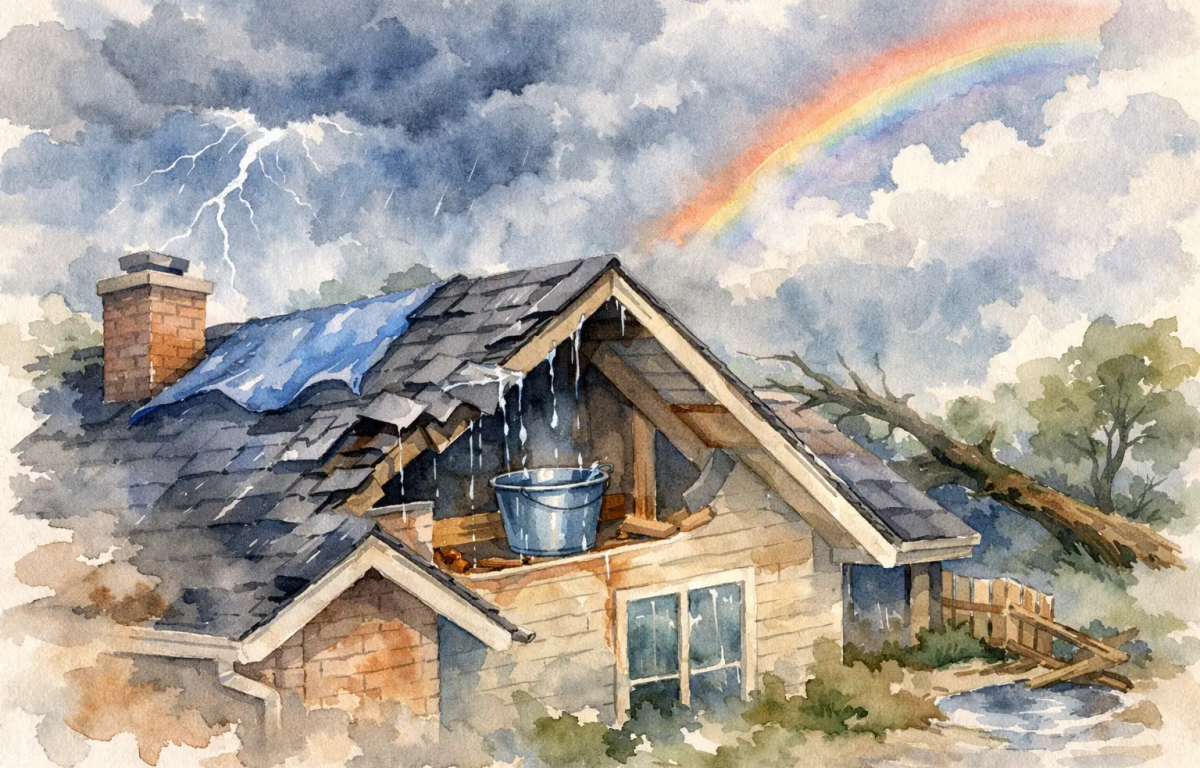
A brown spot spreading across the ceiling after a hard Upstate South Carolina storm is not just a cosmetic problem. It is a warning that water has found a path through your roofing system. Fast roof leak repair can limit damage to insulation, framing, drywall, electrical components, and the belongings below the leak.
The challenge is that the water stain you see is rarely located directly beneath the roof damage. Water can travel along decking, rafters, pipes, or insulation before it reaches the ceiling. That is why a careful inspection matters more than simply patching the most visible spot.
What to Do When You Find a Roof Leak
Start by protecting people and the interior of your home. If water is near a light fixture, outlet, or electrical panel, stay clear of the area and turn off power to that part of the home only if you can do so safely. Move furniture, rugs, electronics, and valuables away from the leak.
Place a bucket or other container under active drips. If water has collected and caused a ceiling bulge, do not ignore it. A water-filled ceiling can collapse under its own weight. If it is safe to do so, carefully relieve the lowest point of the bulge into a bucket, then keep the area clear.
Do not climb onto a wet, steep, or storm-damaged roof. Homeowners are often tempted to cover a damaged section with a tarp in the rain, but slippery shingles, loose decking, and hidden structural damage make that a serious fall risk. A qualified roofing professional can provide emergency protection and assess the condition safely.
Take clear photos and videos of the interior damage, including water stains, damaged personal property, and the outside of the home if it can be photographed safely from the ground. This documentation can be useful if the leak is connected to wind, hail, fallen limbs, or another covered storm event.
Roof Leak Repair Starts With Finding the Real Source
A dependable repair begins with an inspection of the whole affected system, not just the shingle above the stain. Storm damage can create a small opening that allows water in during wind-driven rain, while other leaks develop gradually as flashing, seals, or pipe boots wear out.
Common sources include missing or lifted shingles, cracked pipe boots, exposed nail heads, damaged flashing around chimneys or walls, loose ridge caps, and failed seals around skylights. Gutters also deserve attention. When gutters are clogged, bent, or pulling away from the fascia, water can back up at the roof edge and enter areas that were never designed to hold standing water.
Roof age affects the diagnosis. On a newer roof, a localized repair may be the right answer when the rest of the shingles, flashing, and underlayment remain sound. On an older roof with widespread granule loss, brittle shingles, repeated leaks, or prior patchwork, repairing one point may only delay a larger replacement need.
A professional inspection should identify the source of the leak, the extent of moisture intrusion, and any related exterior damage. It should also explain the recommended work in plain language. Homeowners should know what is being repaired, why it failed, what materials will be used, and whether the repair addresses the full cause rather than the visible symptom.
Why a Ceiling Stain Can Be Misleading
The path water takes is not always straightforward. A leak near a roof vent may appear several feet away at a ceiling seam. Water entering around a chimney can travel along framing before showing up in a bedroom or hallway. In homes with attics, insulation can hold moisture for a long time before a stain becomes obvious.
That delay is one reason small leaks deserve prompt attention. Even when the drip stops after the rain ends, trapped moisture can lead to mold growth, deteriorated wood, damaged insulation, and recurring stains. Drying the interior without correcting the roof source does not solve the problem.
When Storm Damage May Involve Insurance
After hail, high winds, or a falling tree limb, roof damage may qualify for an insurance claim. The key difference is whether the damage was caused by a sudden covered event rather than normal aging or lack of maintenance. An experienced local contractor can document storm-related conditions, explain the repair scope, and help you understand what information your insurer may need.
Do not assume every leak calls for a claim. If your deductible is higher than the cost of a straightforward repair, paying out of pocket can make more sense. On the other hand, a leak accompanied by missing shingles, hail impacts, damaged gutters, torn screens, or siding damage may point to a larger storm restoration project.
Be cautious about signing paperwork before you understand it. You should receive a written proposal that clearly describes the work, materials, payment expectations, and warranty details. A reputable contractor will give you room to ask questions and will not pressure you into a decision while your home is vulnerable.
Temporary Protection Has a Place, but It Is Not the Repair
Emergency tarping can be the right move when rain is still coming, a tree has punctured the roof, or wind has removed shingles and exposed the roof deck. It helps reduce additional water intrusion while a permanent solution is planned. But a tarp is temporary protection, not a substitute for proper roof leak repair.
The same is true of roof cement or caulk applied from the ground or attic. Those materials can sometimes be part of a professional repair, but they should not be used to cover up a larger flashing failure, rotted decking, or widespread shingle damage. A quick patch can trap moisture or make later repairs harder to diagnose.
The best approach depends on the condition of your roof and the cause of the leak. A single damaged pipe boot may be repaired quickly. A roof with multiple wind-lifted shingles and compromised underlayment may need a broader repair. If the roof is near the end of its service life, replacement can offer better long-term value than repeated service calls.
What a Proper Repair Process Should Look Like
A good contractor begins by listening to what happened. The timing of the leak, the direction of the rain, recent storm activity, and the age of the roof all help narrow down the cause. The inspection should include accessible roof surfaces, penetrations, flashings, roof edges, gutters, and attic conditions when available.
From there, the work should be documented in a written scope. For a localized repair, that may include removing damaged shingles, inspecting the deck, replacing underlayment where needed, installing new flashing or boots, and matching shingles as closely as practical. Exact color matching can be difficult on weathered roofs, which is a trade-off homeowners should understand before approving a small repair.
If damaged decking is discovered after shingles are removed, the contractor should explain the condition and the necessary correction before closing the roof back up. Covering soft or rotted wood with new shingles creates a weak point that can lead to future failure.
After the repair, the work area should be cleaned thoroughly and the completed area checked for proper water shedding. Extreme Roofing approaches storm restoration with this level of accountability, from inspection and documentation through repair, cleanup, and final walkthrough.
Preventing the Next Leak
No roof is maintenance-free, especially in a region that sees strong thunderstorms, wind, heavy rain, and occasional hail. A visual check from the ground after major weather can help you spot missing shingles, sagging gutters, debris buildup, or branches resting on the roof. If you notice any change, schedule an inspection before the next storm tests the weak spot.
Keep gutters clear enough to move water away from the roofline and foundation. Trim back overhanging limbs when possible, and pay attention to roof penetrations such as vents, skylights, and chimneys. These areas handle water well when properly installed and maintained, but they require careful inspection as materials age.
A roof leak is stressful because it makes a home feel exposed. Acting early gives you more options, protects your investment, and helps restore the confidence that your roof is ready for the next round of South Carolina weather.