
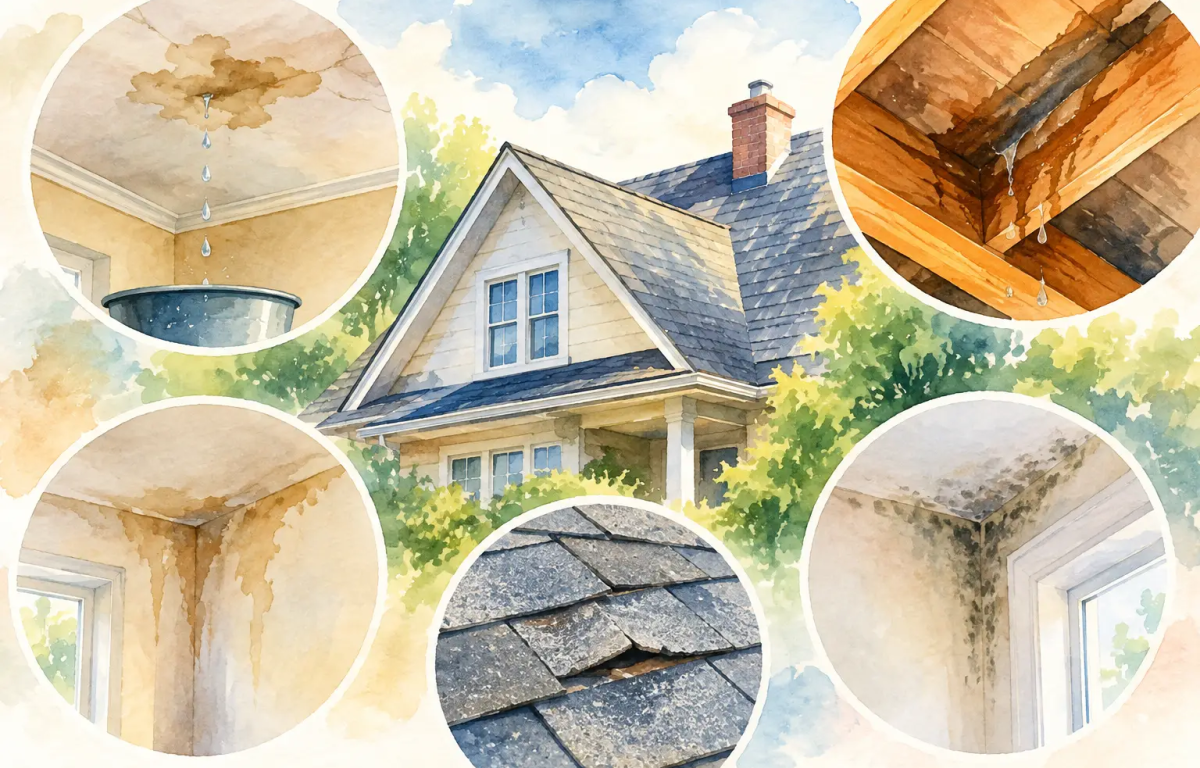
A roof leak rarely announces itself with water pouring through the ceiling. More often, it starts quietly after a hard Upstate South Carolina storm: a lifted shingle, cracked flashing, damaged vent boot, or clogged gutter lets in a small amount of water. Knowing the signs of hidden roof leaks can help you act before minor moisture damage turns into stained ceilings, mold growth, ruined insulation, or structural repairs.
For homeowners in Laurens, Anderson, Greenwood, Greenville, and Spartanburg, the right response is not to wait for a bigger stain or the next rainstorm. A professional roof inspection can identify where water is entering, assess related storm damage, and give you a clear path to repair or replacement.
1. Ceiling Stains That Keep Growing
Brown, yellow, or copper-colored spots on a ceiling are among the clearest warning signs. The stain may look dry, but that does not mean the leak has stopped. Water can soak into insulation and framing, then slowly spread along the ceiling before it becomes visible.
Pay attention to stains that enlarge after rain, appear near light fixtures, or develop in an upstairs room. Water does not always travel straight down from the roof opening, so the stain’s location may not match the actual leak location. A roofing professional needs to inspect the entire roof system, including penetrations, valleys, flashing, and attic conditions.
2. Peeling Paint or Bubbling Drywall
Moisture trapped behind paint can cause it to blister, crack, peel, or feel soft to the touch. On walls, this damage can come from plumbing or exterior siding issues, so it is worth checking carefully rather than assuming the roof is responsible.
When peeling paint or bubbling drywall appears near the top of a wall, around a window, or beneath the roofline, a roof or flashing leak becomes more likely. Homes with skylights, chimneys, dormers, and roof-to-wall transitions deserve extra attention because those areas rely on properly installed flashing to direct water away.
3. A Musty Smell in the Attic or Upper Rooms
A persistent musty odor is often a moisture problem before it becomes a visible leak. Damp insulation, wet wood sheathing, and hidden mold growth can create that smell in an attic, closet, or upstairs bedroom.
If it is safe to enter your attic, look for darkened wood, damp insulation, water marks on rafters, or rusty nails protruding through the roof deck. Do not step on exposed drywall or disturb questionable mold growth. Take photos, note what you find, and arrange an inspection. Early documentation can also be helpful if storm damage may be part of an insurance claim.
4. Mold or Mildew Near the Ceiling
Small black, gray, or green spots near a ceiling line should not be ignored. Mold needs moisture to grow, and a hidden roof leak can provide it even when the room appears dry.
Mold does not automatically prove that your roof is leaking. Poor bathroom ventilation, a plumbing issue, or high indoor humidity can cause similar symptoms. Still, when mold appears after a storm, near an exterior wall, or alongside a ceiling stain, it calls for a closer look at the roof and attic.
5. Damaged Shingles After Wind or Hail
The outside of the roof often tells the story before the inside of the home does. Missing shingles, curled edges, loose tabs, exposed nail heads, granules collecting in gutters, and bruised or cracked shingles can all create openings for water.
Hail damage can be especially difficult to spot from the ground. It may knock granules loose and shorten the roof’s useful life without leaving an obvious hole. Wind can break the seal between shingles, allowing rain to work underneath them during the next storm. A roof can look mostly intact from the driveway and still have damage that needs prompt repair.
6. Granules in Gutters or at Downspouts
Asphalt shingles shed a small amount of granules over time, especially when a roof is new. But a sudden buildup of coarse, sand-like material in gutters, at downspouts, or along the driveway may point to shingle wear or storm impact.
Those granules protect shingles from sunlight and weather. Once enough are lost, the roof surface becomes more vulnerable to cracking and water intrusion. If you notice heavy granule loss after severe weather, combine that clue with a professional inspection rather than judging the roof solely by its age.
7. Sagging, Soft, or Discolored Areas
A sagging ceiling, soft drywall, or bowed section of roofline needs immediate attention. These signs can mean water has saturated building materials for some time. The weight of trapped water can create a safety risk, especially if the ceiling is bulging.
Keep people and furniture away from a bulging ceiling. Do not puncture it unless you have been instructed by a qualified restoration professional and can safely control the water. Call for help quickly, especially during active rain, because the first priority is stopping further damage and protecting the home.
8. Rust Around Vents, Pipes, or Light Fixtures
Roof penetrations are common leak points. Plumbing vent boots can crack, flashing can loosen, and sealants can fail over time. In the attic, rust on metal vents, pipe connections, nails, or electrical boxes may signal repeated moisture exposure.
A rusted light fixture or moisture around electrical components should be treated seriously. Avoid touching wet electrical equipment. Shut off power to the affected area if it can be done safely, then contact the appropriate professional. A roofing inspection can determine whether water is entering from above and what repairs are needed to prevent a repeat problem.
9. Higher Humidity or Unexplained Energy Changes
A hidden leak can damage attic insulation long before you see a ceiling stain. Wet insulation loses its ability to regulate indoor temperatures, which can make upstairs rooms feel warmer in summer or colder in winter. Your HVAC system may run longer, and utility costs may rise without an obvious explanation.
This symptom is not as specific as a stain or missing shingle. Air leaks, aging insulation, and HVAC problems can cause similar changes. But if comfort issues started after a storm or appear with attic odor, dampness, or roof damage, inspect the roof as part of the investigation.
10. Gutter Problems and Water at the Roof Edge
Gutters are not just an add-on to your roof. They control where rainwater goes once it leaves the shingles. Clogged, loose, bent, or overflowing gutters can force water back toward the fascia, soffit, roof deck, and exterior walls.
Look for water spilling over gutter edges during rain, peeling paint on fascia boards, soft wood near the eaves, or soil washing away below downspouts. The repair may involve gutter cleaning, reattachment, replacement, or correcting drainage, but the roof edge should also be checked for rot and hidden water damage.
What to Do When You Spot Signs of a Hidden Roof Leak
Start by limiting damage inside the home. Move valuables away from the affected area, place a container under an active drip, and take clear photos of stains, damaged belongings, and exterior conditions. If water is near electrical fixtures or the ceiling is sagging, treat the situation as urgent.
Avoid climbing onto a wet, steep, or storm-damaged roof. Temporary patches done from the ground or attic can sometimes make the situation worse, conceal damage, or create safety hazards. A trained roofing contractor can inspect the full system and determine whether the issue is isolated flashing damage, a repairable shingle problem, gutter-related moisture, or a larger replacement concern.
For storm-related damage, keep records of the storm date, photos, and any visible changes to the property. Insurance coverage depends on your policy, the cause of damage, and the condition of the roof before the storm. A detailed inspection and written proposal give you practical information to make decisions with confidence.
Extreme Roofing helps Upstate South Carolina homeowners identify storm damage, stop active leaks, and manage exterior restoration with clear communication from inspection through final cleanup. The sooner a hidden leak is found, the more options you typically have to protect the parts of your home that matter most.
A small stain is your home’s warning signal, not a cosmetic issue to save for later. Schedule an inspection while the repair is still likely to be simpler, faster, and easier on your property.