
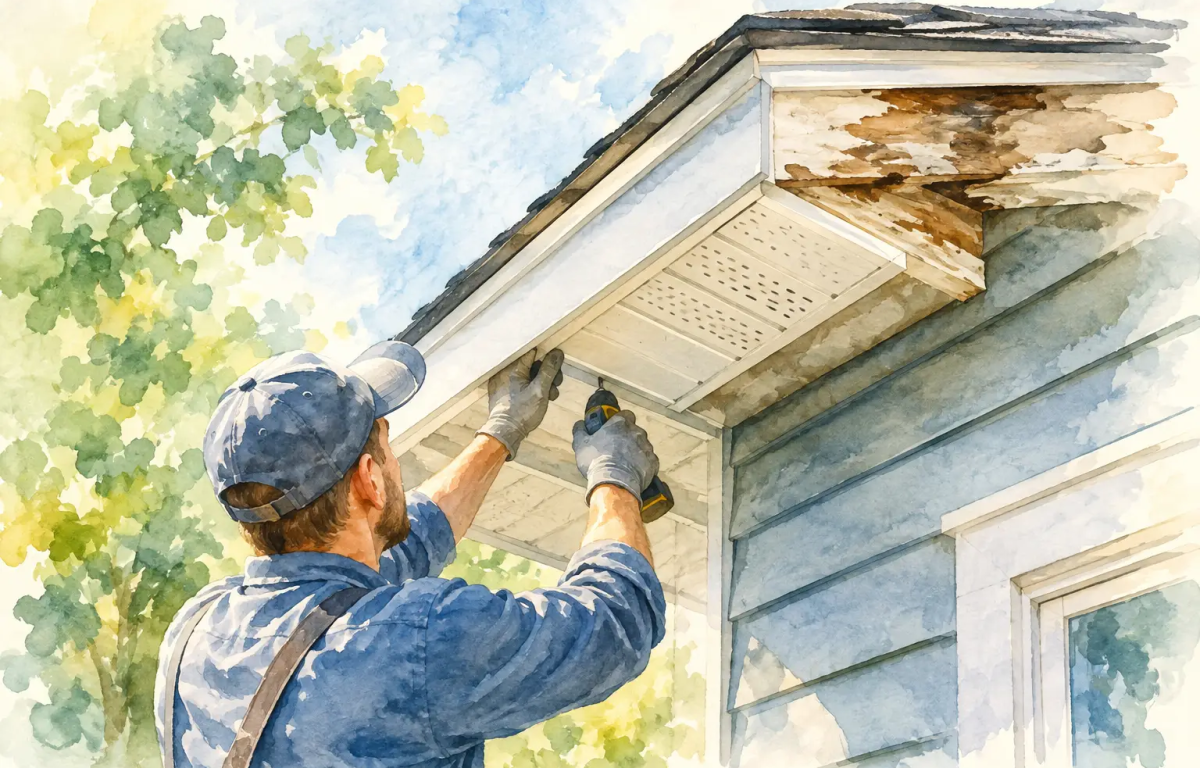
A stain at the edge of your ceiling, a gutter pulling away from the roofline, or a soft spot beneath the eaves can all point to the same problem: moisture is getting where it should not. Timely soffit and fascia repair helps stop that damage at the roof’s edge, where a small failure can lead to rot, pest activity, gutter problems, and interior leaks.
For homeowners across Upstate South Carolina, this is not a cosmetic detail to put off until the next remodel. Heavy rain, wind-driven storms, humidity, and falling limbs can all damage the trim around your roof. Catching the issue early protects the structure behind it and helps keep a manageable repair from becoming a larger exterior restoration project.
What Soffit and Fascia Do for Your Home
Fascia is the long board that runs along the lower edge of your roof. It creates a finished roofline and provides the solid backing your gutters need. When fascia deteriorates, gutters can sag, separate, or drain water against the home instead of away from it.
Soffit is the finished material on the underside of the roof overhang. Vented soffit allows fresh air to move into the attic, supporting proper ventilation and helping control heat and moisture. It also closes off an area that would otherwise be open to birds, squirrels, insects, and wind-blown rain.
These components work with your shingles, roof decking, drip edge, gutters, and attic ventilation. That is why a repair should not be treated as an isolated trim job. The visible damage may be at the fascia, but the cause could be a leaking roof edge, overflowing gutter, storm-damaged shingle, failed flashing, or poor ventilation in the attic.
Signs You Need Soffit and Fascia Repair
Damage along the eaves is easy to miss from the ground, especially on a one-story side of the home that is rarely seen. Still, several warning signs deserve a closer inspection:
- Peeling paint, dark streaks, swollen wood, or soft areas along the roofline
- Gutters that pull away, slope incorrectly, overflow, or have loose fasteners
- Holes, cracked panels, missing vent sections, or animal activity near the eaves
- Water stains on exterior walls, interior ceilings, or attic framing near the roof edge
- A musty attic smell, visible mold, or unusually high heat and moisture upstairs
After a hailstorm or high-wind event, look for bent gutter sections, impact marks, lifted shingles, and debris lodged in valleys or gutters. A falling branch can crack fascia or punch through soffit without causing an obvious roof leak right away. The damage can worsen quietly with every rainstorm.
If you see staining or rot, avoid assuming a fresh coat of paint will solve it. Paint may temporarily improve the appearance, but it cannot stop water entering behind the board. The source of the moisture needs to be identified before repairs begin.
Why Roof-Edge Damage Gets Worse Quickly
The roof edge handles a lot of water. Rain flows off the shingles, over the drip edge, and into the gutter system. When any part of that path is damaged or blocked, water can back up beneath shingles or run behind the gutters. From there, it can soak the fascia, roof decking, soffit framing, and wall materials.
Wood fascia is especially vulnerable once paint fails or seams open. It can absorb water, soften, and lose its ability to hold gutter fasteners. A heavy, water-filled gutter then adds more stress to already weakened boards. In severe cases, the gutter can detach and take sections of the damaged fascia with it.
Soffit problems can create a different set of concerns. Open or damaged soffit gives pests a path into the attic. Blocked or inadequate vents can trap humid air, which contributes to condensation and mold growth. In summer, poor airflow can also increase attic temperatures and place additional strain on your roofing system.
Finding the Real Cause Before Repairing the Trim
A dependable repair starts with an inspection of the full area, not just the board that looks damaged. A contractor should check the shingles and roof edge above the affected section, the drip edge, gutters, downspouts, attic ventilation, and any nearby flashing. They should also inspect the roof decking and framing when accessible.
Sometimes the cause is simple: gutters are clogged with leaves and water has been spilling over the back edge. Other times, the issue is more involved. Wind may have lifted shingles, hail may have bruised roofing materials, or a leak may be traveling from a roof penetration before showing up at the eaves.
This distinction matters when storm damage is involved. Insurance coverage depends on the policy, the documented cause of loss, the age and condition of materials, and other claim details. Sudden damage from a covered storm may be handled differently than long-term deterioration. Clear photos, a detailed inspection, and a written scope of work can help homeowners understand the condition of the property and make informed decisions about next steps.
What Professional Soffit and Fascia Repair Should Include
The right repair depends on how far water damage has spread. A small, isolated section of fascia may only need removal and replacement, followed by proper sealing, priming, and painting. If rot has reached the roof decking or rafter tails, the project requires more involved structural repair before new trim can be installed.
A complete repair generally includes removing damaged materials, checking the supporting structure, correcting the water-management issue, and installing new components that fit the roof system. That may include new fascia boards or aluminum-wrapped fascia, vented soffit panels, drip edge adjustments, gutter repairs, and replacement of damaged shingles or decking.
Material choice is worth discussing. Wood offers a traditional look and can be repaired in sections, but it needs consistent maintenance. Aluminum and vinyl soffit are low-maintenance options that resist rot, though they still need correct installation and ventilation. Composite trim can offer strong moisture resistance in certain applications. The best choice depends on your home’s design, the existing exterior materials, ventilation needs, and budget.
Do not overlook gutter attachment during the process. New fascia will not stay in good condition if gutters are poorly pitched, undersized, clogged, or fastened incorrectly. Water needs a clear path from the roof to the downspouts and away from the foundation.
When a Repair Is Enough and When Replacement Makes More Sense
Repair is often the practical choice when damage is limited to one area and the surrounding materials are sound. For example, a branch may have broken a short fascia section while leaving the roof decking and adjacent trim intact. Replacing that damaged section and correcting the gutter connection can restore protection without expanding the job unnecessarily.
Replacement becomes more sensible when rot runs across long sections, multiple gutters are loose, soffit ventilation is failing throughout the home, or the roof is already near the end of its service life. If a roof replacement is planned soon, coordinating fascia, soffit, and gutter work at the same time can prevent duplicate labor and give the entire roofline a cleaner, more reliable finish.
The goal is not to sell more work than the home needs. It is to make sure the repair addresses the cause, protects the connected components, and holds up through the next round of Upstate storms.
Protecting Your Roofline Between Inspections
Homeowners can reduce risk with basic seasonal maintenance. Keep gutters clear, make sure downspouts discharge away from the foundation, and watch for water spilling over the gutter edge during heavy rain. Trim back limbs that hang over the roof, especially branches that could scrape shingles or fall during a storm.
From the ground, periodically look for sagging gutters, loose panels, peeling paint, or dark discoloration along the eaves. Inside, check the attic after major storms for damp insulation, water marks, or daylight showing where it should not. Avoid climbing onto the roof or probing soft trim yourself. Damaged roof edges can be unstable, and hidden rot is not always visible.
When storms hit Laurens, Anderson, Greenwood, Greenville, Spartanburg, or nearby communities, a prompt exterior inspection can bring clarity before a minor issue spreads. Extreme Roofing provides detailed assessments and practical repair recommendations for homeowners who need to protect the roofline, gutters, and exterior of the home. A sound soffit and fascia system does quiet work every day – give it attention at the first sign of trouble, and it can keep water where it belongs: outside.